

You’re not alone in wondering when a baby outgrows an infant car seat. Most parents hit this question somewhere between their child’s first birthday and 18 months. But the answer isn’t as simple as an age or a single number.
According to NHTSA guidelines and AAP recommendations, the real answer depends on your specific seat’s limits and your baby’s proportions. Most infant seats top out between 22 and 35 pounds and 29 to 32 inches in height. Yet many parents switch far too early, missing valuable months of extra protection.
Let’s walk through exactly how to tell when it’s time.
Quick Answer
A baby outgrows an infant car seat when their head reaches within one inch of the top of the shell. Or when they exceed the weight or height limit on the sticker. Check both limits every month.
Height often comes first. Never guess; measure it.
Why Getting This Wrong Matters for Safety
Rear‑facing car seats protect a baby’s head, neck, and spine in a crash. When a child outgrows the seat, the harness sits too high or the head has no shell above it. That means the restraint no longer holds them properly, and the impact forces aren’t absorbed the way the seat was designed to.
The American Academy of Pediatrics strongly recommends keeping children rear‑facing until they reach the maximum height or weight allowed by the seat. Turning them forward too early or using an outgrown seat increases the risk of serious injury. A 2018 study from the Children’s Hospital of Philadelphia found that children under two are 75% less likely to be severely injured in a crash when riding rear‑facing compared to forward‑facing.
That’s why the one‑inch rule isn’t just a guideline. It’s a safety hard stop.
How to Tell If Your Baby Has Actually Outgrown the Seat
There are three hard checks, not just one. You need to pass all three to stay in the infant seat.
The One‑Inch Head Clearance Check
Place your baby in the seat normally. Look from the side. Can you fit more than one finger between the top of their head and the top of the plastic shell?
If not, or if their head is level with the shell, they’ve outgrown it. This rule applies regardless of weight.
The Harness Slot Check
For rear‑facing, the harness straps must come from at or below your baby’s shoulders. If the straps come from above (because your child has grown taller), the harness won’t hold them properly in a crash. Many infant seats have only a few harness slots.
Once your child’s shoulders are above the highest slot, the seat is too small, even if you still have height left.
The Published Weight and Height Limits
Every infant seat has a sticker on the side or bottom. It lists the maximum weight (e.g., 30 lbs) and maximum height (e.g., 30 inches). If your baby exceeds either number, they outgrow the seat.
Don’t round up. The numbers are absolute.
When the Infant Insert Should Come Out
Most infant seats come with a removable insert for newborns. As your baby grows, that insert takes up space. If removing it gives your child more head clearance and still keeps the harness at or below the shoulders, you might buy a few more weeks.
But once the head is within one inch of the shell with the insert removed, it’s time to move up.
The Most Common Mistake Parents Make (Switching Too Early)
Here’s the weird truth. Most parents switch to a convertible seat before their baby truly outgrows the infant seat. Why?
Because the baby looks cramped. Their legs are bent. They seem uncomfortable.
But babies’ legs bending at the knees in a rear‑facing seat is completely normal. In fact, it’s safe. Studies show that leg injuries are extremely rare in rear‑facing children.
Even if their feet touch the vehicle seat, they are still protected. Your baby won’t be harmed by being folded up.
Another common reason to switch early is the “I want a bigger seat” feeling. Convertible seats are larger, but they also have higher rear‑facing limits. However, if your infant seat still fits correctly, you are giving your baby the best possible protection.
Don’t rush to upgrade unless you must.
What about winter coats? That’s a common trick. A bulky coat makes the harness feel tight, but the fit is actually loose if you buckle first and then tighten.
The correct check is: harness snug, no slack, and the chest clip at armpit level. If you can pinch webbing between your fingers, it’s too loose. Put the coat on after buckling.
What to Do Once You Confirm It’s Time to Move Up
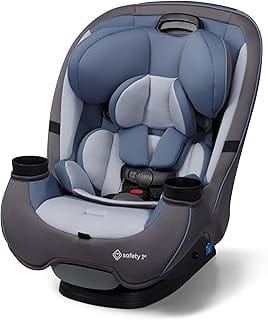
So your baby has outgrown the infant seat, now what? You need a convertible car seat that can remain rear‑facing. Even though you’re moving to a bigger seat, your child should continue riding rear‑facing until they reach the limits of the convertible seat (often up to 40, 50 pounds and 43, 49 inches).
When shopping for a convertible seat, focus on three things:
- Rear‑facing weight and height limits. Look for at least 40 pounds rear‑facing. Many models now go to 50 pounds.
- Harness slot heights. Taller children need higher slots. Check the maximum harness height for rear‑facing (usually the second from top or top slot).
- Vehicle fit. Some convertibles are bulky. Test the fit in your car before buying.
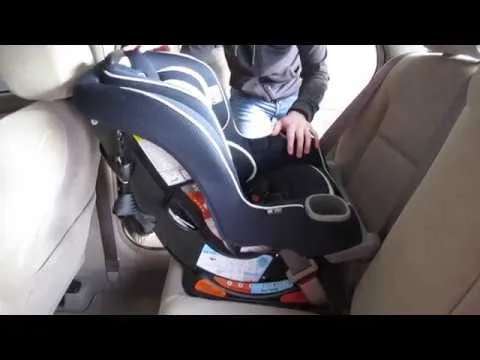
Install the convertible seat according to the manual. Most convertibles have a rear‑facing recline angle indicator. Use the seat belt or LATCH, whichever gives the tightest install.
The seat should not move more than one inch side‑to‑side at the belt path.
If you’re unsure about the installation, many local fire stations or police stations have certified Child Passenger Safety Technicians (CPSTs) who will check your seat for free. Or you can search the NHTSA site for an inspection station near you.
One more note: Keep using the infant seat until you have the convertible installed. Don’t rush to throw it away. You might even need it for a travel system or a second car for a while.
Step‑by‑Step Checklist for Deciding if Your Baby Is Outgrown
Here’s a simple checklist you can run through every month or whenever you’re unsure:
- Find the sticker or manual. Locate the maximum weight and height for rear‑facing. Write it down.
- Measure head clearance. Place the baby in the seat. Use your finger to check the distance from the top of their head to the top of the shell. If it’s less than one inch, stop. They’ve outgrown.
- Check the harness slot height. The straps must be at or below the shoulders. If not, the seat is too tall.
- Remove the infant insert if still in place. See if that buys more clearance.
- Compare actual weight and height. Step on a scale. Measure length. If either exceeds the limit, outgrown.
If you answer “yes” to any of these conditions- head clearance, harness slot, weight limit, height limit- move to a convertible seat. If all four are still in the safe zone, you can continue using the infant seat.
Remember: The height limit is often the first one to trip you up. Babies grow taller faster than they grow heavy. And the one‑inch rule can catch you by surprise even when you’re still under the printed numbers.
That’s why checking both physical fit and published limits is the only reliable way to know.
Internal linking example: If you’re wondering when your baby can face forward, we have a detailed guide on when babies can face forward in a car seat and another on car seat expiration that’s worth reading. Also, if you’re looking for a travel‑friendly convertible seat, our list of the best rear‑facing car seats for travel can help.
Real‑World Scenarios That Change the Timeline
Two babies born on the same day can outgrow their infant seats months apart. Why? Growth rate, seat limits, and torso length all play a role.
A 95th‑percentile baby might hit the height limit at 9 months. A petite baby at the 10th percentile could still fit at 15 months. That’s normal.
Don’t compare your child to a friend’s. Compare them to the seat.
Fast‑Growing vs. Slow‑Growing Babies
Babies grow fastest in the first six months, then slow down. If your baby is in the 90th percentile for height, check the one‑inch rule monthly. For a slower‑growing child, a check every two months might be enough.
Torso length matters more than leg length. A baby with a long torso will outgrow the seat by head clearance sooner than a baby with short torso and long legs.
Different Infant Seat Weight Limits
Not all infant seats are equal. Some max out at 22 pounds. Others go to 30, 32, or even 35 pounds.
The higher the weight limit, the longer you can keep your child rear‑facing in the same seat. But weight limits don’t always match height limits. A seat with a 35‑pound limit might have a 32‑inch height limit.
If your child is tall and light, the height limit will catch them first.
Travel System Users and Portability Trade‑offs
If you use a travel system, the infant seat clicks into a stroller, you may want to keep the infant seat as long as possible for convenience. That’s fine. Just keep checking the three criteria.
Once any of them fails, the convenience isn’t worth the risk. You can always buy a stroller that works with a convertible seat later.
When You Should Keep Using the Infant Seat Even If It’s Close
Parents often ask: “My baby is near the weight limit, but still has head clearance. Can I keep using the seat?” Yes, as long as they are under both limits and the one‑inch rule is satisfied. The seat is still safe.
Here are a few situations where sticking with the infant seat makes sense:
- Airline travel. Infant seats are lighter and easier to carry. If you have a flight coming up, holding onto the seat for one more trip is practical. Just be sure the seat is FAA‑approved (most are) and that your baby still fits.
- Daycare drop‑offs. The carry handle and base system let you move a sleeping baby without waking them. If you’re only a week or two from the limit, it’s okay to keep using the seat for that convenience. But don’t push past the limit.
- Second car. If you have a spare base, you can keep the infant seat in one car and the convertible in the other. That saves you from having to install the convertible in both vehicles right away.
The bottom line: if all checks pass, don’t rush. Use the seat until it’s truly outgrown. Our article on car seat expiration can help you check the date before you continue using it.
Safety Warnings and Compliance Rules You Can’t Ignore
Car seats in the US must meet FMVSS 213. That’s a federal safety standard. It covers crash testing, harness strength, and labeling.
But meeting the standard doesn’t mean a seat is safe past its limits.
Expiration Dates
Every infant seat has an expiration date printed on the shell or base. It’s usually six to ten years from the date of manufacture. Why do they expire?
Plastic degrades over time. Heat and cold cycles can weaken the shell. Never use an expired seat, even if it looks fine.
An expired seat that is still within the weight and height limits is still unsafe.
Crash History
If your infant seat has been in a moderate or severe crash, replace it. Even if it looks unharmed, the internal structure may be compromised. Most manufacturers say to replace after any crash unless it was minor, meaning the car was driven away, the airbags didn’t deploy, no one was injured, and the door near the seat was undamaged.
When in doubt, replace it.
State Laws on Rear‑Facing
Most US states now require children to remain rear‑facing until at least age two. But some states have weight minimums (usually 20 pounds) instead. Check your state’s law.
However, the AAP recommends staying rear‑facing to the seat’s maximum limits, not just the legal minimum. The law is a floor, not a ceiling. If your state says age one but your seat fits until 15 months, keep going.
For more on when it’s safe to turn your child around, see our guides on when a baby can face in a car seat and at what age a baby face forward.
When to Consult a Professional (CPST or Pediatrician)
Most car seat questions can be answered by reading the manual and doing the checks above. But some situations need a second set of eyes.
If You’re Unsure About Installation
A loose install is one of the most common mistakes. The seat should not move more than one inch at the belt path when you push it with moderate force. If you can’t get it tight, or if the recline angle is wrong, find a CPST.
They’re free at many fire stations, hospitals, and police departments. You can also search for an inspection station on the NHTSA website.
If Your Baby Has Special Medical Needs
Babies with reflux, hip dysplasia, or certain disabilities may need a specific seat or positioning insert. Your pediatrician can recommend the right type. Never use an aftermarket product, like head huggers or strap covers, unless the manual says they are okay.
They can interfere with proper harness fit.
If You’re Using a Secondhand or Hand‑Me‑Down Seat
Secondhand seats are risky. You don’t know if they’ve been in a crash or if they’re expired. If you do accept one, get the model number and check the expiration date.
Then verify that all parts, base, buckle, and harness are present and not recalled. You can look up recalls on the NHTSA site.
A quick note on the safety of car seat covers if you’re thinking of adding one.
Frequently Asked Questions
Can my baby’s ears be above the shell but not the head?
Yes. The one‑inch rule applies to the top of the head, not the ears. If the ears are above the shell but the head still has an inch of clearance, the seat is fine.
Focus on the head position only.
Is it safe to use the infant seat without the base?
Yes, if you install it correctly using the vehicle seat belt. Most infant seats are designed for both base and belt installation. Check the manual for the exact routing path.
Without the base, you lose the convenience of click‑in, but the safety is the same when installed properly.
What if my baby is over the weight limit but under the height limit?
You must stop using the seat immediately. The weight limit is a firm ceiling. The harness and shell are not tested above that weight.
Even if your baby looks small, the harness could fail in a crash. Switch to a convertible seat rated for a higher rear‑facing weight.
Should I buy a convertible seat now or wait until I’m sure?
If your baby is close to outgrowing, say, within a pound or half an inch, buy it now. Convertible seats do not expire as quickly as infant seats (many last 8- 10 years), so you’re not wasting money. Having it ready means you can make the switch the moment the infant seat is outgrown.
That’s safer than driving with an outgrown seat while you wait for delivery.
For recommendations, our guide to the best convertible car seat for infants can point you in the right direction.
Final Verdict: Your Safe Transition Plan
You now know the three hard rules. Head clearance must be at least one inch. Harness straps must be at or below the shoulders.
The published limits are absolute. If any of those fail, the infant seat is outgrown.
The safest next step is a convertible seat that keeps your child rear‑facing. Most convertibles go to 40 or 50 pounds rear‑facing. That gives you months or even years of extra protection.
Don’t rush to turn your child forward. Our guide on forward‑facing age limits shows why waiting matters.
One real‑world example to make it stick. A parent with a 14‑month‑old who weighs 28 pounds and is 32 inches tall. The infant seat has a 30‑pound limit and a 30‑inch limit.
The child is over the height limit and within 2 pounds of the weight limit. Head clearance is only half an inch. That seat is outgrown today.
The right move is a convertible seat installed rear‑facing. No exceptions.
Trust the measurements, not your gut. Check monthly. And when in doubt, find a CPST to verify.
Your child’s safety depends on getting this one transition right.