

Deciding when babies can forward face in a car seat is one of the most stressful safety milestones for parents. Many caregivers rush to turn the seat around so they can finally see their child in the rearview mirror. However, making this switch too early puts a toddler at severe risk during a collision.
Transitioning out of the rear-facing position is not a graduation to celebrate early. It actually represents a drop in overall crash protection.
Modern safety guidelines emphasize maxing out your seat limits rather than hitting an arbitrary age. The American Academy of Pediatrics recommends keeping children rear-facing for as long as functionally possible. As of 2026, most quality models allow children to remain backward until they reach 40 to 50 pounds.
Let us break down exactly how to measure your child against these strict manufacturer boundaries.
Quick Answer
Babies can forward face in a car seat only after completely outgrowing the rear-facing limits. You must check your specific model manual for maximum weight and height ratings. Do not turn the seat before your child exceeds these exact measurements.
Most modern convertible units support rear-facing up to 40 pounds or more. The American Academy of Pediatrics strongly advises delaying this transition to protect spinal development.
The Short Answer: Max Out the Rear-Facing Limits
For decades, parents followed the outdated “one year and 20 pounds” rule. That standard is completely obsolete today. Extensive crash data proves that young toddlers are much safer riding backward.
Our goal is to extend that protection for as long as the hardware allows.
You should not view the forward-facing transition as a positive milestone. Turning the child around actually decreases their cervical spinal protection during a severe crash. Caregivers should practice extended rear-facing until the child reaches the absolute maximum limits of the seat.
Using a high-quality unit helps immensely when finding a flexible seat model that fits a growing toddler comfortably.
These strict limits are printed directly on the side labels of your seat. You will also find them in the official owner manual. Every single model has a different threshold for weight and height.
You must track your child against these numbers actively rather than guessing their measurements.
Many children can comfortably ride backward until age three or four. If your child hits a sudden growth spurt, you must weigh them frequently. Doing this at home ensures you have exact data.
Real data keeps your setup compliant with modern safety protocols.
State Laws vs. AAP Guidelines: The True Benchmark for Safety
Understanding the difference between a legal requirement and a safety recommendation saves lives. State laws dictate the absolute bare minimum for child passenger safety. The American Academy of Pediatrics dictates the optimal medical best practice.
Many states legally require children to remain rear-facing until their second birthday. However, turning a child forward exactly on their second birthday is a mistake. The state law only prevents extreme negligence.
The medical guidelines focus on protecting the child from catastrophic injuries.
You can review federal crash ratings directly through the National Highway Traffic Safety Administration. Their data confirms that a rear-facing orientation distributes crash forces evenly. It supports the heavy head, fragile neck, and growing spine perfectly.
The back of the seat shell absorbs the kinetic energy.
Here is a quick look at how minimum laws contrast with safety guidelines:
| Measurement Type | Legal Minimum (Varies by State) | AAP Safety Guideline |
|---|---|---|
| Age | 1 to 2 years old | As long as possible |
| Weight | 20 to 22 pounds | Max limit of seat (40-50 lbs) |
| Height | State dependent | Max limit of seat |
| Purpose | Avoid traffic citations | Prevent catastrophic injury |
Always aim for the AAP recommendation as your true benchmark. Treat the state law as a baseline, not a finish line. If you cross state lines during a trip, the strictest local law applies.
Maxing out the seat limits will keep you compliant in all fifty states.
The Anatomy of a Frontal Crash: Why Rear-Facing Protects the Spine
A frontal collision is the most common and dangerous kind of vehicle crash. When a car stops instantly, everything inside continues moving forward at the original speed. This intense forward momentum places incredible stress on a tiny passenger.
A baby has a disproportionately large head compared to their total body mass. Their spinal ligaments are still soft and extremely stretchy. Their bones have not undergone full cervical spine ossification yet.
Ossification is the biological process where soft cartilage hardens into solid bone rings.
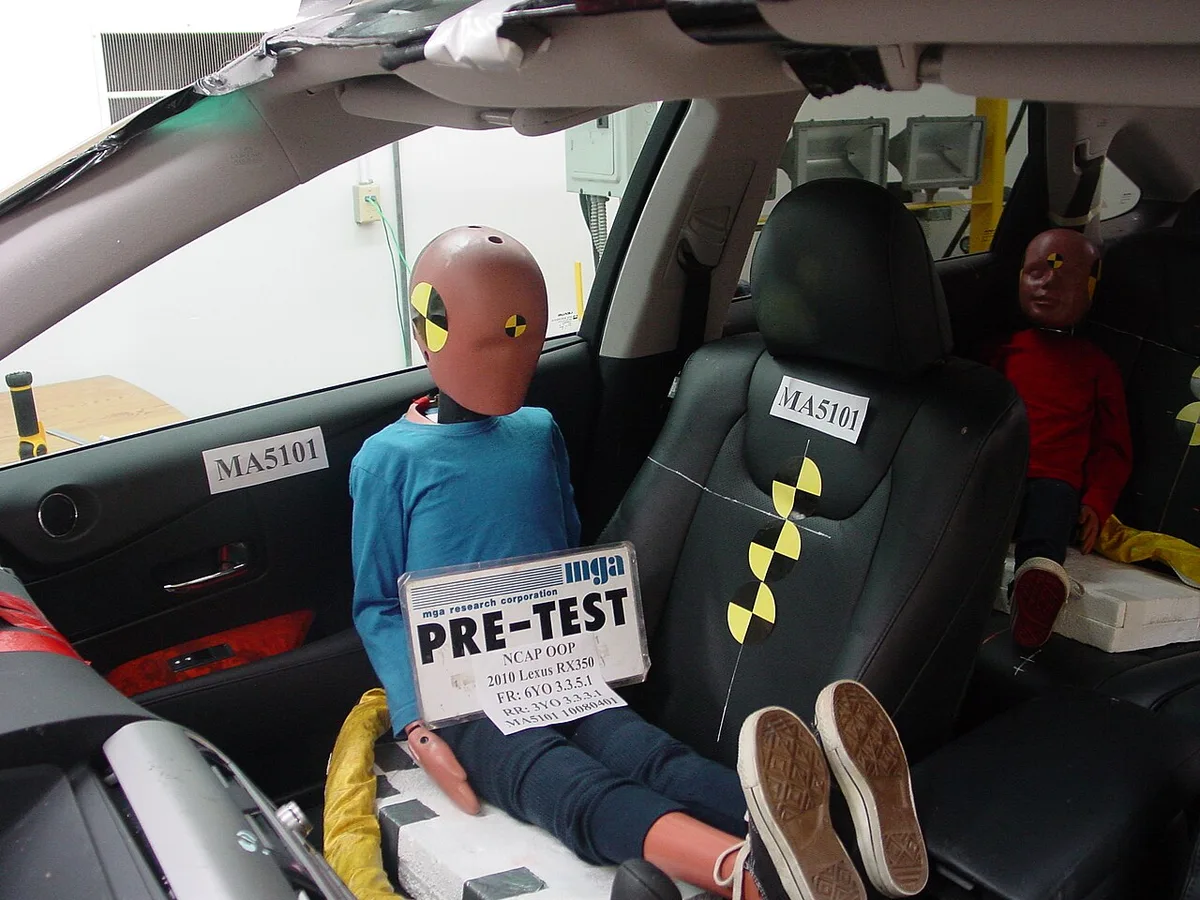
Image source: Wikimedia Commons / MGA Research Corporation, NHTSA, Alpha Technology Associates Inc.
When a child rides forward-facing prematurely, a crash violently throws their heavy head outward. The internal harness restrains their torso entirely. This causes the neck to stretch dangerously far beyond its mechanical limit.
In severe cases, this aggressive stretching causes internal decapitation.
Rear-facing positioning completely changes these crash physics. The solid back of the safety seat absorbs the extreme impact momentum. It cradles the head, neck, and spine in a straight physical alignment.
The plastic shell acts like a protective catcher mitt against the forward force.
Side-impact collisions also pose severe risks for forward-facing infants. A rear-facing shell blocks flying glass and intrusion debris highly effectively. To protect airway positioning on the road, keeping the proper recline angle backward is absolutely necessary.
3 Hard Limits: How to Know Your Car Seat is Officially Maxed Out
Transitioning a baby depends entirely on three distinct objective measurements. Every specific child restraint dictates a maximum weight capacity, a maximum height limit, and a head clearance rule. You only need to reach one of these three limits to necessitate a change.
Do not wait for your child to hit all three milestones simultaneously. The exact moment your toddler outgrows a single parameter, the rear-facing position becomes unsafe. You must check these limits regularly as your toddler gains mass.
1. Hitting the Specific Weight Limit
Weight is the most common reason parents finally flip their child forward. Standard infant bucket carriers often max out around 30 pounds. Once outgrown, a multi-mode model offers significantly extended weight limits.
You must check your exact model manual for the actual ceiling limit. Many high-end convertibles allow a child to ride backward up to 50 pounds. You can weigh your child at home by holding them on a digital scale.
Subtract your own weight to find their exact measurement accurately.
Never exceed the printed weight limit by even a single pound. Crash testing depends heavily on maximum load thresholds being respected. The plastic shell and harness mounting points could easily fracture under excess crash force.
2. Reaching the Manufacturer’s Height Limit
Height is just as critical as overall body mass. Most seats restrict rear-facing usage once a child reaches 40 to 49 inches tall. You will find this strict ceiling listed directly beneath the weight limit on the warning sticker.
Tall children might easily outgrow the height limit long before hitting the weight limit. You must measure your toddler barefoot against a flat painted wall. Use a rigid metal measuring tape to ensure total accuracy.
If they exceed the stated height limit, you must turn them.
This ensures the internal structural supports still align correctly with their frame. Exploring new compact seats for road trips can give you an idea of maximum height capacities currently available. You may need to upgrade seats to keep a tall child rear-facing longer.
3. Exceeding the “One-Inch Rule” for Head Clearance
The one-inch rule regularly trips up well-meaning parents. Even if your child remains under the weight and height limits, their torso length might disqualify them. You must check exactly where the top of their head sits against the upper shell.
There must be at least one full inch of hard shell above the top of their bare head. This empty gap prevents them from ramping up and striking the vehicle roof during a rebound. Use a solid wooden block or ruler to measure this exact distance.
If their head is closer than one inch to the top plastic edge, the current orientation is void. They require a forward-facing setup immediately to maintain safety. You should also verify there are no hidden hairline fractures by checking structural integrity regularly.
Crucial Steps for a Safe Forward-Facing Installation
Once your child officially outgrows their rear-facing limits, you must install the seat differently. Simply spinning the plastic base around is not remotely enough. The internal harness mechanics and vehicle attachment methods change drastically for a forward setup.
Our research confirms that dangerous installation errors spike sharply during this transition phase. You must adjust multiple hidden settings to keep the child secure. Tracking specific age milestones helps you prepare for these complex mechanical adjustments in advance.
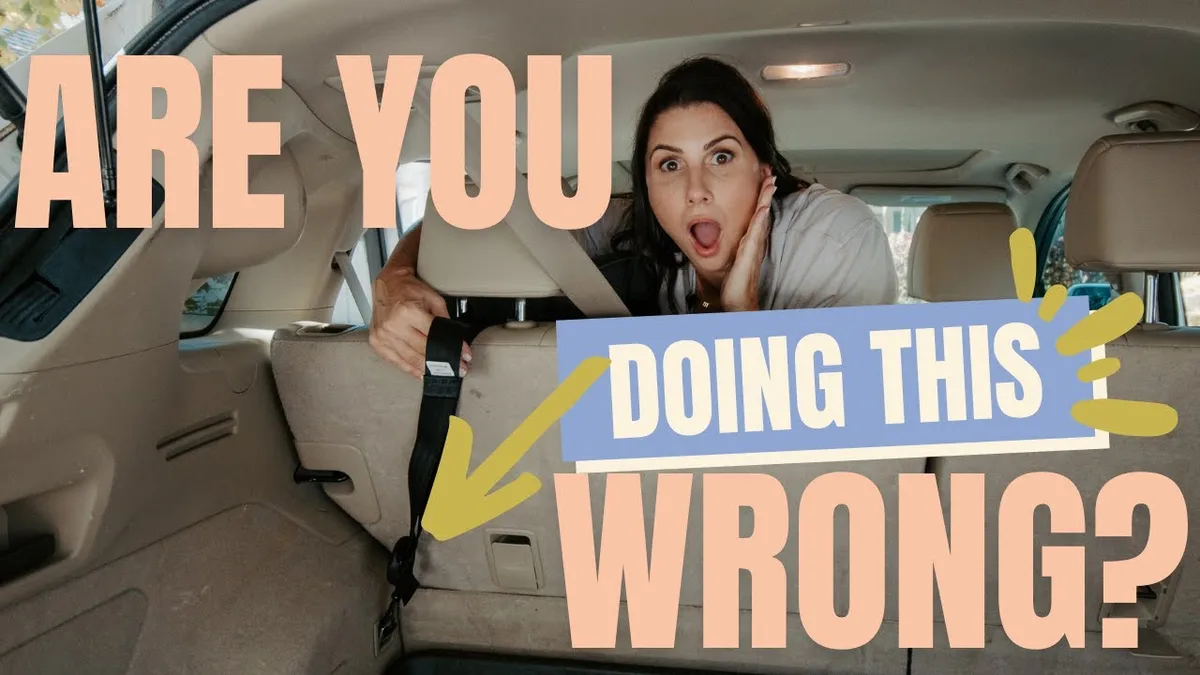
Image source: YouTube / Safe in the Seat (YouTube thumbnail (fair-use with source credit))
Here are the critical hardware steps to execute a perfect forward-facing installation.
Move the Harness Straps Above the Shoulders
Rear-facing harnesses must sit at or slightly below the child’s shoulders. This prevents the child from sliding dangerously upward in a crash. Forward-facing harnesses work the exact opposite way.
You must thread the forward harness straps at or slightly above the child’s shoulders. This holds them firmly against the backrest during a sudden stop. Check these routing slots frequently as your toddler grows taller.
Secure the Top Tether Anchor
You must never skip the top tether when installing a forward-facing unit. The top tether is a strong canvas strap attached to the upper back of the car seat. It hooks securely into a dedicated tether anchor point behind the main vehicle seat.
Using the top tether reduces overall head excursion by up to eight inches. Head excursion is exactly how far the baby’s head throws forward into the cabin during impact. Check your specific car owner manual to locate the correct tether anchors.
Transition from Lower Anchors to Seatbelts
Many parents love the extreme convenience of the lower anchor system. However, lower anchors carry a strict combined weight restriction limit. The metal hoops can physically break if the child and the seat weigh more than 65 pounds together.
Since forward-facing children are physically heavier, you usually need to switch to a standard seatbelt installation. A locked automotive seatbelt is an incredibly strong restraint method. Make sure to engage the internal seatbelt locking mechanism to get a rock-solid installation.
Frequently Asked Questions
What happens if my baby’s legs look cramped while rear-facing?
Cramped legs are entirely a cosmetic issue and not a safety hazard. Toddlers are extremely flexible and naturally find comfortable riding positions. They might cross their legs or drape them playfully over the sides.
There are no recorded instances of catastrophic leg injuries caused specifically by rear-facing car seats.
Can I turn my child forward if they get car sick?
Chronic motion sickness is challenging, but physical safety must come first. Turning a child prematurely to prevent vomiting introduces fatal crash risks. You can actively combat car sickness by opening windows briefly.
Keeping the physical cabin cool and avoiding large heavy meals before road trips also helps immensely.
Do I need a completely different car seat for forward-facing?
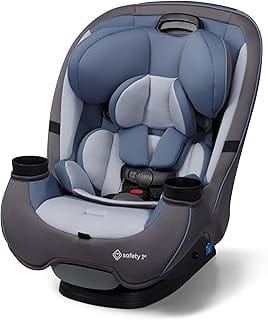
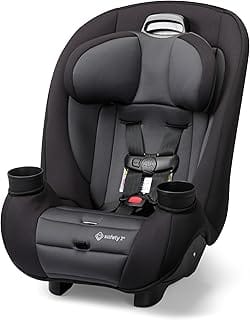
Most modern parents rely on a convertible car seat. A convertible model safely transitions from rear-facing to forward-facing automatically. If your child completely outgrows an infant bucket carrier, you will need to buy a convertible seat next.
Always thoroughly check the printed manual to ensure the model supports both structural modes.
Why do other countries keep children rear-facing so much longer?
Scandinavian countries culturally mandate rear-facing until age four or five. Their child passenger crash fatality rates are drastically lower than in the United States. They rely exclusively on seats engineered with far higher weight and height capacities.
Embracing this global extended standard drastically improves your child’s outcome in a severe accident.
How do I know if my standard seatbelt is locked correctly?
Pull the shoulder belt all the way out smoothly until it physically stops moving. Let it retract back into the wall slowly. You should hear a faint ratcheting clicking sound as it feeds back in.
Pull on the lap belt sharply to ensure it catches tightly across the shell.
Where can I get my child’s car seat hardware visually verified?
You can easily find a certified Child Passenger Safety Technician in your local area. Many local fire stations and regional hospitals host free safety inspection events monthly. A highly trained technician will accurately spot hidden routing errors.
They can teach you how to lock the seatbelt mechanism perfectly.
Busting the “Folded Legs” Myth (And Other Common Caregiver Concerns)
Parents often panic when they see their toddler’s legs touching the back seat. Caregivers assume cramped legs will break during a crash. Crash physics dictate the exact opposite outcome.
A rear-facing position actually protects the lower extremities much better than a forward-facing setup.
During a severe frontal collision, a forward-facing child’s legs fly outward violently. Their heavy feet can strike the back of the front seat with immense force. When a child rides backward, their legs safely tuck against the soft vehicle seat cushion.
The rebound impact is significantly lower.
If your toddler complains about leg comfort, they simply need to adjust their posture. Children sit cross-legged comfortably for hours while playing on the floor. Their flexible joints easily adapt to confined spaces in the car.
You should never compromise cervical spine protection just to give their legs more visual room.
Other common concerns include motion sickness and reduced caregiver visibility. Managing cabin airflow helps reduce nausea much more effectively than turning the seat early. You can avoid using heavy aftermarket accessories inside the car to ensure proper ventilation reaches the child.
Potentially Dangerous Mistakes to Avoid During the Transition
Flipping the car seat forward fundamentally changes how it absorbs crash energy. Caregivers frequently make critical installation errors during this phase. You must avoid these common pitfalls to keep your toddler secure.
Always recheck your vehicle lower anchor weight limits before proceeding. Many parents leave the lower anchors attached after switching to forward mode. Forward-facing toddlers grow heavy very quickly.
A combined weight of over 65 pounds can easily snap those metal anchor hooks during impact.
Neglecting harness strap height is another critical failure point. Rear-facing straps lock in at or below the shoulders. Forward-facing straps must sit at or slightly above the child’s shoulders.
Leaving the straps in the lower rear-facing slots severely compresses the toddler’s spine in an accident.
Finally, never ignore the tether anchor. Skipping the top tether remains the number one installation error nationwide. The top tether reduces head excursion by up to eight inches.
Leaving it disconnected severely increases the risk of fatal head trauma.
Getting Your Forward-Facing Setup Verified by a Certified Technician (CPST)
Even experienced parents make subtle car seat installation mistakes. You should never guess when your child’s life is on the line. A certified Child Passenger Safety Technician provides free professional verification of your hardware setup.
These federally trained experts know exactly how to interpret vague manufacturer manuals. They will double-check your seatbelt lock-offs and tether routing. You can locate a local CPST through local fire departments, regional hospitals, or public safety offices.
Schedule an appointment the very same week you flip the seat forward. A technician will physically push on the base to check for loose movement. The seat must not shift back and forth by more than one inch at the belt path.
If it wiggles excessively, the technician will teach you the proper leverage techniques to secure it.
Testing safe containment early is critical for active toddlers. Finding a secure fit here translates nicely when choosing the safest seating for younger infants at home as well. Building strict safety habits protects your child effectively inside and outside the vehicle.
Common Questions About Forward-Facing Transitions
What is the absolute lowest legal age to turn a car seat forward?
State laws vary significantly regarding minimum age requirements. Most US states mandate children remain rear-facing until they reach exactly 24 months old. However, this legal baseline falls far below optimal medical safety standards.
Maxing out the manufacturer limits provides significantly more crash protection than following state minimums.
Do forward-facing weight limits ever expire?
Older seats absolutely expire eventually. Your car seat plastic degrades over time due to intense temperature fluctuations inside the vehicle. You must check the bottom of the plastic shell for a stamped expiration date.
If your unit is expired, you must cut the straps and throw it away immediately.
Can my three-year-old ride rear-facing safely?
A three-year-old absolutely can ride rear-facing if they fit the seat parameters. Many modern convertible models easily support extended rear-facing up to 50 pounds. Delaying the forward transition past age three drastically lowers the risk of catastrophic neck trauma.
Keep them backward until they surpass either the maximum height or weight limit.
Does my pickup truck have a top tether anchor?
Pickup trucks must have top tether anchors by federal law. Many truck models use a fabric loop system rather than a standard metal ring behind the headrest. You must weave the car seat tether strap through the designated loop precisely.
Check your specific truck owner manual to correctly interpret these unique routing instructions.