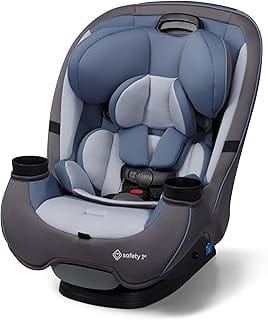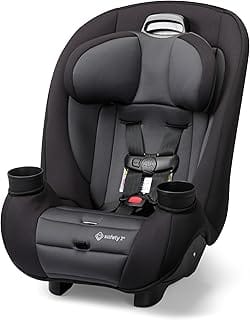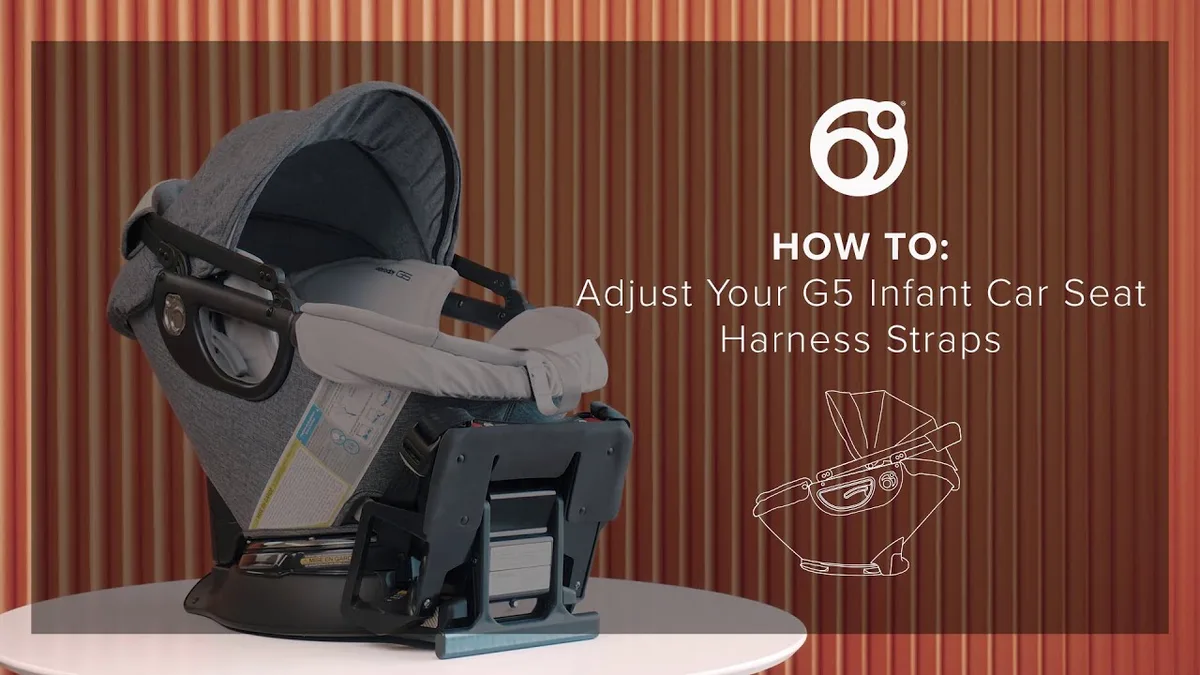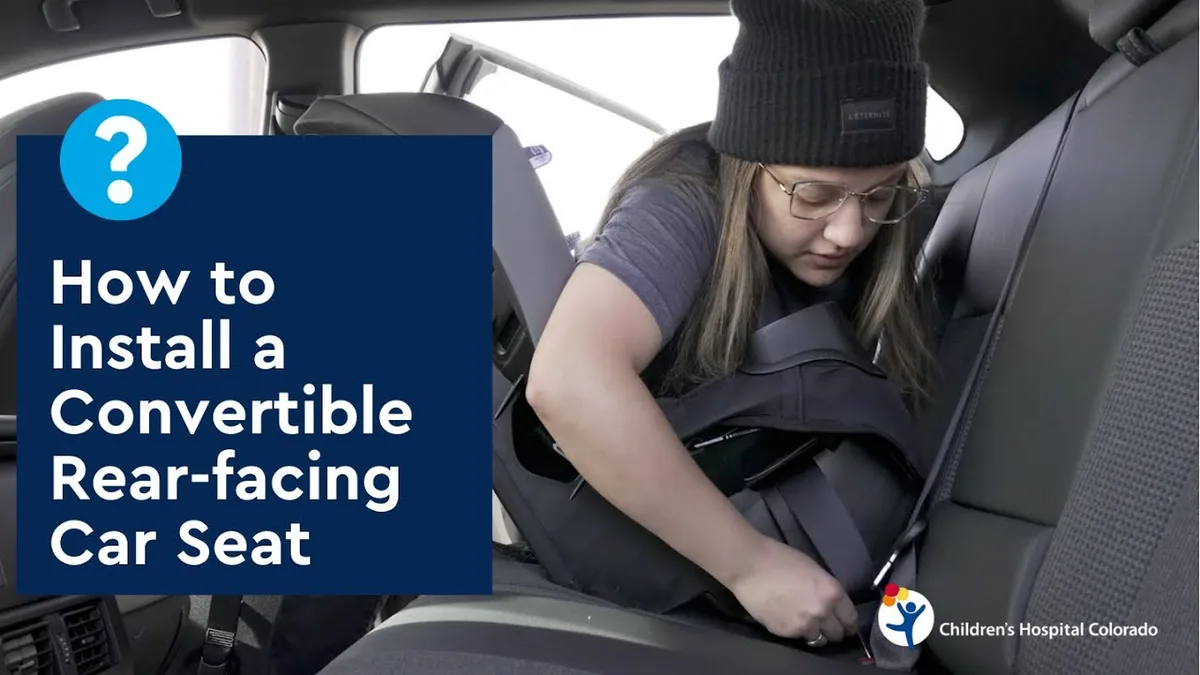

If you’re wondering, “can I use an expired car seat,” the short answer is no. That date stamped into the plastic isn’t a suggestion. It marks the end of the manufacturer’s safety guarantee for your child restraint system.
Our research shows that under Federal Motor Vehicle Safety Standard 213 (FMVSS 213), these seats must meet strict crash performance requirements. Thermal cycling and UV exposure break down materials long before visible cracks appear. Let’s look at exactly why reusing old gear puts kids at risk.
can i use an expired car seat
No, you cannot safely use an expired car seat. The plastic shell degrades over time. Harness straps stretch and lose strength.
Manufacturer specifications confirm reduced crash protection after expiration. Replace it immediately to keep your child safe.
Why Car Seats Expire (It’s Not a Marketing Trick)
A lot of parents assume expiration dates are just a way to sell more gear. They aren't. A child restraint system is a highly engineered safety device made of specific polymers.
Those materials have a hard physical limit.
The main shell is typically molded from high-density polypropylene (HDPE). Over six to ten years, extreme heat inside parked vehicles causes polymer chain scission. This means the molecular chains holding the plastic together literally snap apart.
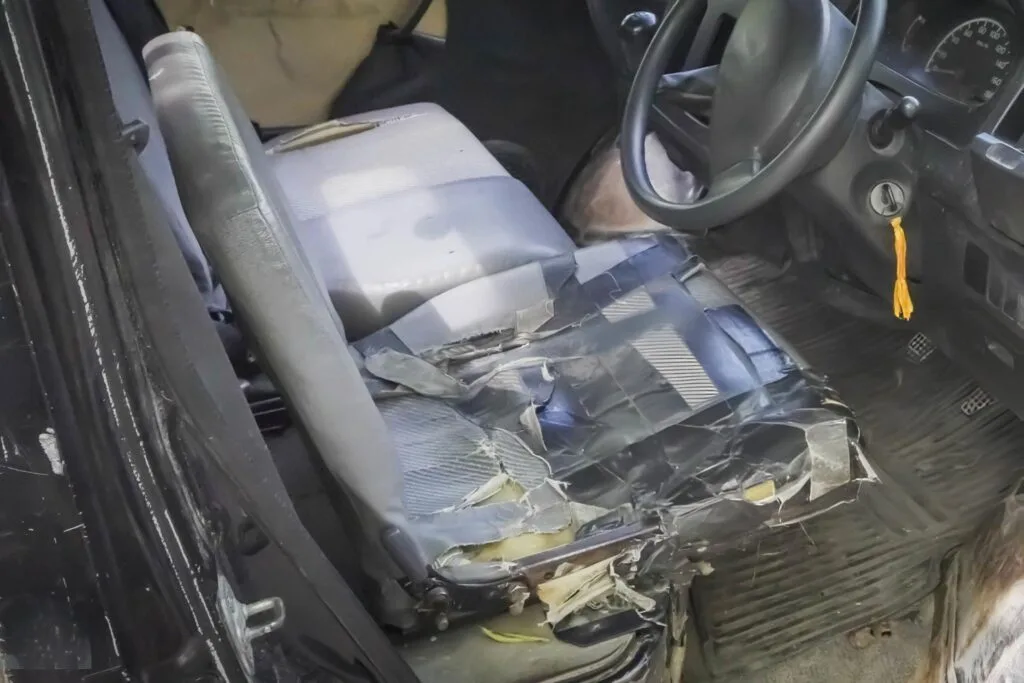
Image source: Web (Bing) / knowillegal.com (Web image (fair-use with source credit))
When those chains break, the plastic loses its flexibility. It becomes brittle. In a sudden 35 mph collision, brittle plastic doesn’t absorb kinetic energy.
It cracks or shatters completely.
The foam lining matters just as much. Expanded polystyrene (EPS) foam sits inside the shell to cushion your child’s head and spine. Over years of temperature swings, this foam dries out and crumbles.
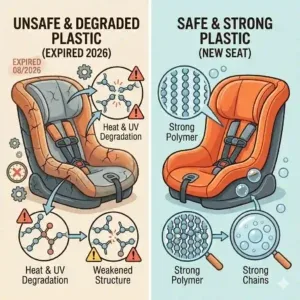
Image source: Web (Bing) / whizkiddo.com (Web image (fair-use with source credit))
It stops absorbing impact forces effectively. You won’t see this damage by just looking at the seat. The degradation happens entirely at a microscopic level.
Other components fail quietly too. Five-point harness webbing stretches out over time. Buckle mechanisms get sticky or wear down internally.
LATCH connectors fray where they rub against vehicle anchors.
Safety standards also evolve constantly. As of 2026, crash testing technology is far more advanced than it was eight years ago. Older seats simply don’t meet current engineering benchmarks.
The National Highway Traffic Safety Administration updates federal motor vehicle safety guidelines regularly. An older model might lack modern side-impact protection features entirely. That’s why manufacturers set firm limits on how long their products last.
How to Find Your Car Seat’s Manufacture and Expiration Date
Finding the exact lifespan of your gear takes a few minutes. You need to locate the date of manufacture (DOM) first. Manufacturers stamp or sticker this information directly onto the seat.
Start by flipping the seat over or checking the back. Look for a white or yellow sticker near the barcode. It usually lists both the DOM and the final expiration date.
Some brands skip the sticker. Instead, they mold the date directly into the bare plastic shell. Run your fingers along the bottom or back to feel for raised numbers.
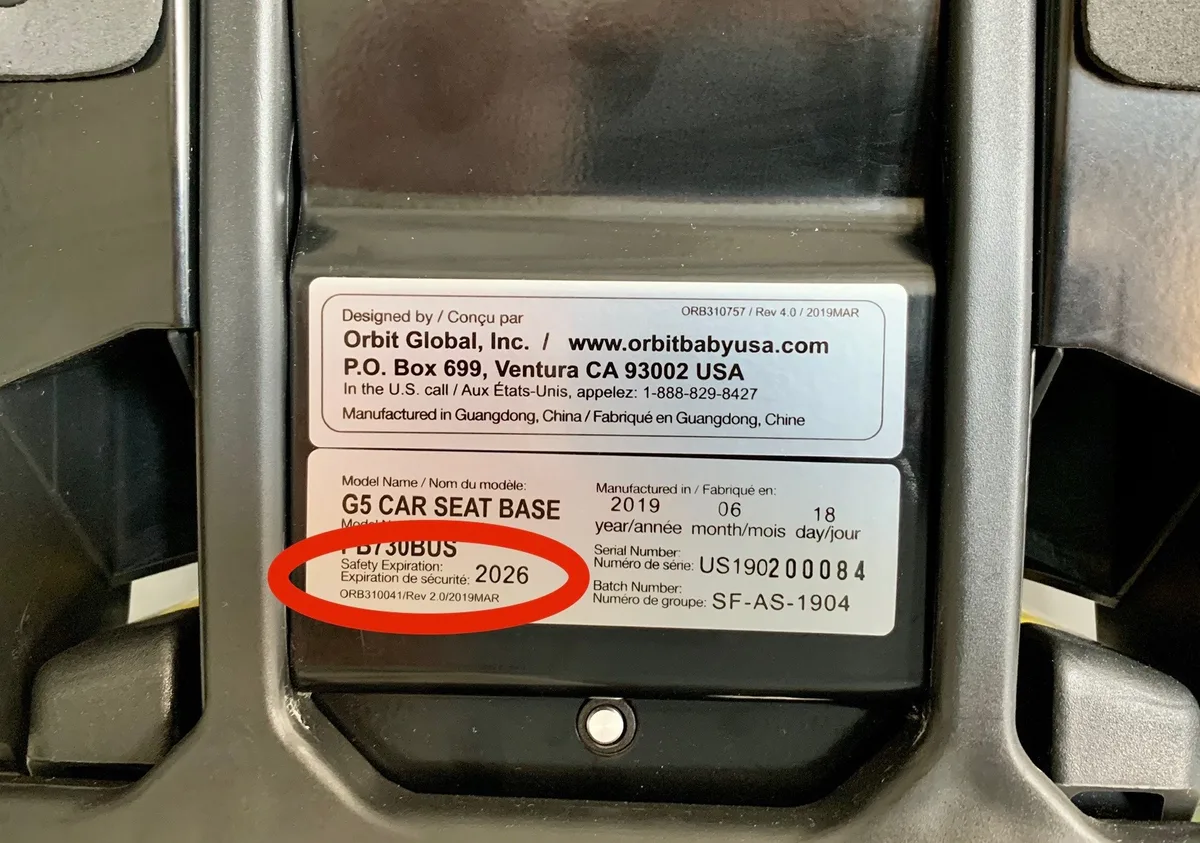
Image source: Web (Bing) / cefqpngn.blob.core.windows.net (Web image (fair-use with source credit))
If you still have the owner’s manual, check there. It will state the exact number of years the model is certified for use. Remember that the clock starts ticking on the DOM, not the day you bought it.
Different brands build their seats to last different amounts of time. Here is what our research found regarding typical lifespans across major manufacturers. Always verify with your specific model's documentation.
| Brand | Typical Lifespan | Where to Find the Date |
|---|---|---|
| Graco | 7 to 10 years | Sticker on the back or bottom |
| Chicco | 6 years | Sticker on the bottom |
| Britax | 6 to 10 years | Sticker near the harness path |
| Diono | 8 to 10 years | Sticker on the underside |
| Evenflo | 6 to 8 years | Sticker on the back or bottom |
| Maxi-Cosi | 10 years | Sticker on the base or shell |
If you bought the seat secondhand and can’t find a date anywhere, treat it as expired. Don't guess. If you're transitioning between stages soon, understanding when kids outgrow infant models helps you plan your next purchase without relying on old gear.
You should also calculate the timeline carefully if you reuse a seat for a second child. Knowing how many months babies typically stay rear-facing prevents you from pushing an expiring seat past its safe window.
The Emergency Exception: Expired Seat vs. Lap-Holding
We get asked about emergencies all the time. What if you absolutely must drive your kid to the hospital right now? Your only available seat passed its expiration date last month.
Here is the reality. An expired car seat is marginally better than zero restraint. Holding a 40-pound toddler in your lap at highway speeds is incredibly dangerous.
Your body weight will crush them during a sudden stop.
If it is a true life-or-death emergency, use the expired seat. But let’s be honest about daily driving. School drop-offs and grocery runs are not emergencies.
Swap the seat out for regular trips.
Aggregate user reviews show some parents justify using old seats because they "look fine." Looks mean nothing here. You cannot see micro-fractures in a high-density polypropylene shell with your naked eye.
Choosing a reliable replacement doesn't require spending a fortune. Checking options for vehicles that fit child restraints well ensures whatever new seat you buy actually installs tightly. A loose new seat is almost as bad as an expired one.
Also consider your child's positioning. Knowing the safest time to turn them around matters just as much as the seat's expiration date. Outdated seats often lack the structural support needed for forward-facing toddlers anyway.
How to Safely Dispose of or Decommission an Expired Car Seat
Never just toss an expired seat in the dumpster or leave it on the curb. Another parent might pick it up thinking they scored free gear. They would unknowingly put their own child in serious danger.
You need to make sure nobody can ever use it again. Follow this decommissioning process exactly. It takes less than five minutes and permanently ruins the seat's functionality.
- Cut the harness straps. Take heavy-duty scissors and snip the five-point harness webbing. Cut it in multiple places so it cannot be threaded back through the slots.
- Remove the padding. Strip off the fabric cover and pull out the EPS or EPP foam lining. Throw the foam away separately.
- Mark the plastic shell. Take a thick black permanent marker. Write "EXPIRED, DO NOT USE, UNSAFE" in massive letters across the front and back of the bare plastic.
- Bag the pieces. Put the destroyed components into dark trash bags. Keep them out of sight so no one tries to salvage parts.
- Look for trade-in events. Some big-box retailers run periodic recycling programs. They take old seats and properly recycle the raw materials instead of sending them to landfills.
Retailers like Target and Walmart typically host these trade-in events twice a year. Check their official sites before your next haul. You destroy the unsafe seat while keeping toxic plastics out of the environment.
Proper disposal goes hand in hand with general upkeep while the seat is still active. Learning how to wash the fabric correctly extends the usable life of your current gear. Just remember that cleaning doesn't reset the expiration clock.
If you want deeper background on material breakdown, reading up on why these safety limits exist gives you the full engineering picture. Understanding the science makes it much easier to throw away a seat that still looks perfectly clean.
Common Mistakes Parents Make With Older Car Seats
Reusing old gear usually happens with the best intentions. You want to save money or help out a family member. But our research shows that good intentions don’t prevent structural failures during a crash.
The biggest mistake is trusting your eyes over the date of manufacture. A seat stored in a climate-controlled closet might look flawless after eight years. That same seat left in a hot trunk undergoes severe thermal cycling every single day.
Heat and UV radiation destroy high-density polypropylene invisibly. You cannot see polymer chain scission happening inside the shell. By the time plastic looks faded or chalky, it lost its strength years ago.
Another common error involves mixing parts from different seats. Parents often lose a buckle or a harness strap. They grab a replacement piece from an older model sitting in the garage.
Child restraint systems are tested as complete units. Swapping a five-point harness from one brand into another voids all safety certifications. The geometry won't match up correctly under sudden kinetic energy transfer.
Buying secondhand seats online is equally risky. You have no way to verify the crash history. Even a minor fender bender at 10 mph can compress expanded polystyrene (EPS) foam permanently.
That crushed foam will not protect your child’s spine in a real collision. Manufacturer specs confirm that most brands require full replacement after any moderate or severe impact. If you aren't sure about the exact limits for rear-facing setups, check the manual before reusing anything.
Finally, people forget to register their seats. Unregistered seats don't receive recall notices. You might be using expired gear that also has a known factory defect.
Always register new purchases directly on the manufacturer's website. It takes two minutes and ensures you get critical safety updates immediately. Keeping track of these details matters just as much as knowing how a baby should sit properly while strapped in.
Frequently Asked Questions
Can I use a car seat that expired one month ago?
No, you cannot safely use a car seat that expired even one month ago. Manufacturer warranties and FMVSS 213 compliance end exactly on that stamped date. The materials degrade continuously.
One extra month pushes the seat outside its certified engineering limits.
Do car seats expire if they are never used?
Yes, unused car seats still expire. The clock starts ticking on the date of manufacture, not the day you open the box. Thermal cycling and UV exposure affect the high-density polypropylene shell regardless of whether a child sits in it.
Is it illegal to use an expired car seat?
Most state laws do not explicitly ban using an expired car seat by name. However, traffic statutes generally require parents to follow manufacturer instructions. Since every manual states not to use the seat past its expiration, doing so violates those usage requirements.
Can I donate an expired car seat to charity?
Never donate an expired car seat to a thrift store or charity. Well-meaning organizations might hand it to another family who doesn't know how to check the date. Always decommission the seat by cutting the straps and marking the shell clearly.
Does the expiration date include the booster seat stage?
Yes, the expiration date applies to the entire lifespan of an all-in-one or convertible car seat. If a seat expires in 2026, you cannot legally or safely use it as a booster afterward. The internal structure degrades uniformly across all configurations.
What happens to a car seat during a crash if it is expired?
During a collision, an expired seat fails to absorb kinetic energy properly. The brittle plastic shell may crack instead of flexing. The compressed EPS foam won't cushion the child's head.
This drastically increases the risk of severe injury compared to a current model.