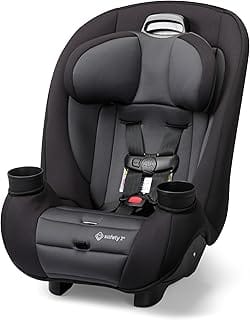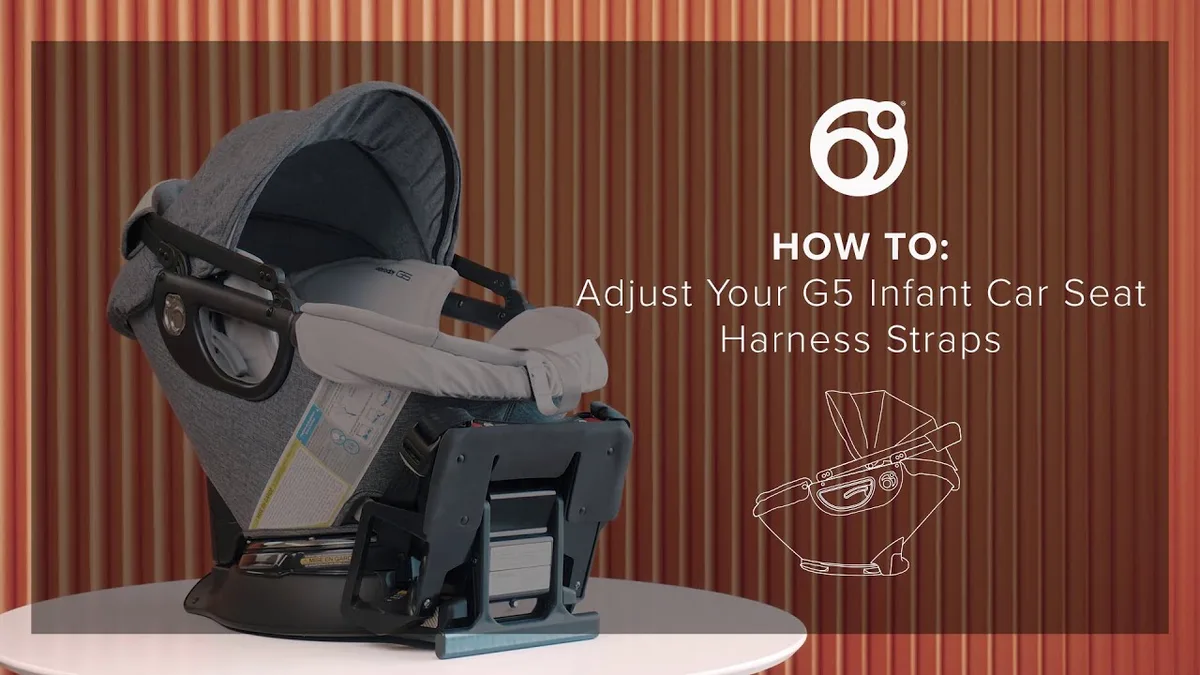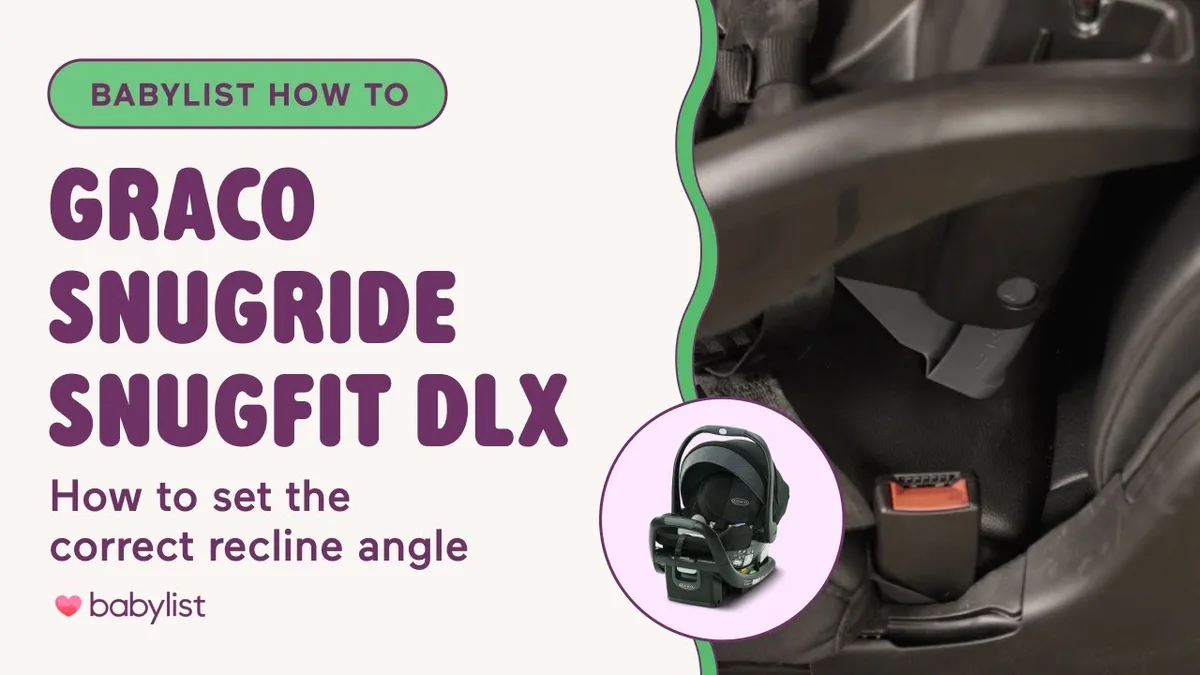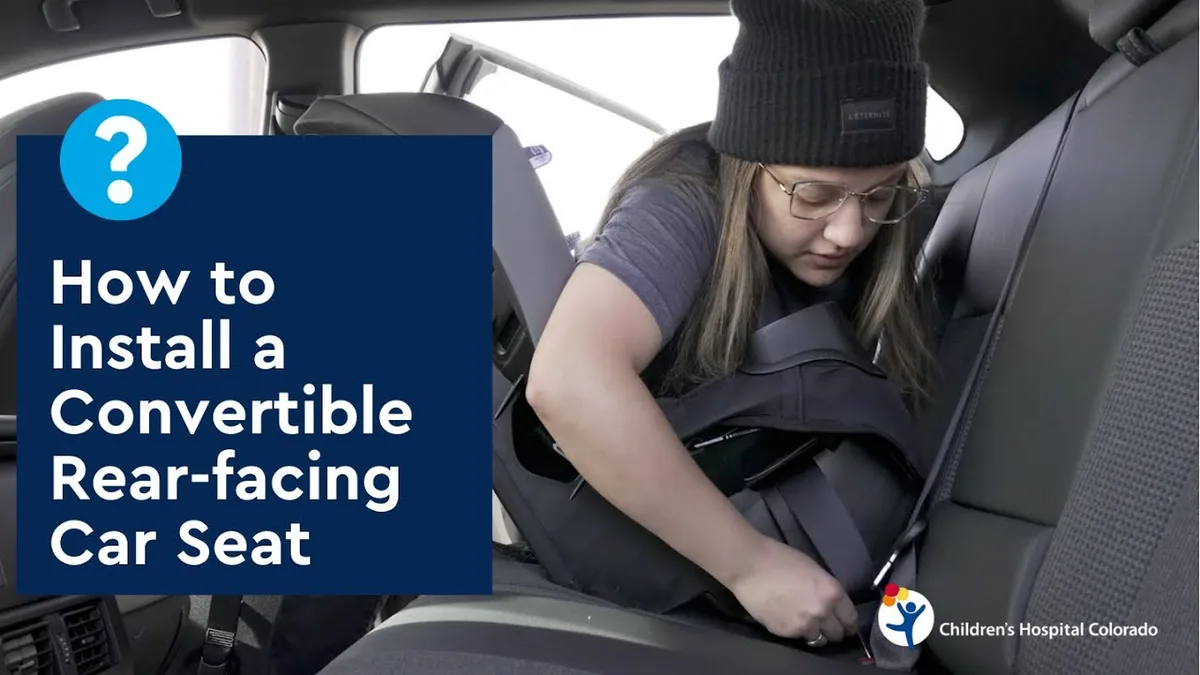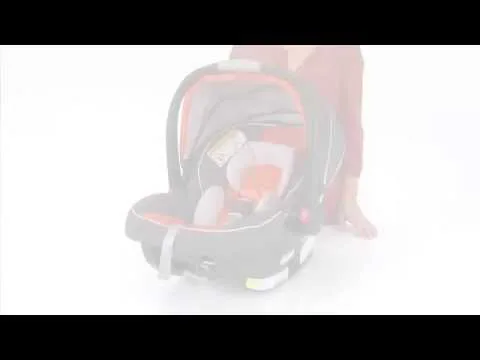

If you are booking a flight and wondering, "do you need a car seat on a plane," the answer depends entirely on your child's age and ticket type. Airlines legally allow children under two to fly as lap infants without any restraint at all. But safety experts strongly advise against holding a baby during unexpected turbulence.
Per Federal Aviation Administration guidelines, any approved Child Restraint System must be 16 inches wide or less to fit standard economy seats. Manufacturer specifications confirm that seats lacking specific aviation certification stickers will get rejected by flight crews. Let us walk through exactly how to decide what your family needs before takeoff.
do you need a car seat on a plane
You do not legally need a car seat for children under two flying as lap infants. Children over two must have their own purchased ticket. A ticketed child requires an approved Child Restraint System or aircraft seatbelt.
The safest option is always using an approved restraint.
The Quick Answer: Do You Actually Need a Car Seat on a Plane?
The legal requirement and the safest practice are two completely different things here. If your child is under two years old, airlines let them fly free as a lap infant. You just hold them in your arms for the entire flight.
No extra ticket required.
If your child is two or older, they must have their own purchased seat. At that point, they need to be secured. You can use the standard airplane seatbelt or bring an approved car seat.
That is the baseline rule as of 2026.
But physics does not care about airline ticketing policies. During severe clear air turbulence, a 20 pound baby becomes a 100 pound projectile. Adult arms simply cannot generate enough force to hold onto a child during sudden altitude drops.
That is why buying a separate seat and bringing a restraint is the only way to guarantee real protection.
The Decision Tree: Lap Infant, Ticketed Toddler, or CARES Harness?
Figuring out what gear to pack comes down to three main variables. Those are your child's weight, their age, and whether you bought them a seat. Use this workflow to find your exact situation.
- Under 2 years old, no ticket purchased: You are flying with a lap infant. A car seat is not legally required. However, our research shows bringing one and asking for an empty row is much safer.
- Under 2 years old, ticket purchased: You absolutely need a hard shell car seat. It must face the correct direction based on your child's weight. Rear facing is standard for smaller babies.
- Between 22 and 44 pounds, ticket purchased: You have two choices. You can bring a forward facing car seat or use the CARES harness. The CARES harness is a soft strap system weighing about one pound.
- Over 40 pounds, ticket purchased: Most kids this size fit securely in the standard aircraft lap belt. You likely do not need a car seat anymore.
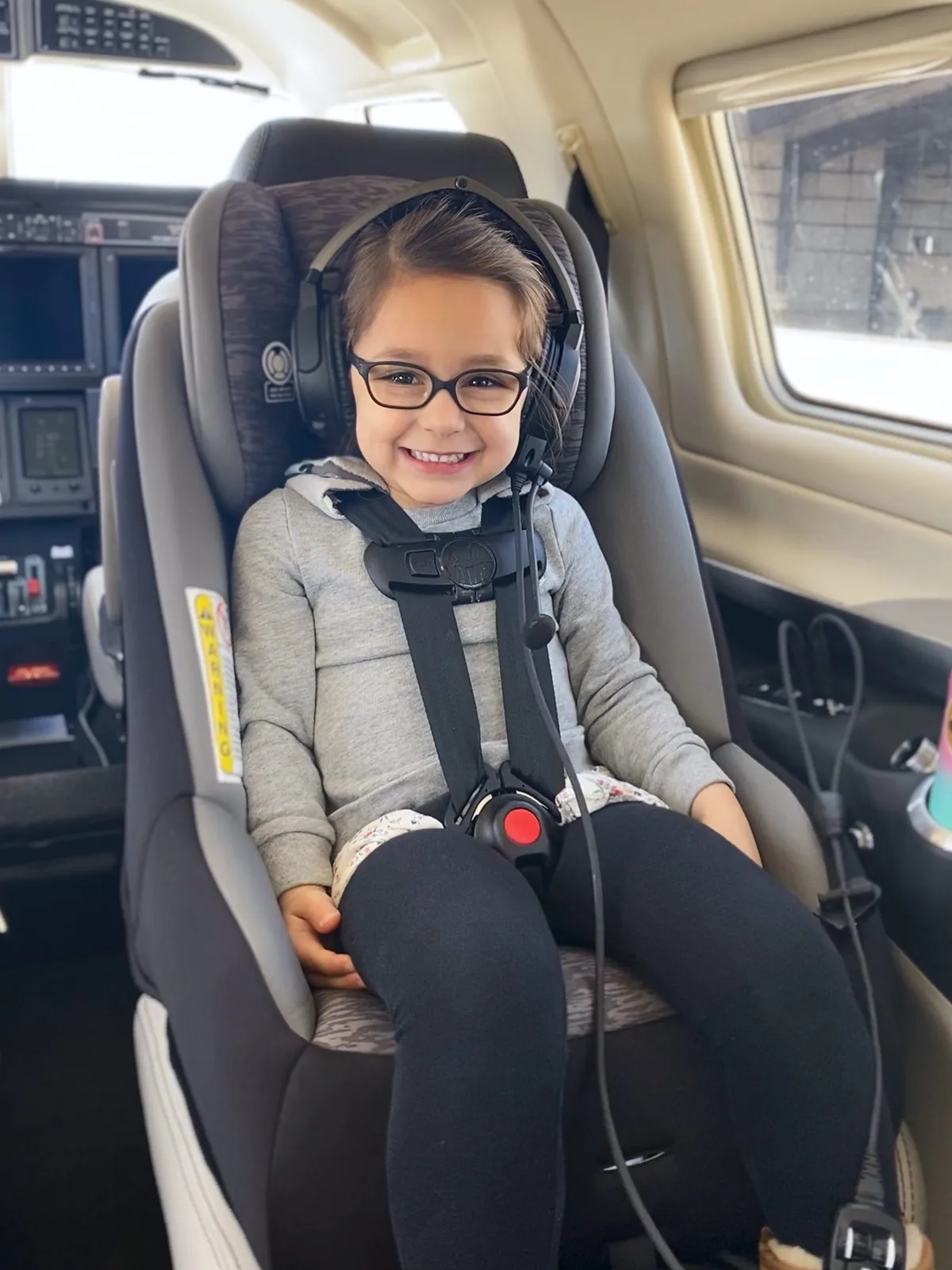
Image source: Web (Bing) / thedailyautomotive.com (Web image (fair-use with source credit))
If you fall into that middle category between 22 and 44 pounds, the choice matters. Hard shell seats offer maximum crash protection and double as your ground transport at your destination. The downside is hauling heavy gear through security checkpoints.
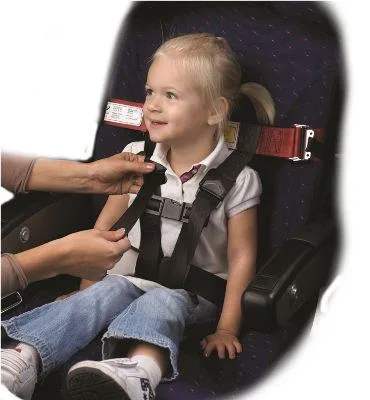
Image source: Web (Bing) / littlegulliver.com.au (Web image (fair-use with source credit))
The CARES harness solves the bulk problem completely. It loops over the airplane seatback and connects directly to the existing lap belt. Aggregate user reviews show parents love it for short flights.
Just remember it does not work if you need a seat for a rental car later. Knowing when your child outgrows their infant carrier helps you plan which option fits best.
| Restraint Type | Weight Range | Requires Purchased Seat | Best For |
|---|---|---|---|
| Lap Holding | Under 2 years | No | Budget travel on empty flights |
| Hard Shell CRS | Birth to 40+ lbs | Yes | Maximum safety and destination use |
| CARES Harness | 22 to 44 lbs | Yes | Light packing and older toddlers |
| Aircraft Belt | Over 40 lbs | Yes | Larger children who sit still |
Why the "Lap Infant" Rule Fails During Severe Turbulence
Airlines allow lap infants because it saves parents money. It has nothing to do with actual passenger safety testing. The Federal Aviation Administration explicitly urges parents to use a government approved restraint instead of holding a baby.
You can review their full safety guidance directly on faa.gov.
Turbulence is the leading cause of non fatal injuries on commercial flights. Clear air turbulence happens without warning. There is no visual cue like a storm cloud to give you time to brace.
When the plane drops suddenly, everything not bolted down floats upward.
Holding a baby during that drop relies entirely on your grip strength. In our research, we found that crash test dummies simulating lap infants consistently ripped out of adult arms at forces easily generated by moderate turbulence. A five point harness distributes those forces across the strongest parts of a child's body.
This risk applies even if you think you are strong enough to hold on. Panic changes your physical reactions. Your instinct might be to push the baby away from your body rather than pull them tight.
That is why securing them in a dedicated seat removes human error from the equation. Understanding how long babies typically stay in rear facing seats ensures you pick a model that handles these forces properly.
How to Check If Your Car Seat Is Actually Airplane Approved
Do not assume your everyday car seat works on a plane. Flight attendants have the authority to refuse any restraint that lacks proper labeling. Bringing the wrong seat means gate checking it while your toddler sits unrestrained.
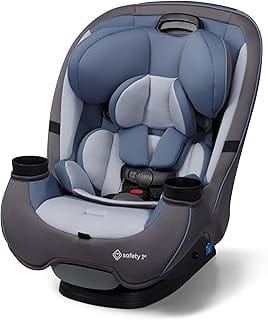
Flip your car seat around and look at the side or back panel. You need to find a specific sticker printed in red letters. It must say "This restraint is certified for use in motor vehicles and aircraft." If the sticker only mentions motor vehicles, it is not approved for flying.
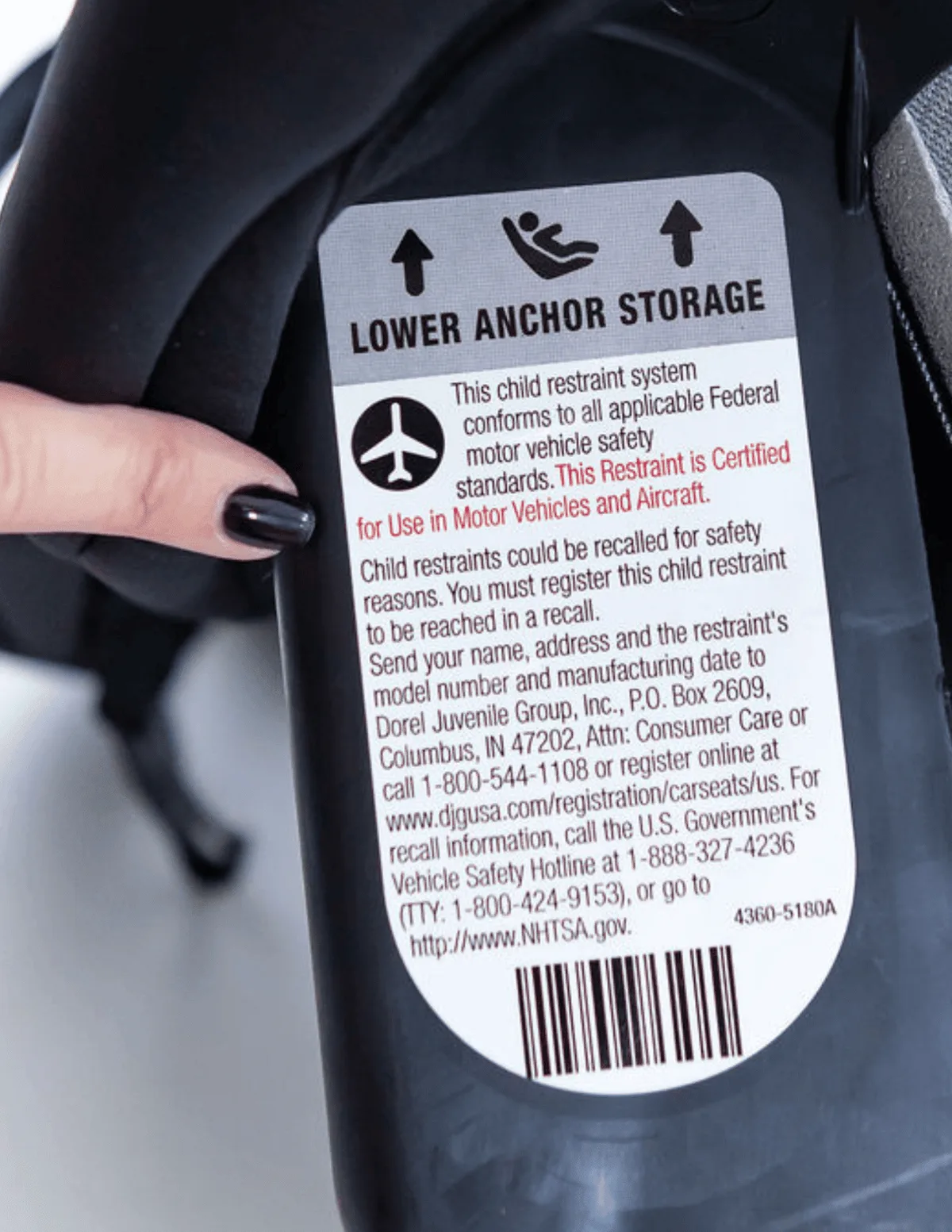
Image source: Web (Bing) / safeintheseat.com (Web image (fair-use with source credit))
Width is the second major hurdle. Standard economy airplane seats measure between 16 and 17 inches wide. Your car seat must be 16 inches wide or less to fit without hanging over the armrests.
Measure the widest part of your seat, usually near the cup holders or base.
If it measures 17 inches, leave it at home. It will block the aisle or prevent the person next to you from sitting down. Crew members will force you to check it.
Always measure before you pack.
Finally, skip the base. Most infant bucket seats come with a click in base for your vehicle. You cannot use that base on an airplane.
The seat must install directly using the aircraft lap belt threaded through the correct path. Verify whether your current seat cover is safe since thick aftermarket padding can interfere with proper belt routing.
Installing Your CRS in Economy Without Blocking the Aisle
Getting the seat onto the plane is only half the battle. Installing it correctly in a cramped row requires planning. You cannot just put a car seat anywhere in the cabin.
Book a window seat. This is a strict rule. A car seat cannot block the exit path for passengers sitting in the middle or aisle seats during an emergency.
If you book an aisle seat, the crew will make you move.
Avoid exit rows completely. You also cannot sit in the row directly in front of or behind an exit row. Bulkhead rows sound appealing but often have fixed armrests.
Fixed armrests make installing a wide car seat nearly impossible.
Request family boarding if your airline offers it. Getting on the plane before the general rush gives you time to thread the belt without blocking fifty angry passengers. Route the airplane seatbelt through the correct belt path on your car seat.
Pull it as tight as physically possible.
A loose car seat shifts violently during turbulence. That defeats the whole purpose of bringing it. Push your knee into the seat cushion while pulling the belt tight.
Lock the buckle. Give the seat a firm shake at the belt path. If it moves more than an inch, tighten it again.
Choosing a highly rated convertible model designed specifically for travel makes this installation process significantly easier.
International Flights: Belly Belts, Bassinets, and Conflicting Rules
Flying outside the US changes everything about child restraints. The rules you followed on domestic flights often do not apply internationally. You must check your specific airline's policy before packing any gear.
European carriers like Lufthansa or British Airways handle infants differently. Many of them do not allow standard US car seats strapped into cabin seats. Instead, they issue a belly belt or loop belt at boarding.
This is a short strap that clips your baby directly to your adult seatbelt.
The FAA banned belly belts on US airlines years ago. Crash testing showed the adult body crushes the infant during sudden deceleration. European aviation authorities still permit them on many routes.
If you are flying overseas, call the airline directly to ask what they actually provide.
Bulkhead bassinets offer another option for long international routes. These skycots clip into the wall in front of bulkhead rows. They work great for cruising altitude when the seatbelt sign is off.
Manufacturer specs usually cap them at 20 to 25 pounds.
You cannot leave a baby in a bassinet during takeoff or landing. Crew members will make you pick the baby up when turbulence hits. That brings you right back to the lap infant problem we discussed earlier.
Knowing when your child outgrows an infant carrier helps you decide if a bassinet or a ticketed seat makes more sense for your specific route.
Common Mistakes That Get Your Car Seat Rejected at the Gate
Gate agents turn away car seats every single day. Most rejections happen because parents skip basic preparation. Avoiding these errors saves you from checking your expensive seat into the cargo hold.
Bringing a seat without the red approval sticker is the fastest way to get rejected. Flight crews look for those exact words confirming aircraft use. If the sticker faded or peeled off, print the manufacturer manual page showing certification.
Keep it folded inside your diaper bag.
Trying to install a rear facing seat in a row with zero pitch causes huge problems. Economy seats barely recline as it is. A rear facing bucket seat might push the passenger in front of you completely upright.
Airlines can refuse the installation if it impacts other paying passengers.
Using the plastic base designed for your vehicle is another major error. Those bases do not lock into airplane seatbelts safely. You must install the seat directly using the aircraft belt path.
Leave the heavy base at home to save weight anyway.
Arriving late kills your setup time. Families who board last have to wrestle with straps while everyone watches. Always use priority family boarding when the gate agent announces it.
Getting settled early prevents rushed installations and stressed toddlers. If you plan to transition your child to forward facing soon, practice that specific belt routing at home before your trip.
Checking your seat without a padded gate check bag ruins the foam underneath. Baggage handlers throw luggage fast and hard. Even invisible micro fractures compromise crash protection.
Always buy a dedicated travel bag if you think you might need to check it.
Frequently Asked Questions
Can I bring a booster seat on an airplane?
Booster seats require a shoulder belt to function properly. Airplane economy seats only have lap belts. Because of this, flight attendants will not let you use a standard backless or high back booster during flight.
Children over 40 pounds should just use the regular aircraft lap belt instead.
Do airlines charge extra for bringing a car seat?
Airlines do not charge a fee simply for carrying a car seat onto the plane. However, the child needs a purchased ticket to use it in their own seat. If you fly with a lap infant under two, you can sometimes bring the seat for free.
You can only use it if an empty seat remains available after boarding finishes.
Where does the car seat go on the plane?
Car seats must always go in a window seat. Placing one in the aisle or middle blocks emergency exits for other passengers. You also cannot put a restraint system in any exit row.
The row immediately in front of or behind an exit row is also prohibited by federal regulations.
What happens if my car seat does not fit?
If your seat exceeds the 16 inch width limit, the crew will ask you to move it. You will have to gate check the car seat in a protective bag. Your child will then need to sit on your lap if they are under two.
Older children will just use the standard airplane seatbelt.
Is the CARES harness allowed on all airlines?
The CARES harness holds FAA approval for US carriers and works for kids weighing 22 to 44 pounds. International airlines operate under different aviation authorities like EASA. Some foreign carriers do not recognize FAA approved soft restraints.
Always email your specific airline to confirm acceptance before relying entirely on the harness for overseas trips.