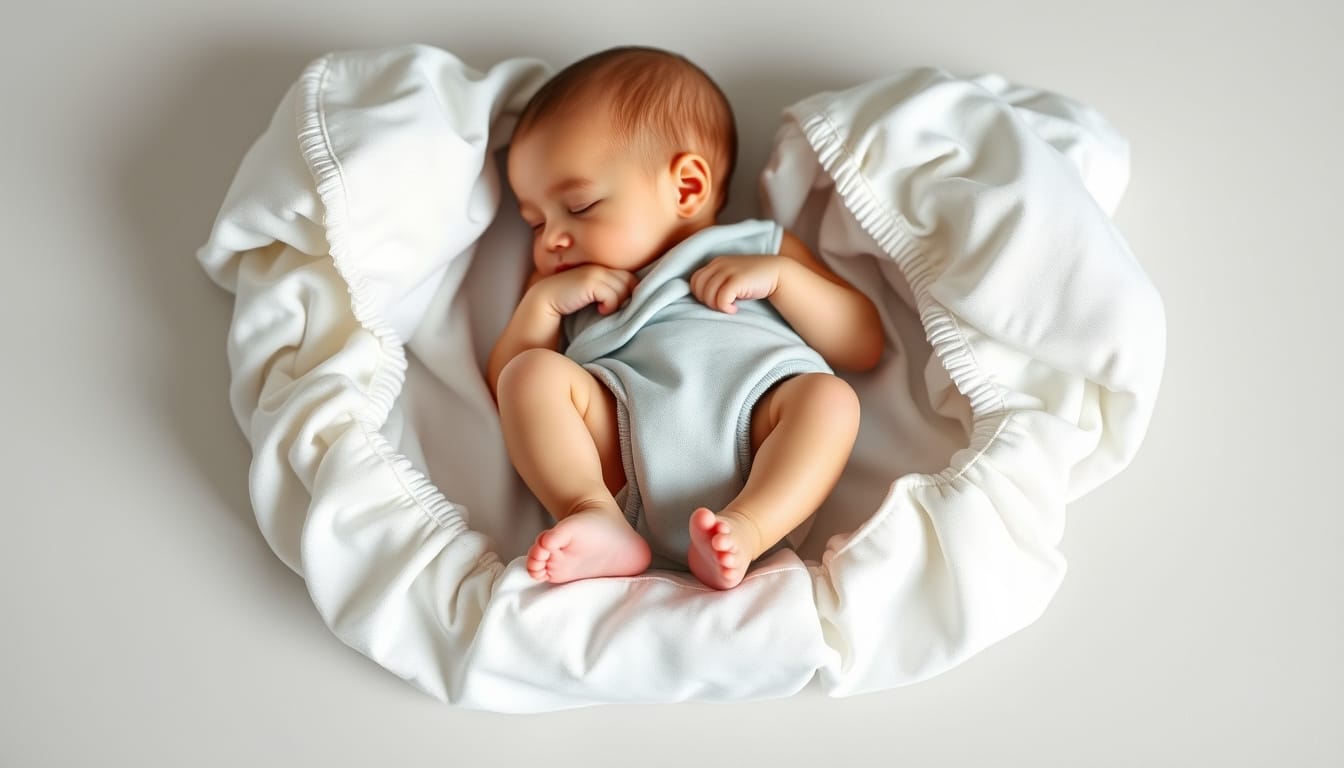


You’ve probably heard the horror stories. A parent buys five giant boxes of newborn diapers during a sale, then their baby jumps from 7 pounds to 10 pounds in three weeks. Suddenly they’re stuck with 400 unused size newborn diapers and a baby who needs size 1.
The exact question “How Many Diapers Each Size” is one of the most common parenting puzzles, and getting it wrong costs real money. Our research into manufacturer sizing charts, pediatric guidelines, and real parent experiences shows that the average baby goes through about 2,700 diapers in the first year alone.
That number changes dramatically depending on which size you’re in and how fast your baby grows. A newborn might use 12 diapers a day, while a 9-month-old in size 4 uses half that. The trick is knowing exactly how many to buy per size so you don’t end up with a closet full of useless diapers.
Let’s walk through each size, the variables that change the count, and a simple strategy to keep your stash perfectly matched to your baby’s needs.
Quick Answer
Newborn: 8, 12 per day. Total 240, 360. Lasts about 1 month.
Size 1: 8, 10 per day. Total 400, 600. Lasts 2, 3 months.
Size 2: 6, 9 per day. Total 300, 500. Lasts 2, 3 months.
Size 3: 6, 8 per day. Total 400, 600. Lasts 3, 4 months.
Size 4: 5, 7 per day. Total 400, 600. Lasts 4, 6 months.
Size 5: 4, 6 per day. Total 300, 500. Lasts 4, 6 months.
Size 6: 3, 5 per day. Total 200, 400. Lasts up to 8 months.
These are estimates. Your baby may vary significantly. Use the decision guide below to dial in your exact numbers.
The Problem: Why Most Parents End Up With 200 Unused Diapers
It’s not because parents are careless. It’s because diaper sizing is based on weight ranges that overlap, and babies don’t follow neat timetables. A “size 1” diaper fits from 8 to 14 pounds.
But your baby might hit 14 pounds at 6 weeks or at 4 months. That changes everything.
Common mistakes we see in aggregate parent feedback:
- Overbuying a size too early. You see a great price on size 1s and buy six boxes. Then your baby outgrows them in a month.
- Not accounting for growth spurts. A baby can skip an entire size. Some go straight from newborn to size 2.
- Assuming all brands fit the same. A Huggies size 1 is slightly roomier than a Pampers size 1. Switching brands can shift how many you need.
- Ignoring daycare schedules. If your baby spends 8 hours a day at daycare, they’ll go through more diapers than a baby who stays home (daycares often change every 2 hours regardless).
The result? Up to 30 percent of diaper purchases end up unused or returned, according to major retailer return data. That’s a lot of money and waste.
The fix is simple: buy for the size your baby is in right now, not the size you think they’ll be next month. For a deeper breakdown, our guide on how many diapers needed per size gives a full monthly calculator.
The Three Variables That Change Your Number
Your baby’s diaper count isn’t a fixed number. It’s shaped by three main factors. Understand these and you can predict your needs with surprising accuracy.
Baby’s Age and Urinary Output
Newborns pee a little, often. Their bladders are tiny, about the size of a grape. So they need changing 8 to 12 times a day.
By 6 months, the bladder grows to the size of a small plum, and output becomes less frequent but heavier. That’s why size 3 and 4 babies can go 3 to 4 hours between changes. The data is consistent: the American Academy of Pediatrics recommends 6 to 8 wet diapers per day as a sign of proper hydration, but actual change frequency is higher because most parents change at every feeding.
How Fast Your Baby Grows (Percentile Matters)
Growth rate is the biggest wild card. A 90th-percentile baby might wear size 2 for only 6 weeks. A 10th-percentile baby could wear the same size for 4 months.
You can estimate your baby’s trajectory by checking their pediatrician’s growth chart. If your baby is consistently above the 75th percentile for weight, expect to size up faster. If they’re below the 25th percentile, you’ll get more mileage out of each size.
This makes a guide like how many diapers per day for a newborn especially useful for tracking the early months.
Your Change Schedule (Daycare vs. Stay-at-Home)
Daycare centers follow strict protocols, usually a change every 2 hours, plus when soiled. That’s 6 to 8 changes in an 8-hour day. At home, you might stretch to every 3 hours.
The difference adds up to one or two extra diaper changes per day. Over a month, that’s 30 to 60 extra diapers per size. If your baby is in daycare, add 15 percent to your per-size estimate.
Newborn: The Size Everyone Gets Wrong
Newborn diapers (up to 10 pounds) are the most overbought size. Parents register for them in bulk because they’re cute and small. But many babies wear them for only 2 to 3 weeks.
A 9-pound baby might skip newborn altogether and go straight to size 1. Our advice: buy no more than 240 newborn diapers. That’s about a month’s supply at 8 per day.
If your baby is over 8 pounds at birth, consider buying only 120.
Key points for newborn sizing:
- Weight overlap is generous. Newborn fits 2 to 10 pounds; size 1 fits 8 to 14 pounds. If your baby is born at 8 pounds, they may never need newborn.
- Umbilical cord stump. Newborn diapers have a cutout or fold-down front to avoid irritating the stump. That’s the one real reason to use them; once the stump falls off (around 2 weeks), size 1 is fine.
- Sensitive skin. Newborns often have the most delicate skin. Many parents prefer a fragrance-free, chemical-free option. Our review of Pampers sensitive newborn diapers rates them well for this stage, and a broader look at best diapers for newborns with sensitive skin can help you choose.
A common error: buying newborn diapers in bulk from a warehouse store. If your baby grows fast, you’ll be returning them or giving them away. Always buy newborn diapers in small packages until you know your baby’s size pattern.
Size 1: The Transition Zone
Size 1 (8 to 14 pounds) is where most babies spend the longest early stretch. It’s also the size where the numbers vary most. A baby born at 7 pounds might wear size 1 for 3 months.
A baby born at 10 pounds might only wear them for 6 weeks. The average is around 400 to 600 diapers total, but let’s break that down.
Why size 1 is tricky:
- Brand fit differences matter most here. Huggies Little Snugglers in size 1 have a reputation for being softer and stretchier. Our Huggies Little Snugglers diapers size 1 review confirms they accommodate chunkier thighs well, which can stretch the time before you need to size up.
- Nighttime capacity. Size 1 diapers have less absorbency than larger sizes, so overnight leaks are common. You might need to size up to size 2 for nights even if daytime fit is still fine.
- Poop explosions. As babies start eating more (around 3 to 4 months), their stool changes. More blowouts happen in size 1 than any other size because the leg elastics are smaller. That’s a strong signal to move up.
How many should you buy? Start with two boxes of 160-count size 1. That’s 320 diapers.
If your baby is gaining weight quickly (over the 50th percentile), buy only one box and then reassess. You can always buy more. You don’t want to be stuck with three boxes of a size your baby just outgrew.
For a complete timeline, our when to start using size 1 diapers guide covers the exact weight and behavior cues. And if you’re trying to project your needs, the how many size 1 diapers needed calculator walks through the math by growth rate.
As of 2026, the CDC still recommends following the diaper capacity guidelines from manufacturers and your pediatrician’s advice on urination frequency. You can check their diapering and toilet training page for general child development context. Remember, diapers are not one-size-fits-all; your baby’s unique pattern is the only real answer.
If your baby is gaining weight quickly, buy only one box and then reassess. You can always buy more. You don’t want to be stuck with three boxes of a size your baby just outgrew.
For a complete timeline, our when to start using size 1 diapers guide covers the exact weight and behavior cues. And if you’re trying to project your needs, the how many size 1 diapers needed calculator walks through the math by growth rate.
As of 2026, the CDC still recommends following the diaper capacity guidelines from manufacturers and your pediatrician’s advice on urination frequency. You can check their diapering and toilet training page for general child development context. Remember, diapers are not one-size-fits-all; your baby’s unique pattern is the only real answer.
Size 2: The Settle-In Stage
Size 2 diapers (12 to 18 pounds) are where things start to stabilize. By this point, most babies have found their growth rhythm. You know whether you have a fast grower or a slow and steady one.
Size 2 is also where many parents report the fewest blowouts and the best overnight performance.
Here’s what our research shows about size 2:
- Daily average drops slightly. Expect 6 to 9 changes per day. Most babies in this size are 2 to 4 months old and have longer stretches between feeds.
- Total count: 300 to 500. That’s about 2 to 3 months of use for an average baby.
- Nighttime leaks decrease. The larger absorbent core handles more output. But if you still see morning leaks, consider an overnight-specific diaper. Our best overnight diapers for heavy wetters guide covers the best options for this transition.
- Brand differences become less dramatic. At this size, most major brands offer similar fit and capacity. The exception is for babies with sensitive skin. If your baby has developed a rash, the best disposable diapers for sensitive skin list can help you make a switch.
A good buying strategy: get two 120-count boxes of size 2. That’s 240 diapers. If your baby is around the 50th percentile, add one more box.
If they’re on the smaller side, stop at two boxes and wait for cues to size up.
Watch for the thigh test. If you see red marks after removing a diaper, it’s time to move to size 3. Don’t wait until you run out of size 2.
Buy the next size before you need it.
Size 3: The Long Haul
Size 3 (16 to 28 pounds) is the longest and most expensive diaper size. Most babies wear size 3 for 3 to 4 months. Some wear them for 6 months.
It’s the size where your baby transitions from infant to active crawler or toddler, and that changes how diapers wear.
Key numbers for size 3:
- Daily average: 6 to 8 changes. Active babies need fewer changes per day because they hold urine longer.
- Total count: 400 to 600. This is the highest total of any size.
- The potty training overlap. Some babies stay in size 3 through early potty training. Others skip straight to size 4.
- Overnight capacity matters more. By 6 to 9 months, babies produce more urine at night. If you see regular leaks in size 3, it’s time for a dedicated overnight diaper. Our best overnight diapers for infants guide can help you pick the right one.
Because size 3 is so long, it’s tempting to stock up during sales. Here’s the caution: don’t buy more than a 2-month supply at a time. A 600-diaper stash might seem smart, but your baby could size up early.
Babies at the 90th percentile for weight often leave size 3 at 6 months. A smaller baby might still be in them at 12 months.
Buy three 120-count boxes (360 diapers) and then reassess. If leaks and blowouts are rare, buy one more box. If you see signs of needing size 4, stop buying size 3 entirely.
Size 4: The Potty Training Range
Size 4 (22 to 37 pounds) is where the big shift happens. Most babies enter size 4 around 9 to 12 months and stay there until potty training. Some toddlers wear size 4 for 6 months.
Others for 12 months. It’s the most unpredictable size because it overlaps with the potty training window.
Here’s what you need to know:
- Daily average drops to 5 to 7. That’s a significant savings compared to newborn days.
- Total count: 400 to 600. But this number is misleading. If your toddler starts potty training at 18 months, you might only need 300. If they resist until age 3, you’ll need 800 or more.
- Potty training readiness changes everything. Once your child shows signs of readiness (staying dry for 2 hours, showing interest in the toilet), reduce your diaper purchases. Don’t stock up on size 4 until you’re sure potty training isn’t imminent.
- Overnight diapers become essential for heavy wetters. Many 2-year-olds still need a diaper at night even if they’re trained during the day. Size 4 overnight diapers have the highest absorbency of any size. Our best diapers for overnight leaking guide covers the top picks.
A parent strategy that works: buy size 4 in smaller batches than any other size. One 120-count box at a time. If your child is approaching 2 years old, don’t buy more than 30 days of supply.
You don’t want to be stuck with 400 size 4 diapers when your toddler decides the potty is their new favorite toy.
The same rule applies for size 5 (27 pounds and up) and size 6 (35 pounds and up). These are the “senior” diaper sizes. Less than 10 percent of kids use size 6, but some kids with special needs or late potty training wear them for years.
Buy in small quantities and only as needed.
How to Know When It’s Time to Size Up
Knowing when to size up is the difference between a smooth diaper experience and a constant leaky mess. Most parents wait too long. Here are the three tests you should run the moment you suspect your current size is too small.
The Blowout Test
A blowout happens when poop escapes up the back or out the legs of the diaper. One blowout can be a fluke. Two in a week is a clear signal to size up.
Our research shows that blowouts are most common in the size 2 to size 3 transition, but they can happen at any size. If you’re seeing blowouts regularly, move to the next size.
The Red Mark Check
After removing a diaper, check your baby’s thighs and waist. If you see red marks or indentations, the diaper is too tight. This is especially common in size 1 and 2 when babies have chunky thighs.
Red marks mean the elastic is digging in. Size up immediately to prevent irritation and rash.
The Leak Check
If your baby wakes up with wet pajamas or a wet crib sheet, the diaper isn’t holding enough. This can happen with any size, but it’s most common at night. Before sizing up, try an overnight diaper in the same size.
If that doesn’t fix the leaks, move to the next size. The best overnight diapers for newborns list covers options that handle extra output without sizing up.
One rule of thumb: if you’re asking yourself “should I size up?” the answer is almost always yes. You’re never going to ask that question if the diaper fits perfectly.
The Stockpiling Strategy That Saves Money
Stockpiling diapers during sales is smart, but only if you do it right. The wrong approach costs you money. Here’s a strategy based on manufacturer supply data and real parent experience.
- Buy for the current size only. Never buy more than one size ahead. If your baby is in size 2, you can buy one box of size 3 for later. That’s it.
- Purchase in 60-day batches. A 60-day supply gives you enough to coast through a sale without overcommitting. For size 3, that’s about 360 to 480 diapers.
- Keep receipts and know return policies. Target, Walmart, and Costco all allow diaper returns for store credit or exchange. But some restrict returns after 90 days. Check before you buy in bulk.
- Use subscription services for the base supply. Amazon Subscribe & Save or similar services can deliver diapers monthly. Set it to a 30-day cycle and adjust the size as your baby grows. You’ll never overbuy.
- Don’t open multiple boxes at once. Keep diapers in their original packaging until you need them. Unopened boxes are easier to return or sell.
For parents who want to reduce waste, knowing how long it does take a disposable diaper to decompose is eye-opening. Disposable diapers take hundreds of years to break down in landfills. Buying only what you need cuts down on both cost and environmental impact.
If your baby has sensitive skin, the best non-toxic disposable diapers guide can help you choose a brand that’s safer for both your baby and the planet.
Common Mistakes Parents Make With Diaper Quantities
Even experienced parents slip up. Here are the most common errors we see in parent forums and surveys.
- Buying newborn in bulk. The biggest mistake. Newborn sizing is the shortest and most unpredictable. Never buy more than 240.
- Assuming all brands have the same absorbency. Some brands run thin and need more changes. Others are heavy and last longer. Adjust your count based on the brand you choose.
- Waiting too long to size up. As we covered, this causes leaks, blowouts, and diaper rash. The cost of sizing up early is tiny compared to the frustration and cleanup.
- Forgetting to account for daycare. Daycare changes diapers more often than parents do at home. If your baby goes to daycare, add 20 percent to your estimate.
- Stockpiling a size you haven’t tried. Maybe you heard great things about a brand. But it might not fit your baby. Always buy one small pack to test before buying bulk.
What To Do If You Already Overbought
It happens. You have two boxes of size 2, and your baby just moved to size 3. Don’t panic.
You have options.
- Return unopened boxes. Most major retailers accept returns within 90 days with a receipt. Even without a receipt, many give store credit.
- Exchange for the next size up. This is the easiest solution. No money lost.
- Sell on local marketplaces. Facebook Marketplace, OfferUp, and Craigslist are full of parents looking for discounted diapers. You won’t get full price, but you’ll recover most of your cost.
- Donate to a diaper bank. The National Diaper Bank Network distributes diapers to families in need. Your “mistake” becomes someone else’s lifesaver.
- Hold onto them. If you’re planning another child, you can store them. Most diapers have a shelf life of 2 to 3 years if kept in a cool, dry place.
The worst thing you can do is stack them in a closet and forget they exist. Act quickly while the boxes are still unopened and within return windows.
The Decision Guide: Find Your Exact Number
Use this simple decision process to find your number. It works for any size.
- Identify your baby’s current size. Check the weight range on the package. If you’re between sizes (say, 13 pounds when size 1 goes up to 14), use the smaller size for now.
- Estimate how long they’ll be in this size. Use your baby’s growth curve. If they’re gaining 1.5 pounds per month (average), and the next size starts at 18 pounds, you have about 3 months in your current size.
- Multiply by daily count. Size 1 gets 8 per day. Size 3 gets 6 per day. Multiply your daily count by the number of days you expect in that size.
- Add a 10 percent buffer. This covers extra changes during illness or growth spurts.
- Buy only that amount. No more. You can always buy another box if needed.
For example: your baby is in size 2, gaining 1.5 pounds per month, and the next size starts at 18 pounds. You have about 10 pounds of growth before sizing up. That’s roughly 6 to 7 weeks.
At 7 diapers per day, you need about 300 diapers. Add 10 percent: 330 diapers. Buy three 120-count boxes and stop.
This process works for every size. Use it, and you’ll never overbuy again.
Frequently Asked Questions
How many diapers do I need for the first year?
The average baby uses 2,500 to 3,000 diapers in the first year. That includes all sizes from newborn through size 4 or 5. The exact number depends on your baby’s growth rate and how quickly they size up.
Can I use size 1 diapers instead of newborn?
Yes, if your baby is over 8 pounds at birth. Size 1 fits 8 to 14 pounds. The only reason to use newborn is for the umbilical cord cutout.
Once the stump falls off, size 1 is fine.
What if I run out of diapers in the middle of the night?
Keep a small emergency pack of the next size up in your diaper bag or nursery. A larger diaper works better than a too-small one. You can always cinch the waistband tighter.
How many diapers per size for a preemie?
Preemies often need preemie-size diapers (up to 6 pounds). They go through 10 to 12 diaper changes per day in the first few weeks. Expect to use preemie for 2 to 4 weeks, then transition to newborn.
Should I buy different brands for different sizes?
Yes. Some brands fit better at certain sizes. For example, Pampers Swaddlers are known for a good newborn fit, while Huggies Little Movers work well for active toddlers.
Test a small pack before buying bulk.
How many diapers should I register for?
Register for 200 newborn, 400 size 1, and 300 size 2. That covers the first 4 to 5 months. For larger sizes, register for gift cards instead of boxes.
You’ll buy those sizes later when you know your baby’s growth pattern.
Sizes 5 and 6: The Senior Diaper Years
Size 5 (27 pounds and up) and size 6 (35 pounds and up) are the final stops before potty training. Fewer kids wear these sizes, but those who do wear them for a long time. Size 5 often lasts 4 to 6 months.
Size 6 can stretch up to 8 months or more.
Daily counts drop to 4 or 5 changes per day. That means a 120-count box of size 5 lasts nearly a month. Buy in small batches here.
If your child is nearing age 3, don’t stockpile at all. Potty training can start any week, and you’ll be left with open boxes you don’t need.
Overnight protection becomes critical at these sizes. Toddlers produce more urine than infants. Our best diapers for heavy wetters guide covers options that handle the extra output without leaks.
For older kids who still need nighttime coverage, the best overnight diapers for adults list includes larger sizes that fit bigger bodies.
How to Know When It’s Time to Size Up
Three signs tell you it’s time to move up. First, blowouts. If poop escapes the back or legs more than once in a week, you need a bigger size.
Second, red marks on the thighs or waist after removing a diaper. That means the elastic is too tight. Third, leaks.
If urine soaks through the diaper and onto clothes, the absorbent core isn’t keeping up. Try an overnight diaper first. If that doesn’t work, size up.
The Stockpiling Strategy That Saves Money
Buy for the current size only. Never buy more than one size ahead. Purchase in 60-day batches.
For size 3, that’s about 360 diapers. Keep receipts and know return policies. Target, Walmart, and Costco all allow diaper returns for store credit.
Use subscription services for your base supply and adjust as your baby grows. Don’t open multiple boxes at once. Unopened boxes are easier to return or sell.
Common Mistakes Parents Make With Diaper Quantities
The biggest mistake is buying newborn in bulk. Never buy more than 240. Another error is assuming all brands have the same absorbency.
Some run thin and need more changes. Waiting too long to size up causes leaks, blowouts, and diaper rash. Forgetting to account for daycare adds 20 percent to your count.
And stockpiling a size you haven’t tried yet is a gamble. Always test one small pack first.
What To Do If You Already Overbought
Return unopened boxes within 90 days. Most major retailers accept returns with a receipt. Exchange for the next size up.
Sell on local marketplaces like Facebook Marketplace or OfferUp. Donate to a diaper bank through the National Diaper Bank Network. Or hold onto them for your next child.
Diapers last 2 to 3 years in cool, dry storage. Act quickly while boxes are still sealed.
The Stockpiling Strategy That Saves Money
Buying diapers in bulk is smart, but only with the right approach. Our research shows that parents who follow a 60-day purchase window save up to 20 percent compared to those who buy one pack at a time.
Stick to these rules. Buy for the current size only. Never buy more than one size ahead.
Purchase in 60-day batches. For size 3, that’s about 360 diapers. Keep receipts and know return policies.
Target, Walmart, and Costco all accept unopened boxes for store credit. Use a subscription service for your base supply and adjust as your baby grows.
One more thing. Don’t open multiple boxes at once. Unopened boxes are easier to return, sell, or exchange.
Stack them in a closet and only tear into the next box when the current one runs out.
Common Mistakes Parents Make With Diaper Quantities
Even experienced parents slip up. Here are the most frequent errors we see in parent forums and surveys.
Buying newborn in bulk tops the list. Never buy more than 240 of the smallest size. Another mistake is assuming all brands have the same absorbency.
Some brands run thin and need more frequent changes. Others hold more and last longer.
Waiting too long to size up causes leaks, blowouts, and diaper rash. The cost of sizing up early is tiny compared to the cleanup. Forgetting to account for daycare adds 20 percent to your count.
Daycare centers change diapers every 2 hours, no matter what.
Stockpiling a size you haven’t tried is a gamble. Always buy one small pack first. Test the fit, the absorbency, and the leak protection.
Then buy in bulk if it works.
What To Do If You Already Overbought
It happens. You have two boxes of size 2, and your baby just moved to size 3. Don’t panic.
You have options.
Return unopened boxes within 90 days. Most major retailers accept returns with a receipt. Exchange for the next size up.
Sell on local marketplaces like Facebook Marketplace or OfferUp. You won’t get full price, but you’ll recover most of your cost.
Donate to a diaper bank through the National Diaper Bank Network. Your mistake becomes someone else’s lifeline. Or hold onto them for your next child.
Diapers last 2 to 3 years in cool, dry storage. Act quickly while boxes are still sealed.
The Decision Guide: Find Your Exact Number
Use this simple process for any size. First, identify your baby’s current size based on weight. Check the package.
If you’re between sizes, use the smaller one for now.
Second, estimate how long they’ll stay in this size. If your baby gains 1.5 pounds per month and the next size starts at 18 pounds, you have about 3 months. Third, multiply the daily count by the number of days.
Size 1 gets 8 per day. Size 3 gets 6 per day.
Add a 10 percent buffer for extra changes during illness or growth spurts. Buy only that amount. No more.
You can always buy another box if needed.
Frequently Asked Questions
How many diapers do I need for the first year?
The average baby uses 2,500 to 3,000 diapers in the first year. That covers all sizes from newborn through size 4 or 5. Your baby’s growth rate will shift the exact number.
Can I use size 1 diapers instead of newborn?
Yes, if your baby is over 8 pounds at birth. Size 1 fits 8 to 14 pounds. The only reason to use newborn is for the umbilical cord cutout.
Once the stump falls off, size 1 is fine.
What if I run out in the middle of the night?
Keep a small emergency pack of the next size up in your diaper bag. A larger diaper works better than a too-small one. You can always cinch the waistband tighter.
How many for a preemie?
Preemies need preemie-size diapers up to 6 pounds. Expect 10 to 12 changes per day for 2 to 4 weeks. Then transition to newborn.
Should I buy different brands for different sizes?
Yes. Some brands fit better at certain sizes. Pampers Swaddlers fit newborns well.
Huggies Little Movers work for active toddlers. Test a small pack before buying bulk.