
You’re holding a feeding tube line that should be flowing smoothly, but it’s stopped completely. If you’re searching for how to unclog a peg tube, you’re probably standing in front of a patient who needs their feed or medication and nothing is moving. That’s a stressful spot, and the wrong move can damage the tube or hurt the person depending on it.
Per the American Society for Parenteral and Enteral Nutrition (ASPEN) clinical guidelines, approximately 6 to 15 percent of PEG tube users experience a clog each month. Most clogs can be cleared at home without a trip to the emergency room, but you need the right approach and a clear head. Let’s walk through what works, what doesn’t, and when to stop and call for help.
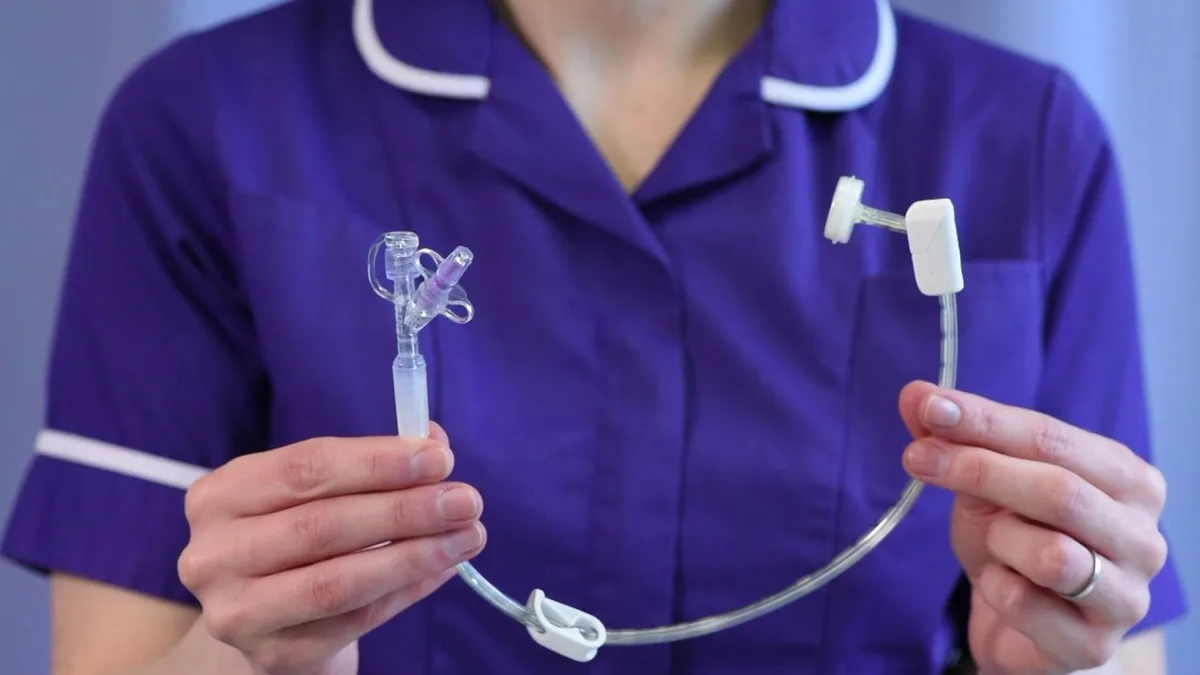
Image source: YouTube / Leeds Teaching Hospitals NHS Trust (YouTube thumbnail (fair-use with source credit))
Quick Answer
Flush the PEG tube with 30 to 60 mL of warm water using a 60 mL catheter tip syringe. Wait five minutes. Try a gentle push-pull motion.
If that fails, use room‑temperature carbonated soda or a pancreatic enzyme solution. Never force fluid. Never use a wire or sharp object.
If the clog doesn’t clear after two or three attempts, call your healthcare provider.
Why Getting This Right Matters – Safety First
A clogged tube isn’t just an inconvenience. It stops nutrition, hydration, and medication delivery. If the patient relies on tube feeds for all their calories, even a few hours without formula can cause dehydration or missed doses of essential medicines.
The bigger risk is doing the wrong thing. Using a syringe smaller than 60 mL creates dangerously high pressure inside the tube. A 30 mL syringe, for example, generates roughly three times the pressure of a 60 mL syringe with the same push force.
That pressure can rupture the silicone or polyurethane wall, causing the tube to leak into the stomach or abdominal cavity. Ruptured tubes mean a hospital trip and a replacement procedure that costs anywhere from $500 to $2,500.
Other common mistakes we see in user reports and clinical case notes include using meat tenderizer (papain), which can damage the tube lining and trigger allergic reactions, or poking a paperclip or wire down the lumen. Both are dangerous and outdated.
When in doubt, slow down. A clog that resists gentle clearing is better handled by a home health nurse or dietitian than by forcing fluid until something breaks.
What Is a PEG Tube Clog? – Core Facts
A PEG tube (percutaneous endoscopic gastrostomy tube) is a flexible feeding tube placed directly into the stomach through the abdominal wall. It has a single lumen (channel) that carries formula, water, and crushed medications from the external port down into the stomach.
A clog is a partial or complete blockage inside that lumen. It can look like:
- Thickened formula residue coating the inner wall
- A solid plug of medication that didn’t dissolve properly
- A curd or lump of formula that clumped together
- A kink in the external tubing (which mimics a clog)
- Internal balloon prolapse (the balloon that holds the tube in place can slide up and block the port)
The tube’s internal diameter matters. PEG tubes come in French sizes from 12 Fr to 24 Fr (1 Fr = 0.33 mm). A smaller tube like 12 Fr clogs more easily than a larger 20 Fr tube because the narrower passage traps particles faster.
Most adult PEG tubes are 20 Fr or 22 Fr. Pediatric tubes are smaller and require even more careful flushing.
A true clog won’t let you flush fluid in easily, and it won’t allow you to aspirate stomach contents back out. If you can get fluid in but not out, that’s often a kink or a ball-valve effect from a piece of formula, still a clog, but a slightly different problem.
Common Causes – Why Tubes Clog
Most clogs are caused by a combination of three factors: formula thickness, medication handling, and flushing habits.
| Cause | How it happens |
|---|---|
| High‑calorie or fiber‑enriched formula | These formulas are thicker and more likely to stick to the lumen wall, especially if the patient is on continuous feed. |
| Crushed tablets not fully dissolved | Some pills (like omeprazole crushed granules, potassium chloride, or iron supplements) don’t dissolve easily. Particles settle and form a concrete‑like plug. |
| Inadequate flushing | Flushing with too little water, or skipping the flush after medications, allows residue to build up over days. |
| Cold formula | Cold formula thickens. Always allow it to reach room temperature before using. |
| Old or clogged feeding set | The administration set itself can develop residue that reduces flow and traps new sediment. Replace sets every 24 hours. |
| Incompatible liquids | Mixing formula with acidic juices or carbonated drinks (sometimes given to clear a previous clog) can cause curdling. |
One of the most preventable causes is using syringes that are too small. Per ASPEN guidelines and manufacturer instructions, you should always use a 60 mL syringe for flushing. Smaller syringes create higher pressure, which can damage the tube and also push a plug deeper into the stomach rather than breaking it up.
If the patient receives multiple crushed medications through the tube, the risk of clogging goes up significantly. We see this most often in long‑term care settings where residents get a half dozen meds through the tube at each shift.
Tools & Supplies You’ll Need
Before you start, gather everything on this list. Having the right tools makes the difference between a five‑minute fix and a stuck tube.
| Tool | Purpose | Notes |
|---|---|---|
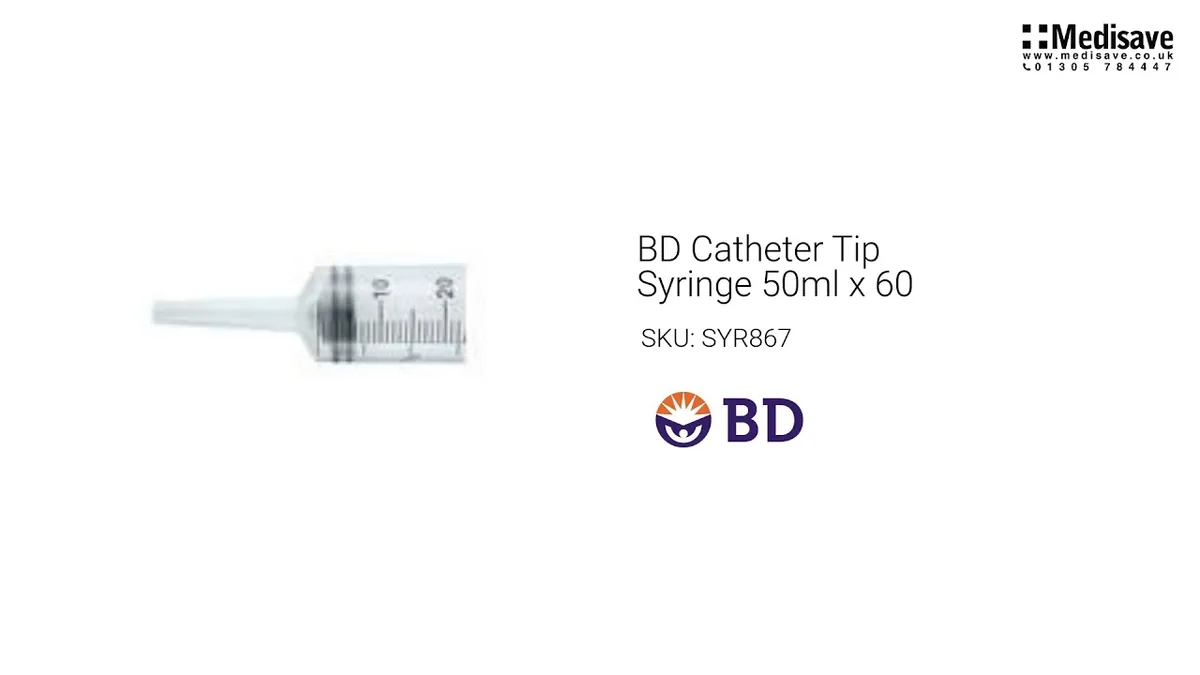
| 60 mL catheter tip syringe | Flushing and push‑pull motion | Must be 60 mL minimum. Smaller syringes create dangerous pressure. |
| Warm water (tap or distilled) | First‑line declogging agent | Temperature should feel warm to the inside of your wrist, not hot. |
| Carbonated beverage (cola or ginger ale) | Second‑line chemical dissolver | Must be room temperature. Skip if patient has GERD or aspiration risk. |
| Pancreatic enzyme tablet (e.g., Viokase, Pancrease) | Stubborn clogs, especially from formula or medication residue | Requires a prescription. Crush tablet, mix with 5 mL water, instill, clamp 15 minutes. |
| Soft silicone tube brush | Mechanical declogging | Use only if flush methods fail. Measure tube length before inserting to avoid pushing past the tip. |
| Alcohol wipes | Clean port before connecting | Reduces infection risk. |
| Clamp or stopcock | Stop flow during syringe exchange | Prevents formula from spilling out. |
| Clean towel | Catch any drips or spills | Simple but helpful. |
Most of these supplies are available from your durable medical equipment (DME) supplier or can be bought at a pharmacy. Keep a dedicated PEG tube declogging kit on hand at home, it saves stress when a clog happens at 2 a.m.
For a full step‑by‑step breakdown of how to use the tube brush safely, check our guide on using a PEG tube cleaning brush correctly. That article covers brush size selection, insertion depth, and what to do if the brush gets stuck.
Now let’s get to the actual process.
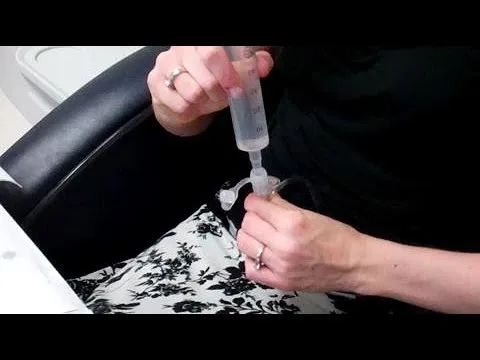
Image source: YouTube / Providence (YouTube thumbnail (fair-use with source credit))