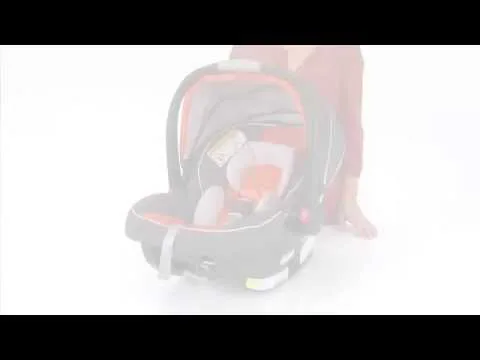

If you are asking do fire departments install car seats, the short answer is that some still do. Many stations stopped offering this service years ago. You need a certified technician to check your installation safely.
Just driving to the nearest station might waste your afternoon.
Per NHTSA guidelines, every child restraint must meet strict federal crash standards before hitting the road. Manufacturer specifications indicate most seats expire six to ten years after their production date. As of 2026, finding local help requires knowing exactly who holds the right credentials.
Let us break down how this actually works today.
do fire departments install car seats
Some fire departments still install car seats if they have certified staff on duty. Many stations stopped doing this because of liability insurance changes. You always need a Certified Child Passenger Safety Technician for the job.
Call your local non emergency line before driving over. They will tell you if a tech is available today.
Quick Answer: Do Fire Departments Actually Install Car Seats?
Yes, some fire departments still offer car seat installations and inspections. But it is not a universal service anymore. If your local station does it, they will only use a Certified Child Passenger Safety Technician.
That specific credential matters more than the building you walk into.
A CPST is someone trained and tested through a national certification program. Safe Kids Worldwide oversees this training alongside NHTSA. You cannot just hand your seat to any firefighter and expect a safe installation.
The person touching those straps needs formal education in vehicle belt paths and LATCH systems.
In our research, municipal policies vary wildly from city to city. Some departments run weekly clinics by appointment only. Others phased out the program entirely five or ten years ago.
If you call and they say no, do not panic. We have a clear path to find someone who can help.
The goal is always getting a verified professional to guide your hands. You want someone who knows FMVSS 213 standards inside and out. That federal rule governs how child restraint systems perform in crashes.
Getting this right protects your kid when it matters most.
Why Many Fire Stations Stopped Doing Car Seat Checks
Years ago, pulling up to the firehouse was standard practice for new parents. You handed over your infant bucket, they clicked it in, and you drove home. That era is mostly over.
Liability insurance changed everything for first responders across the country.
Car seats got heavier and more complex. Vehicle seat belt geometries shifted with every new model year. If a firefighter installed a seat incorrectly and a crash happened later, the department faced massive legal exposure.
Because of that risk, many cities quietly ended their community fitting programs.
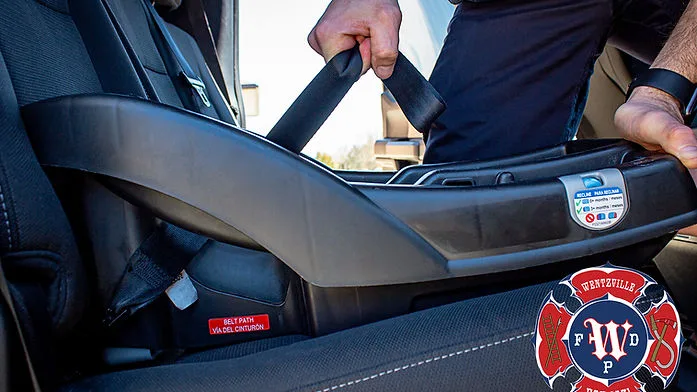
Image source: Web (Bing) / wentzvillefire.org (Web image (fair-use with source credit))
Today, departments that still offer checks require strict certification. They will not let an off duty volunteer handle your rear facing seat. The person must hold an active CPST card.
That means completing standardized coursework and passing practical skills evaluations.
This shift pushed many families toward other local resources. Children's hospitals stepped up to fill the gap. County health departments started hosting monthly checkup events.
State highway patrol offices often keep dedicated technicians on staff too.
We see this change as a good thing overall. It forces standardization. You get a trained expert instead of a well meaning neighbor in a uniform.
If you want to understand how long your baby stays in that first seat, checking infant seat timelines helps you plan these appointments early.
The Decision Tree: How to Find a CPST Near You Today
Finding help depends entirely on where you live and what your local agencies offer. Follow this exact workflow to get your seat checked without wasting gas.
Step 1: Call your fire department's non emergency line
Do not dial 911 for this. Look up the administrative number for your local station. Ask them two direct questions.
First, ask if they currently offer car seat inspections. Second, ask if the person doing it holds an active CPST certification.
If they say yes to both, book an appointment immediately. Most stations no longer accept walk ins. They need to guarantee a certified tech is physically in the building during your visit.
Step 2: Pivot to law enforcement if the firehouse says no
If your fire department stopped offering checks, call the police. Local sheriff's offices and state highway patrol units frequently maintain active safety programs. Law enforcement agencies often prioritize traffic safety initiatives more heavily than fire districts do today.
Ask the same two questions about availability and certification. Schedule your appointment once you confirm a tech is ready.
Step 3: Check children's hospitals and county health departments
Hospitals with pediatric wings almost always have certified staff available. County health departments routinely host free fitting stations. These locations excel at handling complex situations like premature infants or specialized medical restraints.
Call their patient services or community outreach desk. Ask about their next available car seat clinic.
Step 4: Use the national locator tools
If local phone calls fail, use digital directories. The NHTSA website hosts a zip code search tool for inspection stations. Safe Kids Worldwide also maintains a registry of certified technicians nationwide.
Punch in your location. Filter by distance and appointment type. This database pulls from all participating agencies, including private certifiers who work independently.
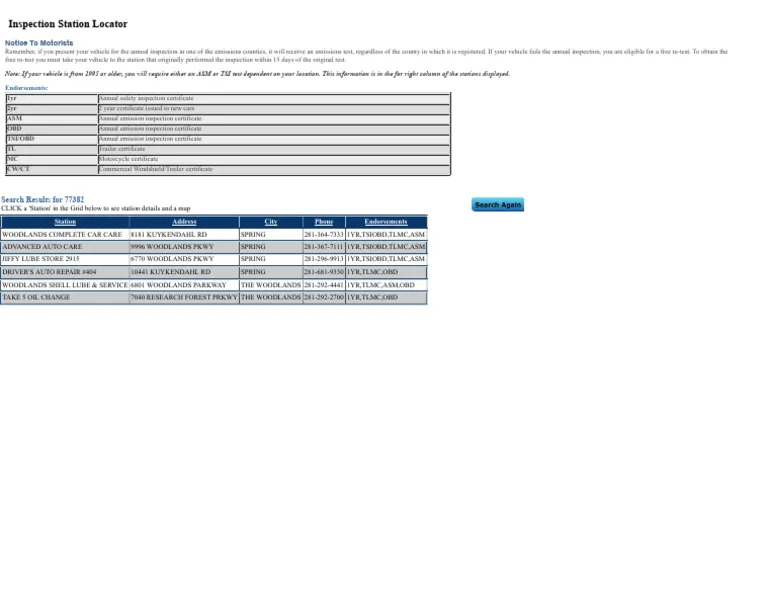
Image source: Web (Bing) / scribd.com (Web image (fair-use with source credit))
| Resource | Best For | What to Verify First |
|---|---|---|
| Fire Department | Trusted local help | Active CPST on current shift |
| Police / Highway Patrol | Reliable scheduling | Appointment availability |
| Children's Hospital | Complex medical needs | Pediatric safety clinic hours |
| NHTSA Locator Tool | Finding any nearby tech | Distance and agency type |
Once you know who is helping you, make sure your equipment matches your child's current size. If your kid recently grew out of their bucket, looking at convertible options for growing babies ensures you bring the right gear to the appointment.
What Happens During a Real Car Seat Inspection
A lot of parents think they just drop off the seat and wait in the lobby. That is not how a proper inspection works. A real session takes 20 to 45 minutes.
You are the one doing the physical work while the technician guides you.
Bring your car seat manual and your vehicle owner's manual. The CPST needs both documents to verify routing paths. Bring your child too.
Harness heights change drastically depending on who is actually sitting in the plastic shell.
The technician starts by evaluating the seat itself. They check the manufacturing date stamped into the bottom. They look up any active recalls using the model number.
They inspect the plastic for stress marks or previous crash damage. If you are unsure whether older plastic degrades, reading up on car seat expiration dates explains why this step matters so much.
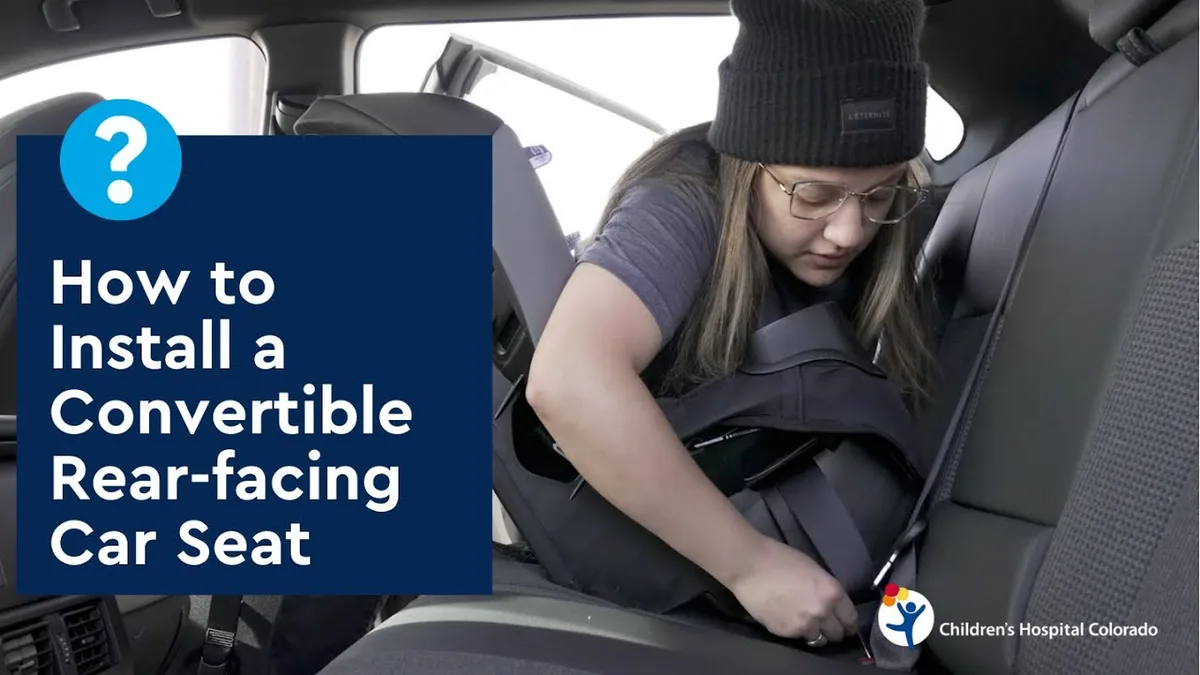
Next comes the installation phase. The tech shows you how to route the vehicle seat belt or attach the lower anchors. You push your weight into the seat while pulling the strap tight.
Then you perform the one inch test. Grab the seat at the belt path and pull side to side. It should not move more than one inch in any direction.
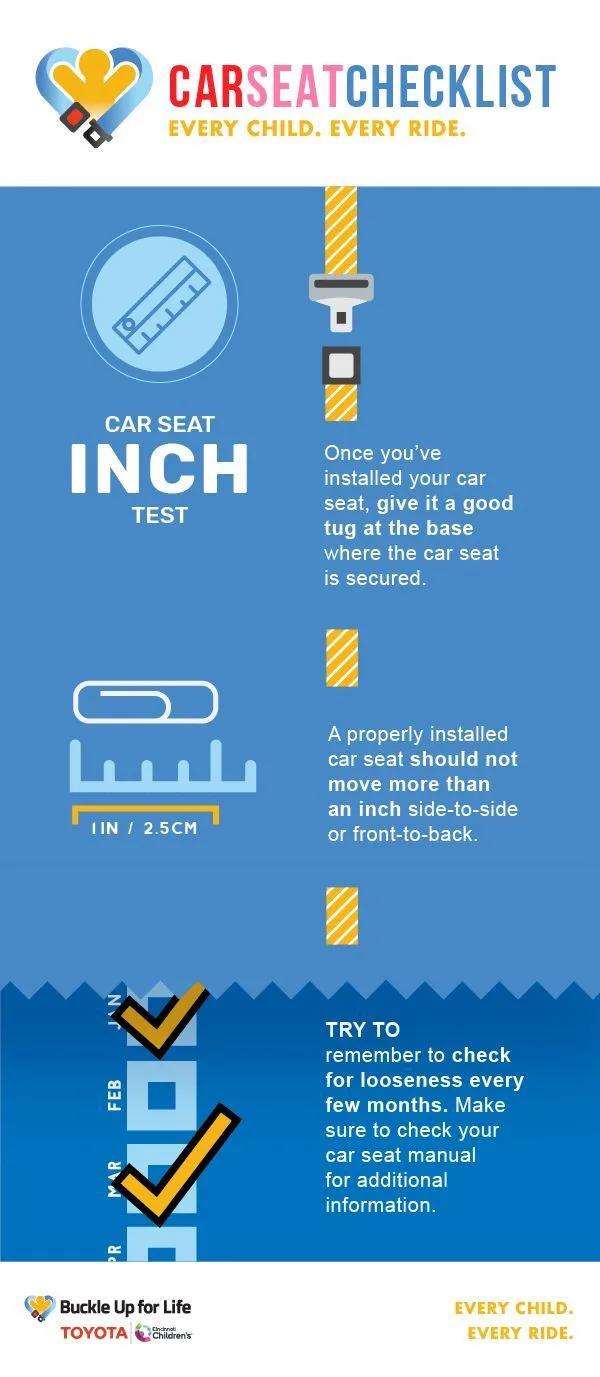
Image source: Web (Bing) / pinterest.com (Web image (fair-use with source credit))
After the base is locked down, you focus on the harness. The straps must sit at or below the child's shoulders for rear facing setups. You tighten the webbing until you cannot pinch any slack between your fingers at the collarbone.
Finally, you slide the chest clip up to armpit level.
The whole point is education. The CPST wants you to feel confident uninstalling and reinstalling the seat yourself. When you eventually transition your kid to face the other way, understanding forward facing safety timing makes that future switch much smoother.
Common Installation Mistakes That Put Kids at Risk
Even smart parents mess up car seat installations. The systems are unforgiving, and vehicle interiors vary wildly. Here are the errors we see constantly during inspections.
Using aftermarket accessories
Those fluffy strap covers, extra head pillows, and hanging mirrors look cute. They are dangerous. If an accessory did not come in the box with your specific seat, do not use it.
Manufacturers test their seats as complete engineered systems. Adding unapproved padding alters how the harness performs in a sudden stop.
If you want to protect the upholstery or block sun glare, verifying whether fabric covers are safe prevents you from buying something that compromises the shell.
Leaving the harness too loose
Parents hate making their kids uncomfortable. So they leave the straps looser than they should be. In a crash, a loose harness allows the child's body to travel forward before catching them.
That extra movement increases injury risk significantly.
Always use the pinch test. Grab the webbing near the collarbone after buckling. If you can pinch a fold of material between your fingers, it is too loose.
Tighten it down until the fabric lies completely flat against your thumb and index finger.
Ignoring winter coat compression
Thick puffy jackets are terrible for car seats. The foam and air inside the coat compress instantly during a collision. Suddenly your perfectly tightened harness has three inches of slack.
Your child can slide right out of the straps.
Dress your kid in thin fleece layers. Buckle them in tightly. Then drape their heavy coat backward over their arms like a blanket.
This keeps them warm without sacrificing structural safety.
Choosing the wrong belt path
Convertible seats have two different routing paths. One is for rear facing mode. The other is for forward facing.
Threading the belt through the wrong slots means the seat will pivot dangerously during impact. Always double check the diagram printed directly onto the plastic shell or in your manual.
Mixing LATCH and seat belts simultaneously
Most vehicles and seats do not allow you to use both systems together. You pick the lower anchors or you pick the vehicle belt. Using both creates conflicting tension points.
Check your manuals to see which method your specific combination supports. Also remember that lower anchors have weight limits. Once your child plus the seat exceeds 65 pounds combined, you must switch to the seat belt.
Placing the chest clip too low
That little plastic slider belongs at armpit level. Period. When parents leave it resting on the child's stomach, the shoulder straps can slide off during a crash.
Move it up every single time you buckle them in.
Getting these details right takes patience. That is exactly why booking time with a certified technician pays off. They catch the tiny errors you miss while wrestling with stiff webbing in a cramped backseat.
Frequently Asked Questions
Do fire departments charge for car seat checks?
Most stations offer this service completely free. If your local department runs a CPST program, they treat it as community outreach. You will not pay an inspection fee.
Some independent technicians or private clinics might charge a small rate, but municipal agencies rarely do.
Can any firefighter check my car seat?
No, a standard firefighter cannot legally inspect your restraint system. The person must hold active CPST certification through Safe Kids Worldwide. If the station only has regular emergency personnel on duty, they will likely turn you away.
Always verify their credentials before driving over.
What should I bring to a car seat inspection?
Bring the child who will ride in the seat. You also need both instruction manuals: one for the car seat and one for your vehicle. The technician uses these documents to find exact belt paths and anchor locations.
Leave bulky winter coats at home so they can test the harness properly.
How long does a car seat appointment take?
Expect to spend 20 to 45 minutes with the technician. A simple infant bucket check goes faster. Inspecting a convertible seat or troubleshooting a difficult vehicle belt path takes longer.
The tech spends most of that time teaching you how to reinstall it yourself later.
Will a fire station replace my expired car seat?
Fire departments generally do not hand out replacement seats during routine inspections. They will tell you if your current seat is expired or recalled. Some county health departments or Safe Kids coalitions run separate programs that provide discounted seats to qualifying families.
Ask your technician about local resources if you need financial help.