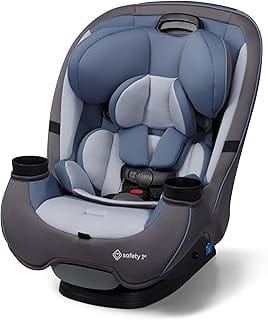

You’re holding a newborn in one arm and an infant car seat in the other, wondering how long this phase actually lasts. It’s a fair question, and one that has two completely different answers depending on what you’re actually asking. “How long is a baby in an infant car seat” can mean per trip, or it can mean how many months before you need to buy the next seat.
Both matter. Both have hard rules that aren’t just suggestions.
Manufacturer specifications and pediatric safety guidelines draw a clear line here. Per the American Academy of Pediatrics and federal car seat standards (FMVSS 213), the answer depends on your baby’s size, the seat’s limits, and how long each car ride lasts. Let’s walk through both timeframes so you know exactly where you stand, and when it’s time to move on.
Quick Answer
A baby stays in an infant car seat for about 9 to 15 months total before outgrowing it. The seat itself has a weight limit (typically 22 to 35 pounds) and a height limit (usually 29 to 32 inches). For each trip, the recommendation is no more than 2 hours of continuous time.
Once your baby’s head is within one inch of the top of the shell, or their shoulders go above the highest harness slots, the seat is outgrown regardless of age.
Why This Question Matters More Than You Think
Most parents assume the infant seat lasts until their baby hits the weight limit. That’s only half the story. Height almost always sneaks up first.
A baby with an average build might hit the height ceiling at 10 months while weighing only 20 pounds, well under the seat’s 30-pound maximum. That seat is now unsafe regardless of weight.
The stakes here aren’t minor. An improperly fitted car seat can compromise how the harness works in a crash. It can also put your baby at risk for what experts call positional asphyxiation, a quiet, serious risk where the chin drops to the chest and the airway narrows.
The seat itself is designed to prevent this when used correctly within its limits. Push past those limits, and you lose that built-in protection.
That’s why the “how long” question has tight, non-negotiable answers. They come from crash test data, pediatric research, and real-world outcomes. Ignoring them isn’t a parenting judgment call, it’s a safety standard.
How Long Per Trip — The Real “2-Hour Rule” Explained
Let’s tackle the first timeframe: how long can a baby stay in the seat during a single car ride. The widely cited “2-hour rule” comes from pediatric guidance, not from car seat manufacturers themselves. The American Academy of Pediatrics and several peer-reviewed studies on infant sleep position recommend limiting continuous time in any sitting device, car seats, bouncers, swings, to about 2 hours for newborns and young infants.
Why the 2-Hour Limit Exists (It’s Not About Convenience)
The concern is airway positioning. A newborn’s head is heavy relative to their neck strength. In a slightly reclined car seat, gravity can pull the chin toward the chest over time.
That angle can partially obstruct the trachea. It doesn’t take a full slump to reduce oxygen intake. Studies published in the Journal of Pediatrics have documented oxygen desaturation events in infants left in car seats beyond 60 to 90 minutes.
The seat’s recline angle is designed for crash protection, not for long-term sleep. That’s why the seat has a built-in recline indicator, to ensure the angle stays between 30 and 45 degrees when installed. At that angle, a baby’s airway stays open best during a ride.
But the clock still ticks. The longer they’re in that position, the more fatigue sets in, and the more likely their head drifts forward.
When Can a Baby Go Longer Than 2 Hours?
Realistically, longer trips happen. Maybe you’re driving to visit family six hours away. In that case, plan a break every 2 hours.
Take the baby out of the seat. Let them stretch, have a feeding, get a diaper change, and have some awake time in a flat or upright position. Then reinstall them for the next leg.
This isn’t just about comfort. It’s about resetting the positional risk. Once the baby is out of the seat and fully awake, the airway concern resets.
You’re not dangerously adding time, you’re breaking the continuous period.
For overnight drives where the baby is sleeping, the same rule applies. Even if the baby is asleep, stopping and removing them is still the safe practice. Sleep doesn’t make the positional risk go away.
It actually increases it because muscle tone drops further during deep sleep.
There’s one exception worth noting: babies with certain medical conditions like reflux, prematurity with lung issues, or airway abnormalities may need even shorter intervals. Your pediatrician can give guidance specific to your baby’s situation.
How Long Before the Seat Itself Is Outgrown
Now for the bigger question: how many months total will your baby fit in that infant seat before you need to switch to a convertible. This answer depends almost entirely on your baby’s growth percentile and which specific seat you own. But across the most popular models on the market as of 2026, the range is consistent.
Weight Limits: The Easy Number
Every infant car seat has a printed weight limit. It’s on the sticker on the side of the seat. It’s in the manual.
You cannot legally or safely exceed that limit. Common limits are:
| Brand Example | Typical Weight Limit | Typical Height Limit |
|---|---|---|
| Graco SnugRide SnugLock 35 | 35 lbs | 32 inches |
| Chicco KeyFit 35 | 35 lbs | 32 inches |
| Evenflo Litemax 35 | 35 lbs | 32 inches |
| Nuna PIPA RX | 32 lbs | 32 inches |
| Diono LiteTravel | 22 lbs | 29 inches |
Weight is straightforward. Step on a scale holding the baby, subtract your weight. If they’re over the limit, the seat is done.
But here’s the reality check: most babies hit the height limit before they hit weight. You’ll likely never see that 35-pound number unless you have a very short, very heavy baby.
Height Limits: The One That Sneaks Up on You
Height limits work differently. The seat doesn’t have a simple “do not exceed X inches” that works the same for every baby. Instead, there are two rules:
First, there’s the manufacturer’s stated height limit, usually 29 to 32 inches. That’s a general guideline based on average proportions. Second, there’s the “1-inch rule”, the real test.
Your baby has outgrown the seat when the top of their head is less than one inch from the top of the hard plastic shell. That’s the point where, in a crash, the head could contact the shell instead of being cushioned by the seat’s energy-absorbing foam.
The “1-Inch Rule” That Tells You It’s Time
Here’s how you check. Look at the back of the car seat shell. Find the top edge.
Measure the distance from that edge to the top of your baby’s head. If that gap is smaller than your thumb width (about one inch), the seat is outgrown. Full stop.
Even if the baby is 3 pounds under the weight limit. Even if they’re 8 months old and the seat says it goes to 12 months. The 1-inch rule overrides everything.
This is where most parents get caught off guard. A baby in the 90th percentile for height might outgrow their infant seat by 7 or 8 months. A petite baby in the 10th percentile might still have room at 15 months.
There’s no universal age. You have to check.
Most babies will outgrow their infant seat by height somewhere between 9 and 15 months. If your baby is in the 50th percentile, expect to transition around the first birthday. But don’t mark your calendar, mark the shell with a piece of tape at the 1-inch line and check monthly.
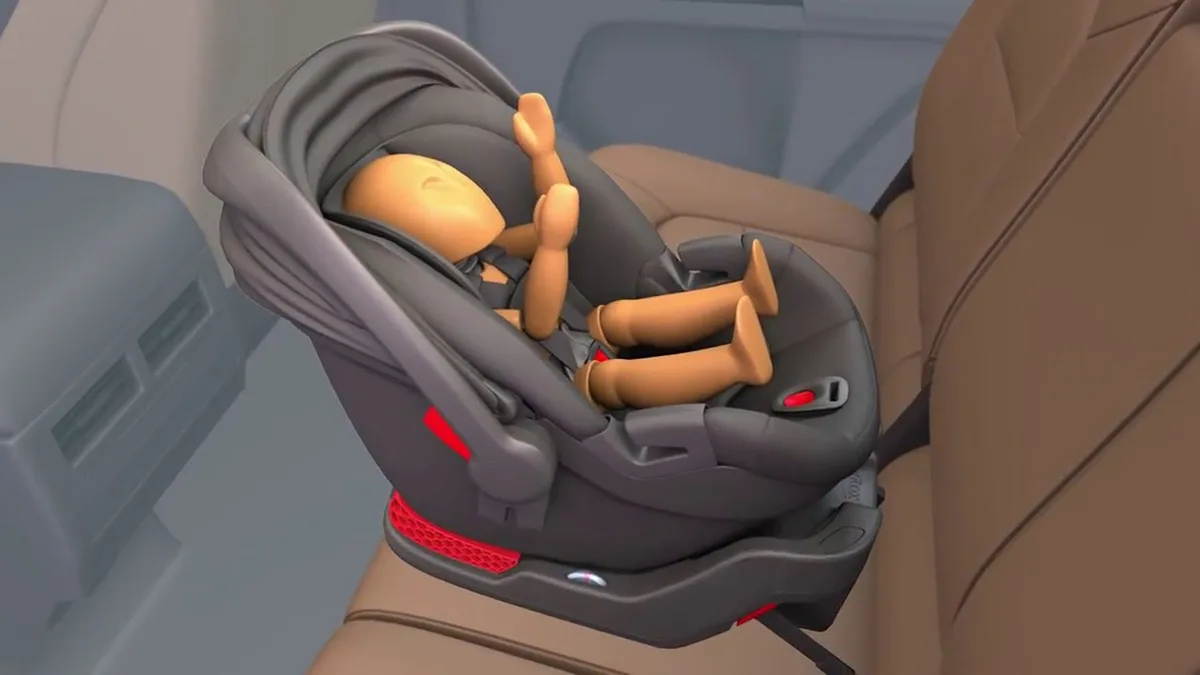
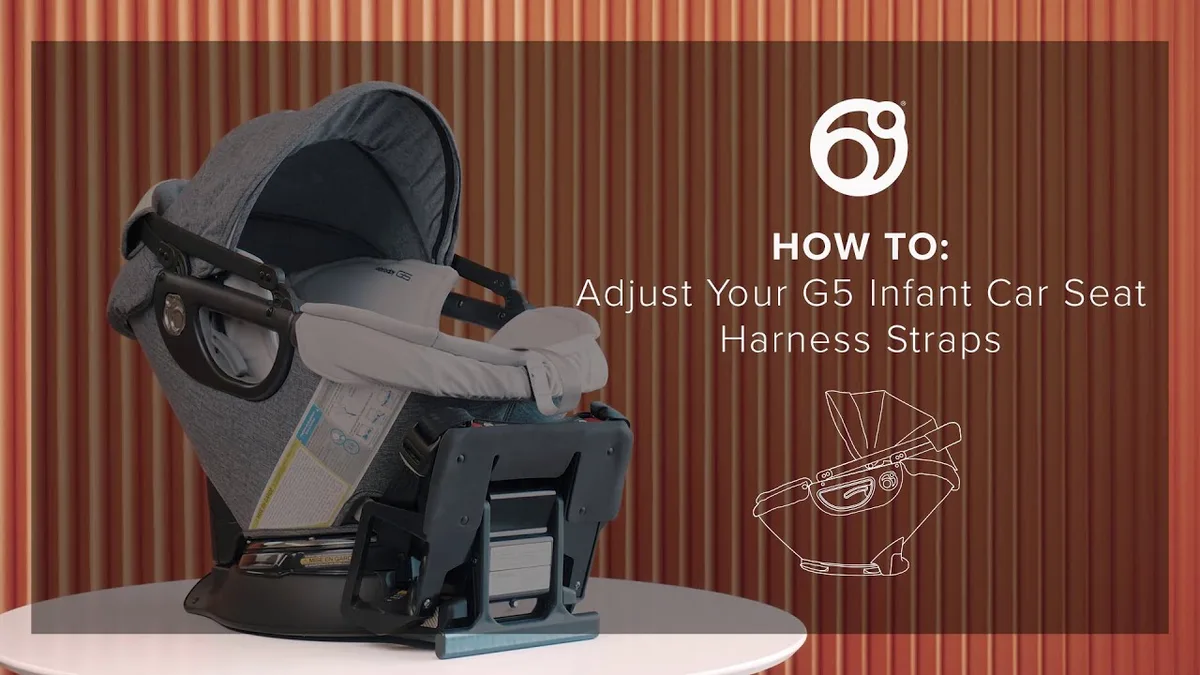
Image source: YouTube / Christopher Doehling (YouTube thumbnail (fair-use with source credit))
How to Check If Your Baby Has Outgrown the Seat (Step by Step)
This isn’t something you guess. It’s a straightforward four-step check that takes about 60 seconds. Do it monthly starting around month 6.
Step 1: Find the Real Limits (Not the Sticker)
Grab the manual. Yes, the paper one that came with the seat. Look for the exact weight limit and the exact height limit.
Don’t rely on memory or what the box said. Write those numbers down. While you’re at it, check the seat’s expiration date.
Most infant seats expire 6 years from manufacture. An expired seat has no crash safety guarantee. If yours is expired, the “how long” answer is zero, it needs to be replaced immediately.
Step 2: Check Height First — Most “Outgrowing” Is Height
Sit your baby in the seat in the normal reclined position. Buckle them in as you would for a ride. From the front, look at their head relative to the top of the shell.
Can you see a clear gap? If not, move to step 3.
Step 3: The Shoulder Slot Test
This one matters a lot. In rear-facing mode, the harness straps must be at or below your baby’s shoulders. Look at where the straps come out of the seat back.
Are they level with your baby’s shoulder line or lower? If your baby’s shoulders are above the highest available harness slot, meaning you’ve already moved the straps to the top slots and the shoulders are still above, the seat is outgrown due to improper harness positioning. This is one of the most frequent errors we see in parent forums.
Step 4: The Head Clearance Check
This is the final and most important test. Place your hand flat on top of your baby’s head. Mark the spot on the shell with your finger where the top of their head reaches.
Measure from that spot to the top edge of the plastic shell. Less than one inch means time to buy a convertible seat. More than one inch means you still have room.
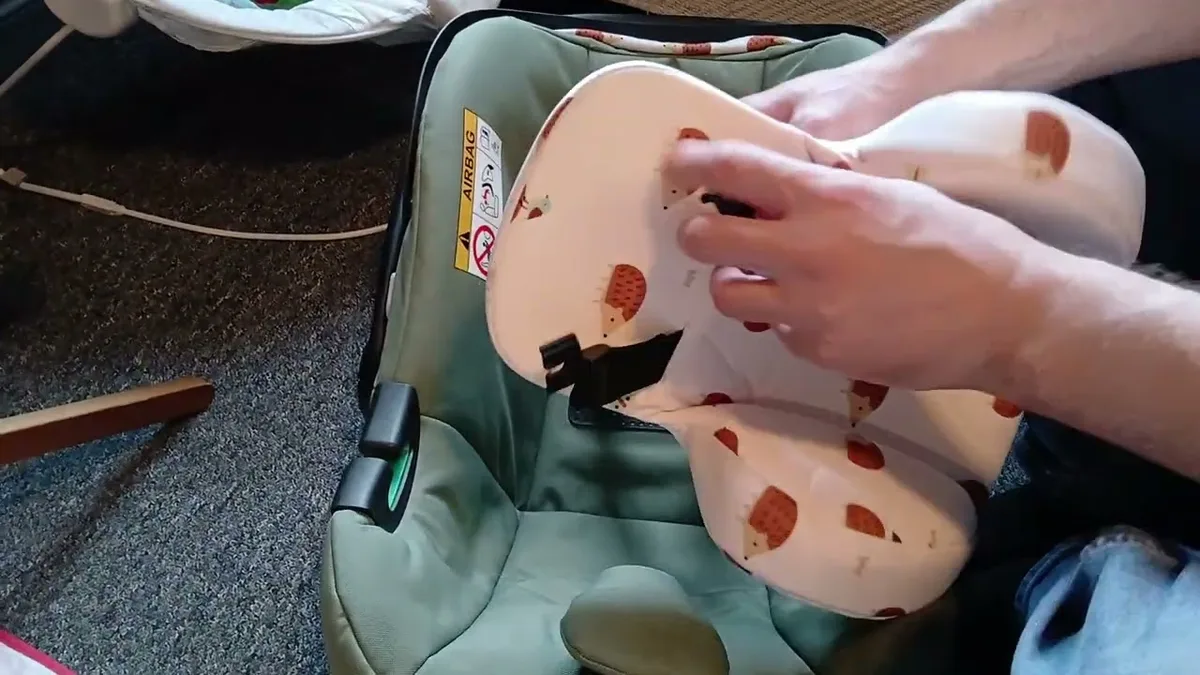
Image source: YouTube / Liam1981 (YouTube thumbnail (fair-use with source credit))
Do this check with the seat installed at the correct recline angle. If the seat is too upright, the baby’s head might appear closer to the top than it actually is when reclined properly. Use the seat’s recline indicator and adjust the base until the bubble is in the safe zone before doing your measurement.
Common Mistakes That Lead to Using the Seat Too Long
Most parents who keep a baby in an infant seat past the safe limit aren’t being careless, they just don’t know what to look for. Here are the most common errors we see in our research.
Assuming Weight Limit Is the Only Limit
The weight limit is the most visible number, so it gets all the attention. But in practice, height takes priority. A baby who fits the weight perfectly can still be dangerously positioned if their head is too close to the shell or their shoulders are above the harness slots.
Check both. Weight alone tells you nothing about head clearance.
Ignoring the Expiration Date
Infant car seats have a finite life. The plastic shell degrades over time. Extreme heat and cold in parked cars accelerate that process.
A seat that looks fine could be brittle enough to fail in a crash. The expiration date is usually stamped into the plastic on the bottom or side of the shell. Six years from manufacture is the standard, but check your manual.
Some brands are shorter. If you’re using a hand-me-down seat, check the date before you install it.
Forgetting That “Fits” Means “Fits Safely”
A baby who fits comfortably into the seat isn’t the same as a baby who fits safely within the seat’s designed limits. Comfort is irrelevant here. The seat’s limits are based on crash dynamics, not on whether your baby can sit cross-legged inside it.
If the manual says the seat is good to 30 pounds and 32 inches, and your baby is 29 pounds and 31 inches, they might still fit, but check the 1-inch rule. That’s the real decider.
There’s also the question of whether you’re still using the seat correctly as the baby grows. The harness should be snug enough that you can’t pinch any webbing at the shoulder. The chest clip should be at armpit level.
The seat should be installed tightly enough that it moves less than one inch side to side at the belt path. All of these things can drift over time as the baby grows and the seat settles. Check them every month.
What to Do When They’ve Outgrown It
Once your baby fails any of the checks above, it’s time for the next stage. The seat doesn’t become a toy. It doesn’t become a booster.
It’s done. Dispose of it according to the manufacturer’s instructions, usually by removing the straps, cutting the harness, and marking it as expired so no one else picks it up.
Moving to a Convertible Seat
A convertible car seat is the next step. It rear-faces like the infant seat, but with higher weight and height limits. Most convertibles go to 40 or 50 pounds rear-facing.
That means your baby can stay rear-facing well past age 2, which is the AAP’s minimum recommendation. Some convertibles go to 40 or 50 pounds rear-facing. They don’t have a detachable base or a carry handle, so they stay in the car.
That’s the trade-off: no more click-and-go portability, but years more safe rear-facing time.
When you shop for a convertible, look for a model that goes to at least 40 pounds rear-facing. The longer your child can stay rear-facing, the safer they are. This isn’t a debated point among safety experts, it’s settled science.
Rear-facing spreads crash forces across the entire back and head, protecting the neck and spine in ways forward-facing seats cannot.
Keeping Them Rear-Facing (Even in the Next Seat)
Once you transition, don’t rush to forward-face. The legal minimum in most states is 1 year and 20 pounds, but the AAP recommends keeping kids rear-facing to at least age 2, and ideally longer if the seat allows. Many convertibles go to 40 or 50 pounds rear-facing.
Use every bit of that headroom. Your child’s spine is still developing until around age 4. Rear-facing is the safest position for as long as they fit.
You’ll hear from other parents who turned their kid around at 12 months because “their legs looked cramped” or “they cried facing backward.” Ignore that noise. It’s normal for a rear-facing toddler to have their legs bent against the seat back. It doesn’t hurt them.
They can even sleep comfortably in that position. Meanwhile, a forward-facing child in a crash takes significantly more force on the neck and spine.
The infant car seat gave you a great start. The convertible seat finishes the job. Move when the rules say move, not when you feel like it, and your child will be as safe as modern engineering can make them.
Real-World Timing: What Most Families Actually Experience
Every baby grows differently, so real-world timing varies. But we can give you ballpark numbers based on common growth percentiles across the major infant car seat models.
Preemies and Small Babies
A baby born at the 5th percentile for weight and height might stay in an infant seat for 14 to 18 months. Weight gain for these babies is often slower, and height follows. The seat’s height limit becomes the limiting factor later, but they can sometimes max out the weight limit first.
Premium seats like the Nuna PIPA RX with a 32-inch height limit can last a small baby well past their first birthday.
Long and Lean Babies
A 90th-percentile baby for height will outgrow most infant seats by 7 to 9 months. The weight limit is rarely reached. The height limit is the wall.
For these babies, buying a seat with a taller shell, like the Chicco KeyFit 35 or the Graco SnugRide SnugLock 35, buys you an extra month or two. But ultimately, you’ll be shopping for a convertible seat much sooner than you expected.
Average-Sized Babies
A 50th-percentile baby typically lasts 10 to 13 months in a standard 30- to 35-pound infant seat. The height limit usually hits right around the first birthday. The weight limit is usually 5 to 10 pounds away from being reached at that point.
This is the most common timeline, and it aligns well with the holiday season and the first year of life.
The takeaway is simple: check monthly, not annually. The seat doesn’t send you a notification. Your eyes and a tape measure are the only tools you need.
Safety Risks of Extended Use or Misuse
Keeping a baby in an infant car seat past the safe limits isn’t a minor oversight. It puts them at risk for several specific safety issues that are well documented in crash testing and pediatric research.
Positional Asphyxiation
The most serious risk is positional asphyxiation. This happens when the baby’s head slumps forward, chin to chest, narrowing the airway. It’s silent.
There’s no coughing or fussing. The baby simply gets less oxygen and eventually stops breathing. This risk increases with extended continuous use (beyond 2 hours) and improper recline angle.
It’s also more likely in younger infants with weaker neck muscles.
Your infant car seat is designed with a specific recline angle (30 to 45 degrees) that keeps the airway open. When installed correctly on its base, that angle is maintained. But when the seat is removed and placed on a flat surface, like a floor or a bed, the recline angle changes.
The seat tips backward slightly, changing the angle and putting the baby’s head in a more forward position. The American Academy of Pediatrics and the Consumer Product Safety Commission specifically advise against using a car seat as a sleep surface outside the vehicle.
Head Slump and Airway Concerns
Even inside the vehicle, head slump can happen. A baby who slides down in the seat from loose harness straps is at risk. So is a baby who falls asleep deeply and their head drifts forward.
The harness is your only defense. A snug harness limits how far the head can fall. That’s why the pinch test matters: if you can pinch fabric at the shoulder, the harness is too loose.
The thin padding behind your baby’s head is designed for crash energy absorption, not comfort. Adding aftermarket head supports, strap covers, or other accessories (unless explicitly approved by the seat manufacturer) can interfere with the harness fit and introduce slack. It also pushes the baby’s head forward slightly, increasing the risk of head slump.
The “Seat as Crib” Mistake
This is the most common misuse we hear about. Parents bring the infant seat inside after a car ride. The baby is asleep.
They don’t want to wake them. So they leave the seat on the floor or on a table with the baby still buckled in, hoping the baby will sleep longer.
The baby might sleep. But the risk during that “nap” is higher than the risk during the car ride. At home, you don’t have the vehicle’s seat belt or base holding the seat at the correct recline angle.
The seat is tipping backward on the floor. The baby’s head is drifting forward. And you’re not watching them the way you would in a moving car.
The safer practice is to remove the baby from the seat as soon as you’re parked and out of the car. Transfer them to a crib, bassinet, or flat playard for the remainder of their nap. It might wake them up.
That’s okay. A few minutes of wakefulness is better than a positional risk.
Image source: YouTube / Babylist (YouTube thumbnail (fair-use with source credit))
When to Consult a Professional
You don’t need to figure this out alone. There are trained professionals who can help you get the seat installed correctly, check the fit, and tell you when it’s time to move on.
Certified Child Passenger Safety Technician Check
CPSTs are trained specialists who inspect car seat installations. They work at fire stations, police departments, hospitals, and community safety events. A check takes about 20 to 30 minutes and is almost always free.
They’ll check your seat’s expiration date, recline angle, harness fit, and installation tightness. They can also tell you whether your baby has outgrown the current seat.
To find one near you, visit the NHTSA website and search for car seat inspection stations. Most appointments are free. Bring your seat, your vehicle, and your baby (dressed in normal clothes, not bulky outerwear).
Expect to learn something. Even experienced parents get caught by a detail they missed.
Pediatrician Guidance for Preemies or Special Needs
If your baby was born prematurely, has low muscle tone, or has any respiratory condition, the standard rules might not apply. Your pediatrician can give you specific guidance on how long each trip can safely be for your baby. Some babies need shorter intervals.
Some need a different seat type altogether. Ask at your well-child visit.
Frequently Asked Questions
Is it safe to keep a baby in an infant car seat for a 3-hour road trip?
No. The safe limit for continuous time in a car seat is about 2 hours. Plan a break at the 90-minute mark.
Take the baby out of the seat. Let them stretch, feed, and have some awake time before continuing.
Can a baby sleep in an infant car seat overnight?
No. Car seats are not safe sleep surfaces for extended or unsupervised sleep. The recline angle changes when the seat is out of the vehicle, increasing the risk of airway obstruction.
Use a crib or bassinet for overnight sleep.
How do I know if my baby has outgrown the infant car seat by height?
Check the “1-inch rule.” Look at the top of the plastic shell. If the top of your baby’s head is less than one inch from that edge, the seat is outgrown regardless of weight. Measure monthly starting at 6 months.
Do all infant car seats expire?
Yes. Every infant car seat has an expiration date, usually 6 years from the date of manufacture. Check the stamp on the bottom or side of the seat.
Never use an expired seat. The plastic degrades and may not protect in a crash.
Can I use an infant car seat for a preemie?
Yes, but check the seat’s minimum weight requirement, usually 4 or 5 pounds. Many infant seats now include newborn inserts and adjust to fit smaller babies. If your preemie weighs less than the minimum, use a car bed designed for low-birth-weight infants.
When should I switch from an infant car seat to a convertible car seat?
Switch when your baby either exceeds the weight limit, exceeds the height limit, or the top of their head is less than one inch from the top of the shell. Most babies switch between 9 and 15 months. Do not delay past these limits.
Quick Reference: Signs It’s Time to Move On
You don’t need to memorize every detail from this article. Here’s the short list you can check in under a minute.
The seat is outgrown if any of these are true:
- Your baby exceeds the manufacturer’s weight limit.
- The top of your baby’s head is less than one inch from the top of the plastic shell.
- Your baby’s shoulders are above the highest harness slot.
- The seat is past its expiration date.
- The harness straps are at or below your baby’s shoulders and you cannot move them lower.
If any one of these applies, stop using the seat immediately. Install a convertible seat that fits your baby properly and keep them rear-facing as long as that new seat allows. The infant car seat did its job.
Now it’s time for the next chapter.
The only remaining H2 from the TOC is the final reference guide. The FAQ section was already written in the first batch. Here is the final H2.
Quick Reference: Signs It’s Time to Move On
You don’t need to memorize every detail from this article. Here’s the short list you can check in under a minute.
The seat is outgrown if any of these are true:
- Your baby exceeds the manufacturer’s weight limit.
- The top of your baby’s head is less than one inch from the top of the plastic shell.
- Your baby’s shoulders are above the highest harness slot.
- The seat is past its expiration date.
- The harness straps are at their highest position and your baby’s shoulders are still above them.
If any one of these applies, stop using the seat immediately. Install a convertible seat that fits your baby properly and keep them rear-facing as long as that new seat allows. The infant car seat did its job.
Now it’s time for the next chapter.