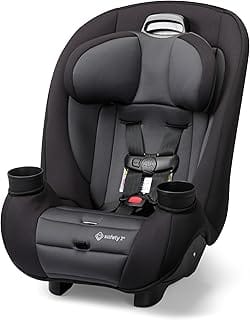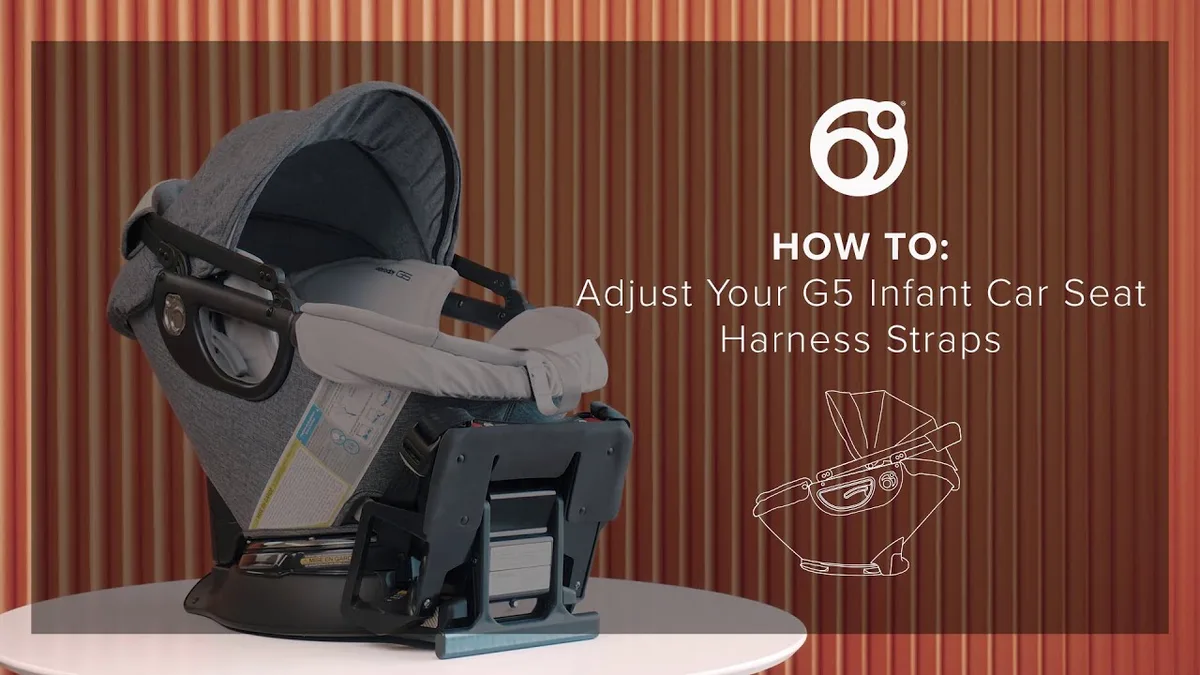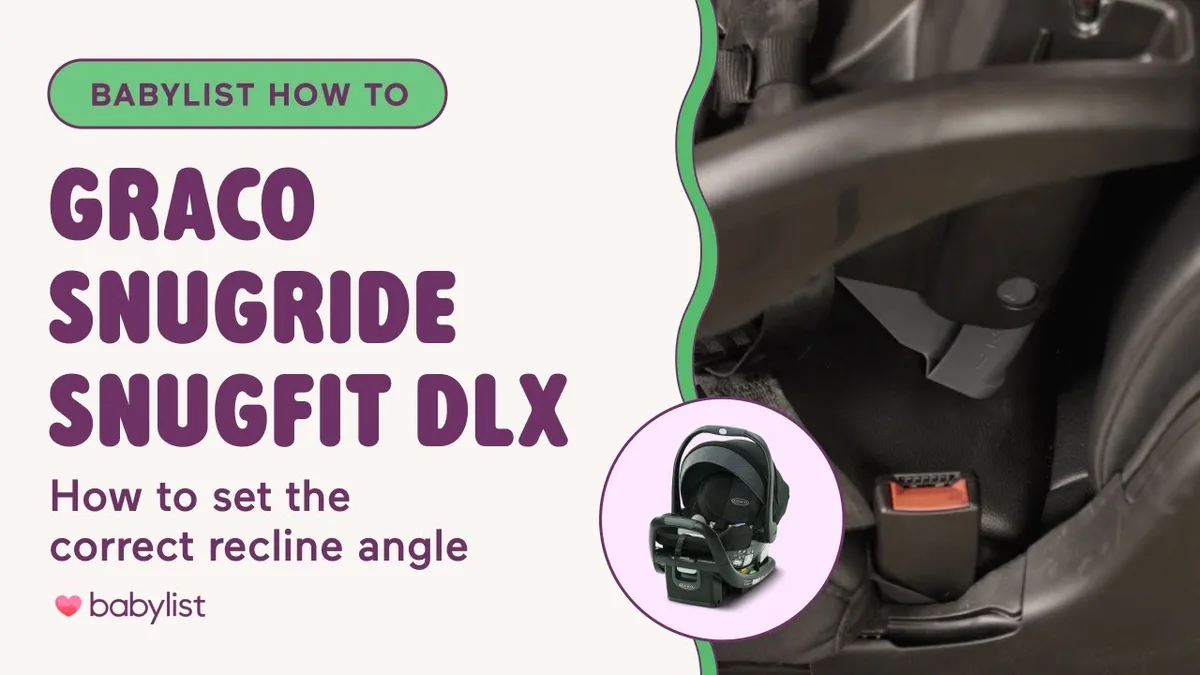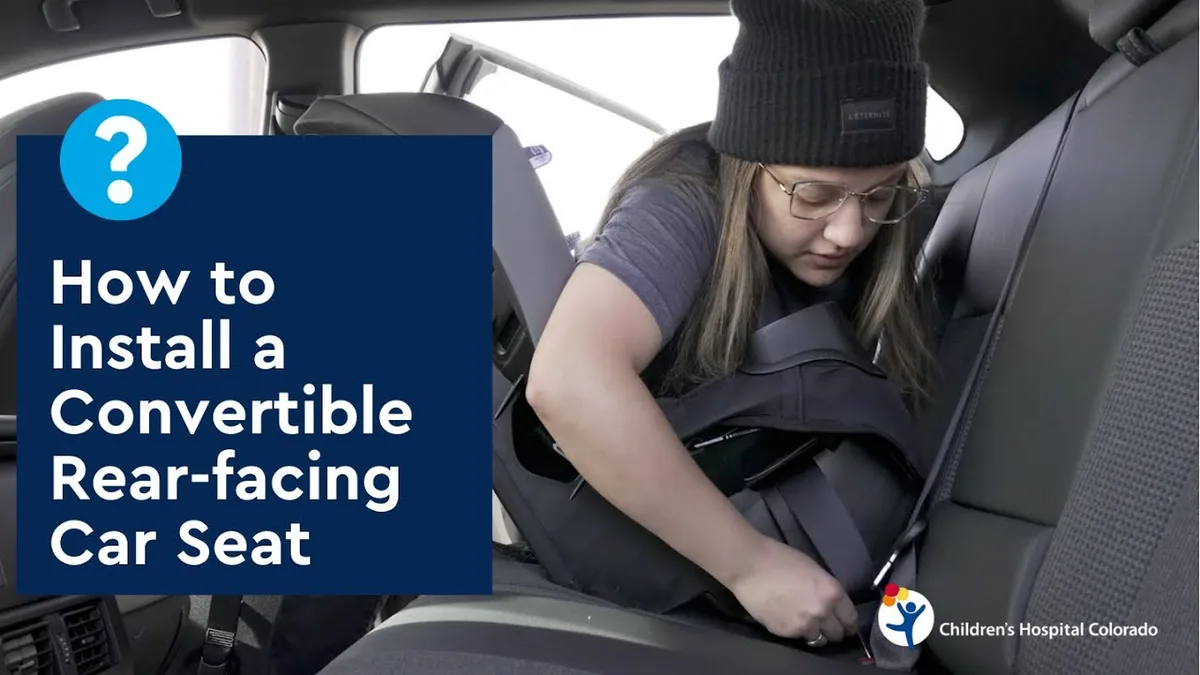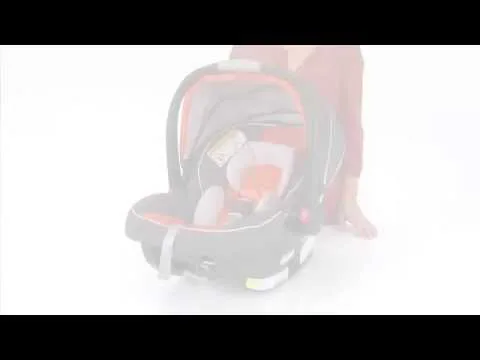


Many parents ask exactly when babies sit forward in car seat models to make daily drives a bit easier. It feels like a massive parenting milestone. You eagerly want to see their face clearly in the rearview mirror.
Turning that seat around might seem like a natural progression into a new stage of childhood.
However, switching directions too soon is a massive step down in collision safety. The American Academy of Pediatrics states that children must remain rear-facing until they completely outgrow their specific seat limits. Most modern equipment allows toddlers to ride backwards well past age three or four.
Let us look closely at the biological data behind this critical safety decision.
Quick Answer
When do babies sit forward in car seat installations? They should only transition after maxing out the rear-facing limits. These maximums are printed plainly on the manufacturer’s label.
Most modern seats allow backwards riding until 40 or 50 pounds. This biological milestone typically happens between ages three and five. Check your specific owner’s manual for the exact height and weight numbers.
The Short Answer: Why You Should Delay the Forward-Facing Milestone
Parents often treat turning the car seat around as a graduation event. Flipping the seat early might let you hand back snacks easily. But convenience must never outweigh crash safety.
A rear-facing position is the absolute safest way for a human body to ride in a moving vehicle.
Forward-facing positions completely alter how crash forces impact a small body. Adult bodies can handle seatbelt restraints during a collision. Toddler bodies lack the rigid bone structure needed to absorb that immense kinetic energy.
Deciding knowing the right time to transition requires looking at biological facts over convenience.
You should delay the switch for as long as your specific hardware allows. Many parents rush the timeline out of habit or social pressure. Friends or family might tell you their child turned around on their first birthday.
You must tune out that outdated advice. Follow the numerical limits printed directly on your equipment labels instead.
The Biology Behind the Guidelines: Vertebral Ossification Protects Your Child’s Spine
The safety behind rear-facing seats comes down to basic human anatomy. A toddler’s head is disproportionately heavy. It accounts for roughly 25 percent of their total body weight.
An adult head only accounts for about six percent. That heavy infant’s head is supported by a very weak, developing neck.
In early childhood, the spine is not made of solid bone. A young child’s vertebrae are primarily fused cartilage. The process of this cartilage hardening into solid bone is called vertebral ossification.
This biological hardening process takes years to complete. It rarely finishes before a child turns three or four years old.
If a young child sits facing forward during a heavy crash, their head violently snaps forward. The five-point harness stops their torso completely. Their flexible, cartilaginous neck takes the massive strain of stopping the flying head.
This high-stress event can cause internal decapitation. This happens when the spinal cord snaps while the skin and muscle remain intact.
Rear-facing seating prevents this horrific outcome entirely. The rigid plastic shell fully cradles the child’s head, neck, and spine. Crash forces are evenly distributed across their entire back rather than isolated on the stretching neck.
Reading the Numbers: Navigating Height and Weight Limits
Child passenger safety experts completely ignore age as a metric for turning seats around. A birthdate does not dictate bone density or physical size. You must strictly track your child’s standing height and current weight instead.
Car seat manufacturers print specific maximums on the side of every model. You will usually find these numbers on a prominent sticker near the base. You can also consult the enclosed instruction manual.
These tested limits are the only metrics you need to follow. Also, keep track of your equipment’s safety lifespan to ensure the plastic shell has not degraded over the years.
Weight Maximums and the 40+ Pound Threshold
Decades ago, maximum weights for backwards riding were capped at 20 pounds. Modern engineering has completely changed the landscape. Today, nearly every standard convertible model accommodates rear-facing passengers up to exactly 40 pounds.
Some extended-use models go as high as 50 pounds.
Most children do not hit 40 pounds until they are well into preschool. A child in the 50th percentile for weight will not reach 40 pounds until their fifth birthday. The rule is simple.
You must never turn the seat around if your child is under the maximum stated weight limit.
Height Limits and the “One-Inch Rule”
Height limits catch many parents off guard before weight limits do. Most seats have a standing height maximum of around 40 to 49 inches. You must continually measure your child’s standing height against the manufacturer’s label.
You also need to apply the universal one-inch rule. Measure the distance from the very top of your child’s head to the top edge of the plastic shell. There must be at least one full inch of hard shell above their head.
If their head creeps closer than an inch to the top, it can ride up over the plastic during a violent crash. If they break the one-inch rule, the seat is outgrown for rear-facing use.
Minimum State Car Seat Laws vs. AAP Best Practices
Legal minimums and medical best practices are heavily disconnected in many regions. As of 2026, many local laws still lag significantly behind proven medical science. Some states legally allow parents to turn a car seat forward on a child’s first birthday.
Others require keeping them backwards until age two.
State laws merely dictate the bare minimum standard to avoid a traffic ticket. According to current American Academy of Pediatrics guidelines, you should completely ignore state minimums. You should aim for the absolutely safest biological option.
The AAP strongly recommends maxing out the height or weight limits of your specific hardware.
Law enforcement officers enforce legislative minimums. Pediatricians and crash-test engineers advocate for maximum survivability. You should always choose maximum survivability.
Never treat the state law as a finish line.
Crash Dynamics: What Happens in a Frontal Impact?
Image source: Wikimedia Commons / National Highway Traffic Safety Administration, United States Department of Transportation
Frontal collisions are the most common and most deadly type of vehicle accident. Understanding exactly what happens in that split second explains why rear-facing is so heavily prioritized. When a car traveling at standard highway speed hits a static object, the vehicle stops instantly.
Everything inside the cabin keeps moving forward at highway speed.
If a toddler is facing forward, the five-point harness forcibly stops their shoulders and pelvis. Their arms, legs, and heavy head continue rocketing forward. Data from the National Highway Traffic Safety Administration indicates that early transitions expose the spinal column to incredible stretching forces.
A forward-facing child experiences massive whiplash.
A child sitting rear-facing experiences a totally different mechanical sequence. As the car violently stops, the child’s entire body is pushed backward deeper into the padded car seat shell. The hard plastic backrest absorbs the massive kinetic energy.
| Factor | Rear-Facing Mechanics | Forward-Facing Mechanics |
|---|---|---|
| Head Support | Shell fully cradles the head | The neck absorbs rapid forward snapping |
| Impact Dispersion | Forces spread evenly across the back | Forces concentrate harshly on the harness straps |
| Spinal Load | Extremely low rotational stress | Massive stretching stress on the vertebrae |
| Limbs | Contained safely within the seat shell | Thrown violently forward into the cabin |
Common Parental Concerns: The “Cramped Legs” Myth
Parents often turn seats around early because they worry about legroom. It is completely normal for a three-year-old child to sit with bent legs in a rear-facing setup. They will casually fold their legs like a frog.
They might dangle them over the sides or prop them up against the fabric seat back.
This visual causes many parents deep anxiety. They assume their child is cramped or facing a serious leg injury in an accident. The data strongly prove otherwise.
Toddler joints are incredibly flexible and largely composed of soft cartilage. They comfortably sleep in positions that would give an adult severe pain.
Leg injuries from rear-facing crashes are statistically quite rare. The real danger lies in forward-facing crashes where the legs fly forward and smash into the front seats. A broken leg is a highly treatable injury anyway.
A severed spinal cord is permanent and fatal. Do not let bent legs rush this critical safety choice.
Dealing with Tantrums and Car Sickness in Rear-Facing Seats
Many toddlers go through a phase of hating their car seat. They might scream, arch their backs, or throw intense tantrums when you buckle them in. Some parents desperately flip the seat forward, hoping the new view will calm the child down.
This rarely solves the underlying behavioral phase.
Tantrums are a normal part of toddler development. They hate being confined. Changing the seat direction will usually only buy you a few days of novelty distraction.
You should stick forcefully to your safety boundaries. Use safe toys, engaging music, or simple conversation to distract them.
Motion sickness is another common parental complaint. Car sickness stems from mixed signals deep in the inner ear. It is related to middle-ear development rather than seating direction alone.
You can manage motion sickness without compromising crash safety. Keep the car cool, skip heavy meals before driving, and roll the windows down slightly. Also, check portable travel options that sit higher on the vehicle bench if your child struggles constantly to see out the window.
How to Safely Transition to a Forward-Facing Car Seat
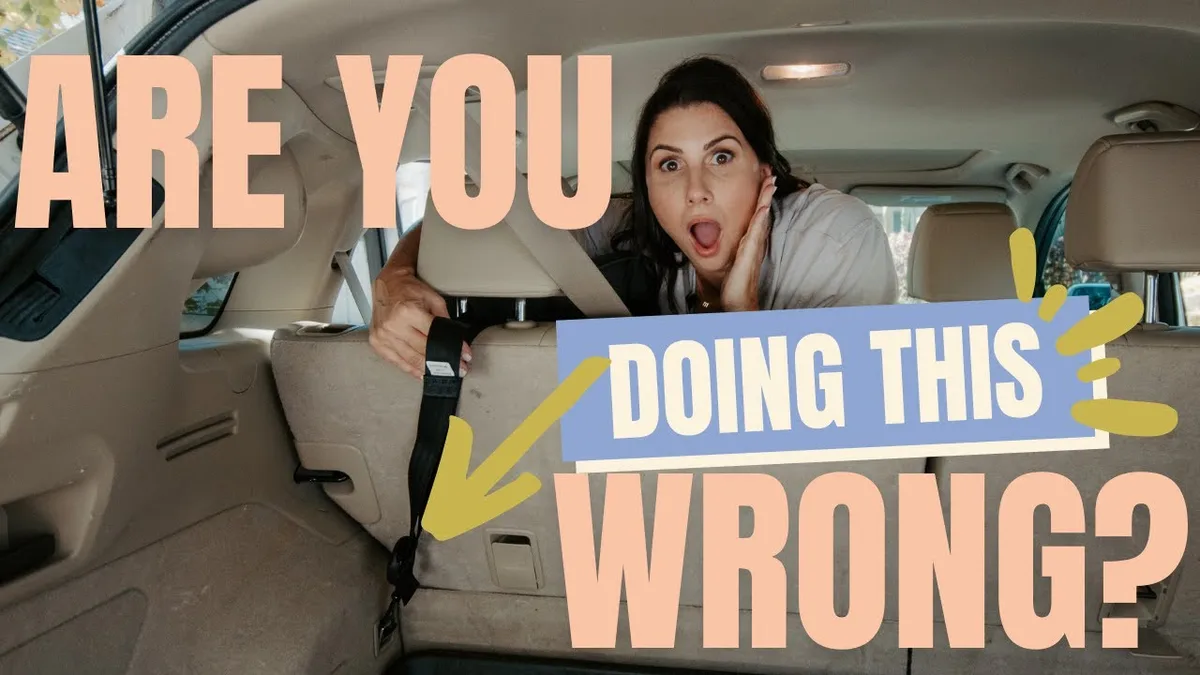
Image source: YouTube / Safe in the Seat (YouTube thumbnail (fair-use with source credit))
Eventually, your child will legitimately outgrow their rear-facing limits. When that milestone completely passes, it is time to turn the hardware around. Transitioning a convertible seat requires significantly more work than just spinning it on the vehicle bench.
You must entirely reconfigure the installation points and harness geometry.
You need to thoroughly read your specific owner’s manual before beginning. Different brands require different baseline adjustments. You also need to look at top-rated models directly if your current hardware cannot be legally installed facing outward.
Adjusting to the Upper 5-Point Harness Slots
Harness geometry completely reverses when you turn a child forward. In a rear-facing setup, the shoulder straps must originate at or just below the child’s shoulders. This pulls them downward into the protective plastic shell during an accident.
In a forward-facing setup, the straps must begin strictly at or above the child’s shoulders. If the straps start below their shoulders, the crash forces will severely compress their spine downward. You will need to physically unthread the harness straps from the back of the seat shell.
Route them carefully through the higher slots.
Switching to the Forward-Facing Belt Path
The routing path for your vehicle seat belt or LATCH straps must change, too. Convertible seats feature two entirely separate belt paths molded into the plastic. You must remove the belt from the rear-facing path, usually located under the child’s legs.
Thread the belt precisely through the forward-facing path located directly behind the child’s back. Make sure the belt lies completely flat. A twisted belt severely compromises the holding strength during a blunt impact.
Push down heavily into the seat pan with your knee while you pull the belt totally tight.
The Critical Importance of the Top Tether Anchor
Installing the top tether is a completely non-negotiable step. Every modern forward-facing car seat features a long strap extending from the upper back of the plastic shell. This strap securely clips to a dedicated metal anchor point fixed to the vehicle frame.
The top tether aggressively stops the top of the car seat from pitching forward during a violent collision. It reduces head excursion by up to eight solid inches. Failing to clip the top tether drastically increases the odds of your child’s head striking the front seatback.
Locate your vehicle’s specific tether anchors using the car owner’s manual immediately.
The Final Checklist Before Turning the Car Seat Around
Installing a forward-facing seat correctly demands close attention to detail. Before you put the car in drive, run through a strict mental safety checklist. A poorly installed forward-facing seat provides almost zero actual protection in a heavy crash.
You must be cautious when adding winter accessories under the chest buckles. Puffy coats create massive hidden slack in the safety webbing. You must also consider strict guidelines for handling naps during trips since sleeping heads can slump heavily forward.
| Verification Step | What to Check | Why It Matters |
|---|---|---|
| Harness Height | Straps originate at or slightly above the shoulders. | Prevents downward spinal compression in a wreck. |
| Belt Path | Webbing firmly routed through the back slot path. | Secures the geometry to the correct center of gravity. |
| Top Tether | Hooked securely to the vehicle’s metal anchor point. | Crucially reduces head movement by several inches. |
| Tightness Test | Less than 1 inch of side-to-side wiggle at the belt path. | Ensures the hardware transfers the crash forces properly. |
| Pinch Test | Cannot pinch any material slack above the collarbone. | Keeps the child inside the rigid protective shell. |
Frequently Asked Questions
Is age two the absolute right time to turn a car seat around?
No. Turning a child around simply because they reached age two is dangerously outdated advice. Current medical guidelines insist on keeping children rear-facing until they reach the exact maximum height or weight limit of their specific model.
What if my child’s legs firmly touch the back of the vehicle seat?
Bent, crossed, or dangling legs are perfectly safe and largely comfortable for small children. Young bodies have highly flexible joints. In serious highway collisions, structural leg injuries are incredibly rare for rear-facing passengers.
Can riding rear-facing cause significant car sickness?
Car sickness is caused by mixed biological signals in the inner ear. It relies strictly on brain development rather than seating direction. You can actively manage early motion sickness by offering cool directed air and strictly avoiding screens in the car.
How tight should the forward-facing chest harness be?
The five-point harness must pass the pinch test completely. You should not be able to pinch any fold of the strap material at the collarbone. The chest clip must also sit exactly flat at armpit level to correctly position the heavy webbing.
Can I use the LATCH system and a seat belt at the same time?
You should never use both installation methods at the exact same time unless your manual explicitly encourages it. Using both straps can put completely untested stress on the plastic shell during a heavy crash. You must choose one secure method.
Evaluating High-Weight Harness Options
Some children max out their hardware’s forward-facing limits before they are mature enough for a standard booster backrest. You should explore combination seats if this happens. These specific models feature exceptionally high harness weight limits.
Some combinations support a five-point harness up to 65 or even 90 pounds. A high-weight harness keeps energetic toddlers securely positioned on long vehicle trips. Always check the official manufacturer spec sheets before graduating to a new model.
When to Move from a Forward-Facing Harness to a Booster
Transitioning to a standard booster belt relies purely on physical maturity and standing height. The child must have the discipline to sit perfectly upright for the entire drive. They cannot slouch, lean out of the shoulder belt, or fall asleep out of position.
Most pediatric experts recommend keeping the five-point harness until at least age five or six. When you eventually switch, the vehicle seat belt must cross the strong collarbone. It must also route flatly across the upper thighs rather than the soft stomach.
The Danger of Secondary Market Car Seats
You should never buy used vehicle safety equipment from thrift stores or online marketplaces. A second-hand seat might have severe internal micro-fractures from a previous traffic collision. The rigid plastic shell also degrades rapidly under heavy sunlight exposure.
Missing instruction manuals make proper forward-facing installation extremely difficult and dangerous. You must stick strictly to brand new models to guarantee true structural integrity.
Maintenance and Cleaning for Forward-Facing Seats
Children tend to snack heavily in forward-facing positions. Loose crumbs easily jam the lower crotch buckle mechanism over time. You must clean these vital moving parts strictly according to the owner’s manual.
Never use harsh chemical bleach on the safety harness straps. Bleach degrades the strong safety webbing fibers instantly. Use a simple, damp cloth with mild soap instead.
Always air-dry the straps completely before booking your next family drive.
Expert Resources for Proper Installation Verification
Installing a forward-facing setup correctly is notably difficult for beginners. Government research shows most parents make at least one critical routing error. You should never guess with child passenger safety.
Contact a certified Child Passenger Safety Technician for a thorough physical inspection. These certified technicians verify your belt path and ensure that the top tether for free. You can find local community inspection stations directly through the National Highway Traffic Safety Administration website.