
The question keeps parents up at night. You’re driving home, you glance in the rearview mirror, and your baby is out cold. Peaceful.
Finally asleep. And now you’re sitting in the driveway wondering: can babies sleep in car seats, or do I have to wake them up? It’s a real dilemma, and the answer isn’t quite as simple as a yes or no.
Here’s what the research actually says. The American Academy of Pediatrics (AAP) is clear that car seats are designed for travel, not for sleep outside the vehicle. As of 2026, the data still points to the same conclusion: a flat, firm surface is the only truly safe sleep environment for infants.
But let’s break down exactly when it’s okay, when it’s not, and what to do about that sleeping baby in the back seat.
Image source: YouTube / Babylist (YouTube thumbnail (fair-use with source credit))
Quick Answer
No, babies should not sleep in car seats outside of a moving vehicle. Car seats are designed for travel, not for extended sleep. The incline and angle can cause airway obstruction.
The AAP recommends moving your baby to a flat, firm sleep surface as soon as you arrive. For active car travel, keep trips under two hours.
Why Car Seats Are Safe for Travel but Not for Sleep
This is the part that confuses most parents. If car seats are tested for safety, and babies sleep in them during car rides all the time, why can’t they just stay there?
The difference comes down to angle and position. When a car seat is installed correctly in a vehicle, the base keeps it at a specific recline angle. That angle is designed to keep the baby’s airway open during travel. Learn Are Baby Car Seat Covers Safe.
But here’s the thing: that angle is only maintained when the seat is clicked into the base. Once you take the seat out of the car and set it on the floor, the angle changes. The seat tilts backward slightly, which can cause a baby’s head to fall forward.
That forward head position is the problem.
When a baby’s chin drops to their chest, it compresses their airway. This is called positional asphyxiation. And it can happen silently.
The baby doesn’t cry, doesn’t struggle, and doesn’t wake up. They just stop getting enough oxygen.
In a moving car, the vibration and motion can help keep the baby’s head from slumping too far forward. But on a flat floor? No motion.
No vibration. Just gravity pulling that little head down.
That’s why the safety rating on a car seat applies to car travel, not to sleeping outside the vehicle. They’re two completely different situations.
The Real Risk: Positional Asphyxiation Explained
Let’s get specific about what positional asphyxiation actually looks like. Because most parents have never heard of it until they’re sitting in a parking lot, wondering if they should wake the baby.
Positional asphyxiation happens when something blocks a person’s airway because of their body position. For babies, it’s almost always the chin-to-chest position. A newborn’s neck muscles are weak.
They don’t have the strength to lift or turn their head if their airway gets restricted.
Here’s what happens step by step:
- The baby falls asleep in the car seat
- Their head relaxes and drops forward
- Their chin presses against their chest
- This kinks the trachea, reducing airflow
- Oxygen levels in the blood start to drop
- The baby doesn’t wake up or cry; they just get quieter
The scary part is that it looks like peaceful sleep. The baby is quiet, still, and breathing shallowly. A parent might look back and think, “Finally, they’re sleeping well.” But that stillness is actually a warning sign.
The AAP and the National Highway Traffic Safety Administration (NHTSA) both warn about this. Car seats, bouncers, swings, and other inclined devices all carry the same risk when used for unsupervised sleep. The NHTSA car seat guidelines recommend transferring babies to a flat sleep surface immediately after travel.
This isn’t about scaring parents. It’s about knowing what to look for so you can make an informed decision in the moment.
How Long Is Too Long? The 2-Hour Rule
You’ve probably heard something about a two-hour limit for car seats. Here’s what that actually means and where it comes from.
The two-hour rule is a general guideline from pediatricians and car seat manufacturers. It says that a baby should not spend more than two continuous hours in a car seat, whether they’re awake or asleep. This applies to car travel and to sitting in the seat outside the vehicle.
Why two hours? Two main reasons.
First, there’s the airway risk. The longer a baby stays in that reclined position, the more their muscles relax. After about two hours, the risk of head slumping and airway compression increases significantly.
This is especially true for newborns and young infants who don’t have strong neck control yet.
Second, there’s the concern about flat head syndrome or positional plagiocephaly. Spending too much time on a hard, curved surface can put pressure on one spot of the baby’s skull. Combined with time spent on their back in a crib, this can cause flattening.
| Age Group | Max Continuous Time in Car Seat | Notes |
|---|---|---|
| Newborn (0-2 months) | 30 minutes to 1 hour | The highest risk of airway issues |
| Infant (2-4 months) | 1 to 2 hours | Still limited neck control |
| Older infant (4-12 months) | 2 hours max | Lower risk, but still not for sleep |
For longer road trips, plan stops every two hours. Take the baby out, let them stretch, do tummy time on a blanket, or just hold them upright for a while. Then you can safely continue the drive.
And this rule applies even if the baby is sleeping. That’s the hard part. If you’ve been driving for an hour and a half and the baby falls asleep, you can finish the drive.
But once you arrive, the clock is ticking. Get them to a safe sleep surface as soon as possible.
The Four Scenarios Parents Face Most Often
Let’s walk through the situations where this question actually comes up. Because theory is one thing, but real life is messier.
During active car travel
This is the safest scenario. When the car seat is properly installed in a vehicle with the correct recline angle, car travel is generally safe for a sleeping baby. The seat is designed for this.
The base maintains the angle, and the motion of the car helps keep the baby’s head in a neutral position.
That said, the two-hour rule still applies. And you should never leave a baby unattended in a car, even if they’re sleeping. But a sleeping baby during a drive?
That’s normal. That’s fine.
After arriving home
This is where it gets tricky. You pull into the garage. The baby is asleep in the carrier.
You have two choices: wake them up and move them, or leave them in the seat.
The safest choice is to wake them and move them to a crib or bassinet. I know. It hurts.
You finally got them to sleep. But the risk of positional asphyxiation is real, and it only takes a few minutes of chin-to-chest positioning to cause harm.
If you absolutely must leave them in the seat for a few minutes while you bring in groceries or get the house ready, keep these rules:
- Stay within sight at all times
- Keep the seat on a flat, level surface
- Do not put the seat on a soft surface like a bed or couch
- Keep the harness buckled properly
- Limit it to 10-15 minutes max
As a nap spot at home or a restaurant
This is where parents get into trouble. You’re at a restaurant, the baby falls asleep in the carrier, and you put the carrier on the floor next to the table. Or you’re at home, and you let the baby nap in the carrier because they’re sleeping and you don’t want to disturb them.
Don’t do this. Not for a real nap. Not for more than a few minutes.
The car seat is not a crib. It’s not a bassinet. It’s a travel device.
If you need a portable sleep surface for naps on the go, look into a travel bassinet or a portable play yard with a firm mattress. These are designed for safe sleep outside the home.
Overnight sleeping
This one is straightforward. Never let a baby sleep overnight in a car seat. Not in the car, not in the house, not anywhere.
Overnight sleep means prolonged, unsupervised sleep in a position that increases the risk of airway obstruction and SIDS.
If you’re traveling and don’t have a crib, use a portable bassinet, a pack-n-play, or even a dresser drawer on the floor if that’s all you have. The surface needs to be flat, firm, and free of loose bedding. A car seat is none of those things.
What Safe Sleep Actually Looks Like (The ABCs)
The AAP uses a simple framework for safe infant sleep. It’s called the ABCs. Alone, Back, Crib.
Every letter matters.
Alone means the baby sleeps in their own space. No blankets, no pillows, no stuffed animals, no bumpers. No bed-sharing.
The sleep surface should be bare. The only thing in the crib is the baby and a fitted sheet.
Back means the baby is placed on their back for every sleep. This includes naps and nighttime sleep. Back sleeping reduces the risk of SIDS by roughly 50 percent.
Once a baby can roll from back to front and front to back on their own, you can let them find their own position. But you always put them down on their back.
Crib means a flat, firm, and bare sleep surface. This can be a crib, a bassinet, or a portable play yard. The mattress should be firm with a tight-fitting sheet.
No soft surfaces. No inclines.
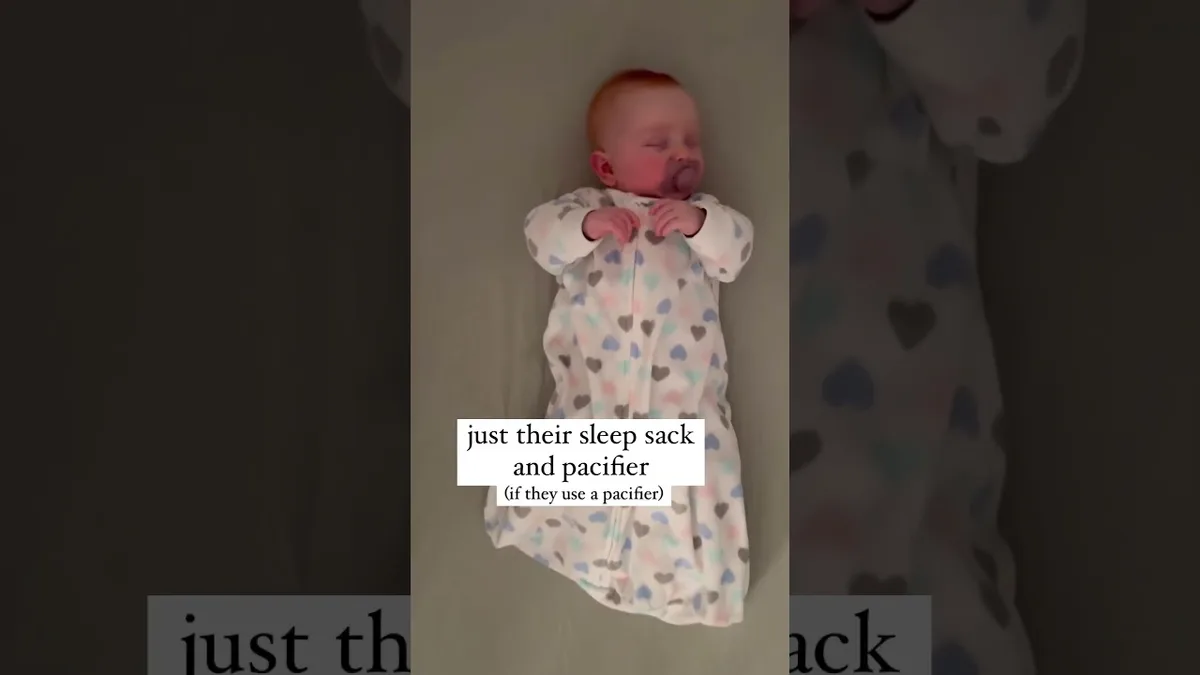
A car seat fails all three ABCs when used for sleep outside the car. It is not a flat surface. It forces an incline.
It restricts the baby’s position. And it often has straps and padding that interfere with the “alone” rule.
If you need a portable sleep solution for travel, consider a firm travel bassinet or a compact play yard. These meet the ABC standards. They cost less than a car seat and they’re designed specifically for safe infant sleep.
Mistakes I See Parents Make (and You Might Too)
Let’s be honest. Every parent has broken at least one of these rules. The sleep deprivation is real, and the temptation to let a sleeping baby stay asleep is powerful.
But knowing the common mistakes ahead of time makes it easier to avoid them.
Mistake 1: Leaving the baby in the car seat after arriving home. This is the most common one. You pull into the driveway. The baby is asleep.
You sit in the car for a few extra minutes, hoping they’ll wake up on their own. Then you carry the carrier inside and set it on the floor. An hour goes by. Read this Best Rear Facing Car Seat for Travel.
You check on the baby. They look peaceful. You leave them there.
The problem is that the seat is no longer at the correct angle. Without the base keeping it tilted properly, the baby’s head can slump forward. And you might not notice until it’s too late.
Mistake 2: Using aftermarket head supports or strap covers. Those cute little head pillows and fleece strap covers you see on Etsy or in boutique baby stores? They are not crash tested. Many of them interfere with the harness fit.
And they add extra padding that can push a baby’s head forward, increasing the risk of airway obstruction. Stick with what came in the box.
Mistake 3: Putting the car seat on a soft surface. You set the carrier on a bed or a couch while you fold laundry. The surface sinks under the weight of the seat, which changes the angle. This can cause the baby to tilt sideways or forward even more than they would on a hard floor.
Always put the carrier on a flat, firm surface.
Mistake 4: Assuming older babies are safe. Older infants have stronger neck muscles, but they’re not immune to positional asphyxiation. A 6-month-old can still slump forward in a car seat. And once they start rolling and scooting, they might wiggle into a position that compromises their airway.
Don’t relax the rules just because your baby is bigger.
Mistake 5: Leaving the baby unattended in the carrier. Even if the seat is on a flat floor and the baby is awake, never leave them unsupervised in a car seat. Babies can wiggle. The seat can tip.
The harness can shift. Stay within arm’s reach.
When to Move the Baby vs. When to Let Them Sleep
This is the practical decision parents need to make dozens of times. Here’s a simple framework.
Move the baby if:
- You have arrived at your destination
- The car ride lasted more than 90 minutes
- The baby is under 4 months old
- The seat is not installed in a vehicle base
- You plan to sleep or rest
- The baby’s head is slumped forward
- You cannot watch the baby continuously
Let the baby sleep in the seat only if:
- The seat is properly installed in a moving vehicle
- You are the driver and can see the baby in the mirror
- The ride is under two hours total
- The baby is properly buckled with the harness snug
- The seat is at the correct recline angle
- You will transfer the baby immediately upon arrival
Here’s the hard truth. If you’re sitting in the driveway, you should move the baby. Even if they’re sleeping.
Even if it’s been a long day. The risk is highest when the car is stopped, and the seat is out of the base.
One trick that experienced parents use: warm the crib mattress with a heating pad before you lay the baby down. Remove the pad before placing the baby. The warm surface mimics the car seat’s temperature and makes the transition less jarring.
It doesn’t always work, but it helps.
Another tip: keep the baby in their sleep sack or swaddle during the car ride. Then, when you transfer them, you don’t have to mess with layers. Less disturbance means a higher chance they will stay asleep.
How to Handle the Dreaded “Baby Fell Asleep in the Car” Moment
You’re five minutes from home, and the baby conks out. What do you do? There’s no perfect answer, but there is a best approach.
If you’re close to home (under 10 minutes): Finish the drive. Don’t take a detour to extend the drive intentionally. Don’t circle the block hoping they’ll get a full nap.
Just get home. Then transfer the baby to their crib or bassinet immediately.
If you’re far from home (30+ minutes): You have a few options. You can keep driving until the baby naturally starts to stir, then head home. You can pull over somewhere safe, take the baby out for a short break, then continue.
Or you can accept that the baby will wake up when you arrive and plan for an earlier bedtime.
The transfer technique matters. When you get home, follow these steps:
- Unbuckle the harness carefully without jostling the baby
- Lift the baby out, keeping their head and body aligned
- Lower them slowly into the crib, feet first
- Keep a hand on their chest for 30 seconds to help them settle
- Walk away quietly
It doesn’t always work. Sometimes they wake up, and you start the whole bedtime process again. That’s normal.
That’s parenting. The safety benefit of moving them outweighs the inconvenience of a disrupted nap.
For parents who drive frequently with their baby, having a safe sleep setup ready at home makes a difference. If you’re using a reliable rear-facing car seat for daily commutes, keep the nursery ready. Have the crib or bassinet prepped with a fitted sheet.
Set up a similar safe space in the room you spend the most time in. Having the sleep environment ready reduces the urge to leave the baby in the car seat.
What About Car Seat Inserts, Head Supports, and Aftermarket Products?
The aftermarket baby market is enormous. There are padded inserts, infant head supports, strap covers, seat protectors, and travel wraps. Most of them are sold as safety or comfort products.
Most of them are not safe.
Here’s the rule: if it didn’t come with the car seat, don’t use it during travel.
Car seats are tested as a complete system. The manufacturer designs the harness, the padding, and the recline mechanism to work together. Adding an extra layer of padding between the baby and the straps changes how the harness fits.
It can create slack that allows the baby to move more than they should in a crash.
Head supports are especially risky. Many of them sit behind the baby’s head and push it forward. That forward head position is exactly what causes airway obstruction.
A product marketed as “head support” can actually create the problem it claims to solve.
| Product Type | Safe During Travel? | Safe for Sleep Outside the Car? |
|---|---|---|
| Manufacturer newborn insert | Yes, if included with the seat | No, still an incline |
| Aftermarket head support | No | No |
| Aftermarket strap covers | No | No |
| Seat protector (between the seat and vehicle) | Check the manual; some are approved | N/A |
| Car seat canopy or cover | Only if it doesn’t restrict airflow | No |
If your baby’s head flops to the side or forward in the car seat, the problem is not that they need more padding. The problem is usually one of three things. The recline angle might be too upright.
The baby might have outgrown the newborn insert. Or the harness straps might be too loose.
Fix the actual problem. Don’t buy a product that masks it.
For parents looking for the best rear-facing car seat for travel, focus on seats with a proper recline indicator and a newborn insert that’s part of the original design. Skip the add-ons. They don’t improve safety, and they often make things worse.
Signs Your Baby’s Airway Might Be Compromised
You can’t always see positional asphyxiation happening. That’s what makes it so dangerous. But there are warning signs.
Look for a chin pressed firmly against the chest. Listen for noisy breathing, snoring, or gasping. Watch for the chest heaving while the baby seems to be struggling.
If the baby’s face is flushed or their lips look bluish, that’s an emergency.
A baby who is too quiet can also be a warning. Healthy sleep has movement. Babies twitch, stir, and change positions.
A baby who is completely still for a long stretch in a car seat needs to be checked.
If you see any of these signs, take the baby out of the seat immediately. Hold them upright until their breathing normalizes. Then call your pediatrician.
Real-World Scenarios and What to Do in Each
Scenario 1: You’re on a road trip, and the baby falls asleep. Plan stops every two hours. Take the baby out for a 15-minute break. Let them stretch and feed if needed.
Then continue driving.
Scenario 2: You’re at a restaurant, and the baby falls asleep in the carrier. Finish your meal quickly. Take turns holding the baby upright. Do not leave them in the carrier on the floor for an extended nap.
Scenario 3: The baby falls asleep five minutes from home. Finish the drive. Transfer immediately. A warm crib mattress can help them stay asleep.
Scenario 4: The baby falls asleep on the way to daycare. Wake them when you arrive. A short, disrupted nap is safer than an unsafe sleep position.
Frequently Asked Questions
Can my baby sleep in the car seat on a plane?
The FAA approves car seats for use on aircraft. But the same rules apply. The seat is safe during the flight because it’s secured.
Once the plane lands, transfer the baby to a flat surface if possible.
What if the car seat is clicked into a stroller?
Clicking the seat into a stroller frame keeps the recline angle closer to the correct position. But it’s still not a flat sleep surface. Short naps under 30 minutes with direct supervision are lower risk.
For longer sleep, use a bassinet stroller attachment instead.
Is it safe if I’m sitting right there watching?
Direct supervision reduces risk but does not eliminate it. You can intervene if you see the baby’s head slump. But you have to watch constantly.
And you have to know what to look for. If you’re tired or distracted, it’s safer to move the baby.
What about older babies (6 months+)?
Older babies have stronger neck muscles and better head control. That reduces the risk of positional asphyxiation. But they can still slump.
And they can wiggle into unsafe positions. The two-hour rule still applies. And the car seat is still not a safe sleep surface outside the vehicle.
The Bottom Line: Your Quick Decision Guide
If you take one thing away from this, let it be this. Car seats are for cars. They are not for sleeping outside the vehicle.
The risk is real, it is silent, and it is preventable.
The safest choice is always to move your baby to a flat, firm, bare sleep surface. A crib, a bassinet, or a portable play yard with a firm mattress. Those are the only places where the AAP recommends letting a baby sleep. Buying guide: Best Convertible Car Seat for Infants.
When you’re driving, keep trips under two hours. Check your baby’s head position in the mirror. If you see chin to chest, pull over and adjust.
When you arrive, transfer the baby. Even if it wakes them up.
You can’t always avoid a crying baby. But you can always avoid an unsafe sleep situation. That’s the trade-off that keeps your baby safe.