
If you’ve ever stared at a car seat manual and then looked at the fluffy aftermarket cover you just bought, you’ve probably asked yourself: Are baby car seat covers safe? It’s a fair question, and the answer isn’t a simple yes or no. The short version?
Most aftermarket covers are not safe because they haven’t been crash-tested with your specific seat, and they can interfere with the harness system that keeps your baby secure.
Here’s what the research and safety standards actually say. Under FMVSS 213 (the federal standard that every car seat sold in the US must pass), adding any product not approved by the seat’s manufacturer can change how the seat performs in a crash. That includes covers, inserts, and padding. Understanding the Best Convertible Car Seat for Infants.
As of 2026, the National Highway Traffic Safety Administration (NHTSA) continues to warn against using unapproved aftermarket accessories. Let’s break down exactly why, and what you can safely use instead.
Quick Answer
Most aftermarket car seat covers are not safe. They haven’t been crash-tested with your seat. They can add slack to the harness.
They can block airflow and cause overheating. Only use covers approved by your car seat’s manufacturer. If the manual doesn’t list it, skip it.
The Short Answer – Are Baby Car Seat Covers Safe?
No, not in the way most parents hope. The vast majority of aftermarket car seat covers you’ll find on Amazon, Etsy, or even big-box stores have never been tested with the car seat they’re designed to fit. That’s a problem, because car seats are engineered as a complete system.
Every strap, buckle, and piece of padding works together to distribute crash forces in a specific way.
When you add a cover that wasn’t part of that engineering, you’re essentially modifying the seat. And modifications can have unpredictable consequences. Manufacturers like Graco, Chicco, Britax, and Evenflo all include warnings in their manuals that explicitly forbid using any aftermarket products not approved by them.
Those warnings aren’t just legal CYA. They exist because real crash test data shows that extra padding and covers can change how the harness behaves.
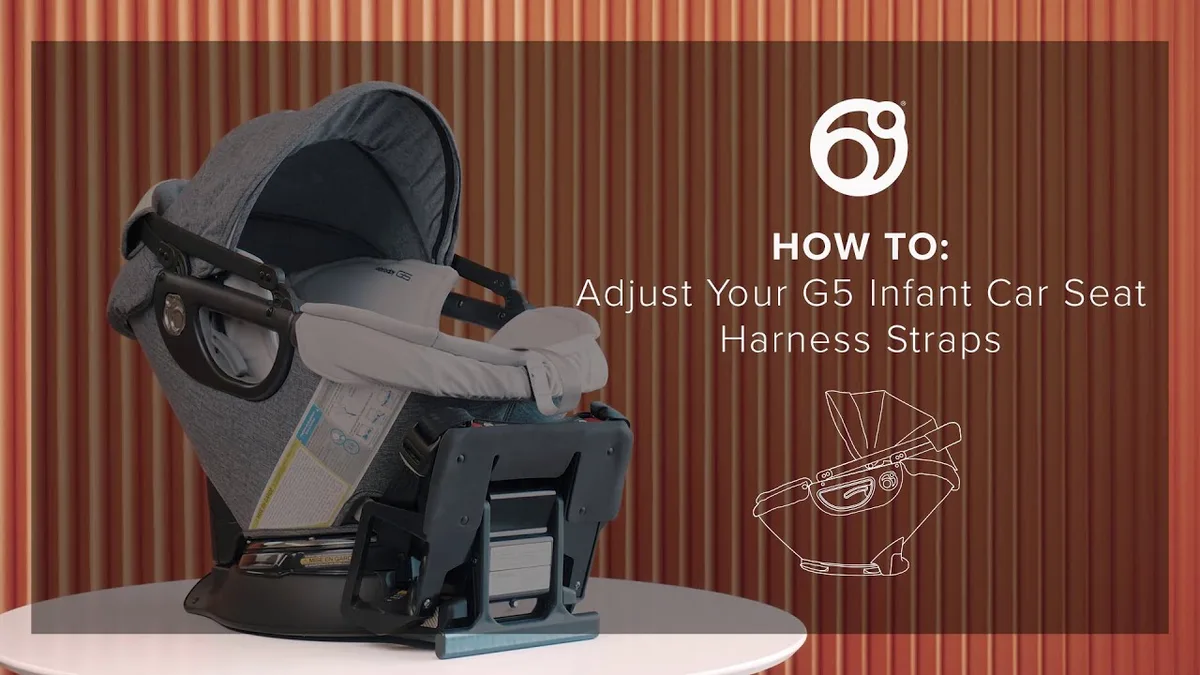
Image source: YouTube / Orbit Baby USA (YouTube thumbnail (fair-use with source credit))
What Makes a Car Seat Cover a Safety Risk?
Let’s get into the mechanics of why a seemingly harmless piece of fabric can be dangerous. There are three main ways to compromise safety, and understanding them will help you make smarter choices.
How Covers Interfere with the Harness System
The car seat harness is designed to fit snugly against your baby’s body. The straps need to be tight enough that you can’t pinch any slack between your fingers. That’s called the pinch test, and it’s the single most important check you can do after buckling your child in.
An aftermarket cover sits between the baby and the harness. That extra layer of fabric means the straps need to be pulled tighter to achieve the same snug fit. But here’s the catch.
Many covers are thick enough that they compress under load. In a crash, that compression creates sudden slack, allowing your baby to move forward more than the seat was designed to allow. That extra movement can lead to head or chest impact with the seat itself.
Some covers also cover up the harness slots. Rear-facing seats require the straps to be at or below the baby’s shoulders. If you can’t see where the straps are coming through the cover, you might accidentally use the wrong slot.
And that mistake alone can reduce the seat’s effectiveness in a crash.
The Hidden Danger of Added Bulk in a Crash
This is the part that surprises most parents. You’d think more padding equals more protection. But car seats are designed with a specific amount of space between the baby and the shell.
That space is there for a reason. It allows the seat to cradle and decelerate the child during a collision.
Adding a thick aftermarket cover prematurely fills that space. In a crash, the cover compresses, and the baby moves through that void. As a result, the harness doesn’t hold them in the correct position.
This is especially dangerous for newborns and small infants whose heads are proportionally heavy and whose necks are weak.
Per FMVSS 213 testing standards, the harness must keep the child’s head within a certain displacement zone. Adding an aftermarket cover can push that head movement beyond the limits. That’s the difference between a seat that passes crash testing and one that doesn’t.
Why Heat Buildup Matters More Than You Think
Overheating is a serious risk for infants, and car seat covers can make it worse. Many aftermarket covers are made from synthetic materials like polyester or fleece that trap heat. In a parked car, even with windows cracked, temperatures can rise quickly.
A cover that blocks airflow around the baby’s face can contribute to hyperthermia.
This is why pediatric safety guidelines recommend keeping car seats as bare as possible. A canopy or shade that blocks direct sun is fine. But a full-body cover that wraps around the seat and restricts airflow is not.
If you’re concerned about sun exposure, use a window shade on the car itself, or a separate stroller canopy that doesn’t interfere with the seat.
Flammability and Materials You Don’t Expect
Here’s another wrinkle. Car seat fabrics are held to specific flammability standards under FMVSS 213. Aftermarket covers are not.
Many are made from materials that burn faster or produce more toxic smoke than the original seat fabric. In the unlikely event of a vehicle fire, that difference matters.
The Only Two Kinds of Covers You Should Trust
So what can you use? There are exactly two scenarios where a cover is safe.
Manufacturer-Approved Covers (What to Look For)
Some car seat brands sell their own covers, liners, or inserts that have been tested with their seats. These are almost always listed in the manual or on the brand’s website. If the manufacturer sells it, it’s crash-tested and safe for that specific model.
Look for the exact model number on the packaging. A Graco cover for one seat might not fit another Graco model. Don’t assume it’s universal even within the same brand.
If the manual doesn’t mention it, it’s not approved.
Aftermarket Covers That Pass FMVSS 213 Testing
There is a very small category of aftermarket covers that explicitly state they’ve been tested to FMVSS 213. These are rare, and you’ll need to verify the claim. Look for a certification label or a statement from the manufacturer that includes the specific standard.
If it just says “car seat safe” without mentioning a standard, it’s marketing, not safety.
The One Exception: Stroller-Only Canopies
A canopy or cover that attaches to the stroller frame and not the car seat itself is a different story. Stroller canopies don’t interfere with the harness or the car seat’s crash structure. They’re safe to use when the seat is clipped into the stroller base.
Just remove them before reinstalling the seat in the car.
What the Car Seat Manual Actually Says
Let’s do something most people skip. Let’s read the manual. Not the whole thing, just the part about accessories.
Image source: YouTube / EricTheCarGuy (YouTube thumbnail (fair-use with source credit))
Decoding the “No Unapproved Aftermarket Products” Clause
Open your car seat manual. You’ll find a sentence that reads something like this: “Do not use any padding, insert, cover, or other accessory not approved by the manufacturer.” Sometimes it’s in bold. Sometimes it’s in a warning box.
It’s always there.
This isn’t a suggestion. It’s a safety instruction backed by the fact that the seat was tested as a complete unit. Every piece of padding and fabric on the seat was chosen to meet specific performance criteria.
Adding something else changes the equation.
How a Cover Can Void Your Warranty (and Why That Matters)
Here’s the practical consequence. If you use an aftermarket cover and something goes wrong, the manufacturer won’t cover it. That means if the harness malfunctions, the shell cracks, or the seat fails in any way, you’re on your own.
More importantly, if you’re ever in an accident and the seat’s performance was compromised by an unapproved cover, the manufacturer’s liability is off the table.
The Difference Between a Voided Warranty and a Real Safety Issue
A voided warranty is annoying. A real safety issue is something else entirely. The reason manufacturers are so strict about this is that they’ve done the crash testing.
They know what happens when you add a 1-inch thick fleece cover to a seat designed for a 1/4-inch foam insert. The warranty void is just the legal consequence. The actual risk is the compromised protection.
How to Tell If Your Cover Is Safe – A Quick 3-Step Check
If you already own a cover or are considering one, here’s a simple check you can do in under two minutes.
Step 1: The Harness Visibility Test
Put the cover on the seat exactly as you would use it. Can you clearly see where the harness straps come through the seat shell? Can you see the height markers that show whether the straps are at the right level for your child?
If the cover blocks any of that, it’s not safe.
Step 2: The Pinch Test After Installation
Buckle your child into the seat with the cover in place. Tighten the harness until it feels snug. Now try to pinch a fold of the strap at the collarbone.
If you can pinch any fabric, the harness is too loose. If you had to crank the straps excessively tight to pass the pinch test, the cover is adding thickness that shouldn’t be there.
Step 3: The Chest Clip Position Check
The chest clip should sit at armpit level, flat against the chest. A cover that bunches up or pushes the clip out of position is a problem. Clip position is critical for keeping the harness straps on the shoulders during a crash.
If the cover moves the clip even half an inch, it’s a risk.
The Right Way to Keep Your Baby Warm Without a Cover
This is the number one reason parents buy covers. They’re worried about their baby being cold in the car. It’s a valid concern.
But there are safer ways to handle it.
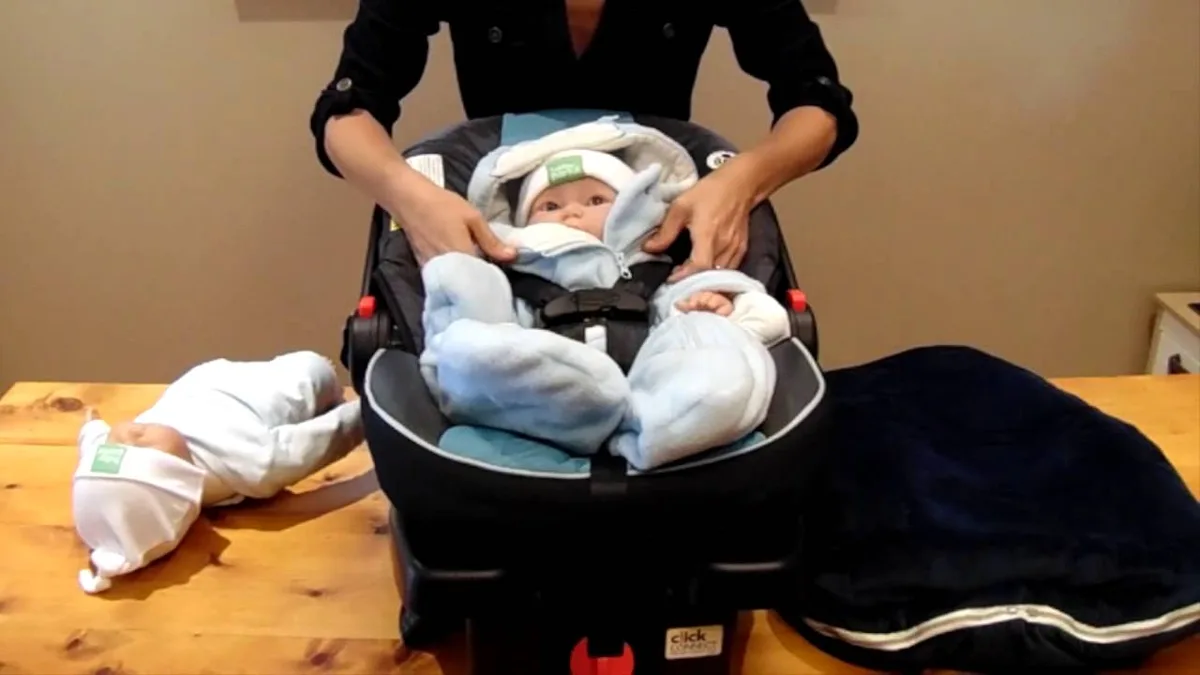
Image source: YouTube/baby parka (YouTube thumbnail (fair-use with source credit))
Bunting Bags and Wearable Blankets (What Works)
The safest option is a wearable blanket or bunting bag that goes on the baby, not on the seat. These fit over the baby’s body and then the harness straps go over the top. The key is that nothing is between the baby and the harness.
The bunting bag is just an extra layer of clothing.
Look for products that are specifically designed to be used with car seats. They should have openings for the harness straps and chest clip. Never use a bunting bag that wraps around the seat itself or that sits under the harness.
Layering Clothing Under the Harness
You can also dress your baby in layers. Start with a onesie, add a fleece bodysuit, and top it with a jacket or snowsuit that zips over the harness after the straps are tightened. The American Academy of Pediatrics recommends thin, close-fitting layers under the harness and a blanket or jacket over the top.
The rule is simple: nothing goes between the baby and the harness except the baby’s clothing. If you can do that, you’re safe.
Using a Blanket Over the Baby (After Strapping In)
The old-school method still works. Buckle your baby in, tighten the harness, and then drape a lightweight blanket over them. Tuck it around the sides.
It keeps them warm, it doesn’t interfere with the harness, and you can remove it easily if the car heats up.
Frequently Asked Questions
Can I use a car seat cover for sun protection?
Yes, but only use a canopy or shade that attaches to the car seat’s handle or the stroller frame, not to the seat itself. Window shades on the car are a better option because they don’t interfere with the seat at all.
Are winter car seat covers safe?
Most are not. Insulated covers that wrap around the entire seat or go between the baby and the harness are unsafe for the reasons covered above. Use a bunting bag or blanket over the harness instead.
How do I know if a cover is crash-tested?
Check the packaging or product page for a statement that says “tested to FMVSS 213” or “certified for use with child restraints.” If you don’t see that exact language, assume it hasn’t been tested. Manufacturer-approved covers will also list compatible seat models.
What about covers that just go over the top of the seat?
Covers that only cover the top of the seat (like a canopy) and don’t wrap around the sides or interfere with the harness are generally safe. They’re not crash-tested because they don’t affect the harness system. But full-body covers that wrap around the entire seat are a different story.
Can I wash my car seat’s original cover?
Yes. Most original covers are machine washable. Check the manual for specific instructions.
Washing the original cover is safe because it was designed as part of the seat. Just make sure it’s completely dry before reinstalling it.
What if I already bought an aftermarket cover?
Stop using it for car travel. You can still use it on the stroller if it fits and doesn’t interfere with the stroller’s harness. Or return it if the store allows it.
Your safest option is the manufacturer-approved cover or no cover at all.
Winter Covers vs. Summer Covers – Does the Season Matter?
Yes, the season changes the risks. Cold weather makes parents reach for thick, insulated covers. Hot weather makes parents look for breathable fabrics.
Both scenarios have the same answer: keep the harness clear.
Insulated Covers and Cold-Weather Concerns
Winter car seat covers are the biggest category of unsafe aftermarket products. These thick fleece or quilted covers add serious bulk between the baby and the harness. In a crash, that bulk compresses and creates dangerous slack.
The colder it gets, the thicker these covers tend to be.
The better option for winter is a car seat poncho or a wearable blanket that goes over the harness. Brands like Columbia and Carter’s make fleece bunting suits with harness openings. You buckle the baby in, then zip or snap the cover over the top.
Nothing sits under the straps. Explore the Best Chairs for a 4-month-old.
Breathable Covers for Hot Climates
Summer covers are less risky but still require caution. Mesh or cotton covers that claim to be breathable can still add enough thickness to compromise the harness fit. The safest approach is to use a car window sunshade instead.
It blocks UV rays without touching the seat at all.
If you must use a cover for sun protection, choose a canopy that attaches to the car seat handle. Never use a full-body cover that wraps around the seat. The canopy sits above the baby and doesn’t interfere with the harness.
Universal Fit vs. Seat-Specific Designs by Season
Universal covers claim to fit any seat. That’s a red flag. A cover that fits every seat probably fits none of them perfectly.
Seat-specific covers designed by the manufacturer are the only ones that guarantee proper fit. If you want a seasonal cover, buy one from your car seat brand.
Common Mistakes Parents Make (And How to Avoid Them)
Even well-meaning parents make these errors. Here are the ones we see most often, and how to avoid them.
Putting the Cover On Before Tightening the Harness
This is the most common mistake. Parents install the cover, then buckle the baby in. The problem is that the cover adds thickness that masks a loose harness.
Always buckle and tighten first, then add any safe cover layer over the top.
Using a Cover That Covers the Harness Height Markers
The height markers on the seat shell tell you where the straps should be. If your cover covers those markers, you can’t verify the correct strap position. This is especially dangerous for rear-facing seats, where the straps must be at or below the shoulders.
If you can’t see the markers, remove the cover.
Assuming a Thicker Cover Means More Protection
Thicker is not safer. Car seats are designed with specific padding. Adding more padding actually reduces protection because it creates space for the child to move forward in a crash.
The safest seat is the one that fits your baby snugly with no extra layers.
Not Checking the Cover After Washing It
Machine washing can shrink or warp a cover. Even manufacturer-approved covers can change shape after washing. Always recheck the fit and the harness slot visibility after every wash.
If the cover no longer fits snugly, replace it.
When to Simply Skip the Cover Altogether
Sometimes the best choice is no cover at all. Here’s when you’re better off leaving the seat bare.
Newborn Seats with Built-In Canopies
Many infant car seats come with a built-in canopy that pulls over the baby. That canopy is crash-tested as part of the seat. You don’t need an extra cover.
The built-in canopy provides sun protection and some warmth without compromising safety.
Seats with Removable Original Padding (Wash That Instead)
If your seat’s original cover is removable and machine washable, just wash it. That’s the safest way to keep the seat clean. Aftermarket covers are not necessary for hygiene.
A clean original cover works perfectly.
Cars with Tinted Windows or Sunshades Already Installed
If your car has factory-tinted windows or you’ve installed rear window sunshades, you likely don’t need a cover for sun protection. The car itself provides the UV block. Adding a cover on top of that is unnecessary and potentially risky.
What to Do If You Already Have an Unsafe Cover
If you’ve already bought an aftermarket cover, here’s how to handle it.
How to Check If Yours Is on the Recall List
The CPSC maintains a searchable recall database for child products. Check if your cover has been recalled for safety issues. You can search by brand, model, or date of manufacture.
If it’s recalled, stop using it immediately and follow the recall instructions.
Options for Returning or Repurposing It
Many retailers accept returns on unused covers. If the package is opened, check the store’s policy. Some stores allow returns within 30 days.
If you can’t return it, repurpose it as a stroller cover. Just don’t use it in the car.
When It’s Safe to Keep Using It (Rare, but Possible)
There are very few scenarios where an aftermarket cover is safe. If the cover is a canopy that attaches to the stroller frame only, it’s safe for stroller use. If it’s a thin mesh cover that sits under the car seat (not between the baby and the harness) and the manufacturer explicitly approves it, it’s fine.
Otherwise, toss it.
A Final Word – The One Rule That Covers Everything
Here’s the simplest way to remember all of this. Nothing goes between your baby and the car seat harness except your baby’s clothing. No cover.
No padding. No insert. No blanket.
If it didn’t come with the seat, it doesn’t belong there.
Manufacturer-approved covers exist for a reason. They’ve been crash-tested with the seat. They fit properly.
They don’t interfere with the harness. If you want a cover, buy the one made for your seat. If you want to keep your baby warm, use a blanket over the harness or a wearable bunting bag.
If you want sun protection, use a window shade.
The research is detailed. The warnings are in every manual. And the stakes couldn’t be higher.
Your car seat is one of the most important safety devices your child will ever use. Keep it simple. Keep it bare.
And keep your baby safe.