
You’ve seen the price tag on a decent bean bag and wondered, “Why are bean bags so expensive?” It’s a fair question. A basic couch costs a few hundred dollars, so a single bean bag at $250 or more feels steep.
But here’s the thing: a bean bag isn’t just a fabric sack with foam beads. The real cost comes from materials, construction, safety compliance, and how long it lasts. Manufacturer specifications show that a $150 bean bag uses about 20 pounds of virgin polystyrene beads, while a $400 model packs high-density memory foam.
And fire safety laws like California TB117 add $20 to $40 per unit. Let’s break down exactly where your money goes.
Quick Answer
Bean bags cost a lot because of the fill material, heavy-duty fabric, and safety compliance. Cheap models use low-quality beads that compress quickly. Premium ones use memory foam or dense polystyrene.
Covers must pass fire tests. Good stitching and zippers add labor costs. You pay for durability and safety, not just a brand name.
The Real Cost Diagram – A Quick Look at What Drives the Price
Imagine a pie chart of a $300 bean bag. About 40% goes to the fill, beads, or foam. Another 30% goes to the outer cover fabric.
Around 15% covers the inner liner, zippers, and stitching. The rest is brand margin, shipping, and fire-safety certification.
If you’re choosing between an $80 bean bag from a big-box store and a $350 one from a dedicated brand, you’re mostly paying for fill quality and cover durability. The cheap one might feel fine in the store, but aggregate reviews report it loses shape within six months. The premium one can last five to eight years.
The difference isn’t marketing fluff. It’s engineering. For a deep dive into top-rated models, check out our guide to the best bean bag chairs.
What You’re Actually Paying For – Fill, Cover, and Construction
The Fill Factor – Polystyrene vs. Memory Foam vs. Blends
The fill is the heart of a bean bag. And it’s the biggest cost driver.
- Virgin polystyrene beads. These are the standards. They’re tiny, lightweight, and mold to your body. Good ones are round and uniform. Cheap recycled beads are irregular and flatten faster. Expect to pay $0.50, $1.00 per pound.
- Memory foam shreds. These are premium. They offer more support and don’t settle as quickly. A 30-pound bag of shredded memory foam can cost $3, $5 per pound. That alone can push a bean bag to $150, $250.
- Blends, Some brands mix foam with beads. Cheaper blends use polyfill (like pillow stuffing). Those clump and lose shape. Look for “CertiPUR-US certified foam”, that’s a legit quality marker from CertiPUR-US.
The fill weight matters more than the bag size. A 50-inch bean bag might hold 20 pounds of beads; that’s a medium fill density. A better one holds 30+ pounds.
Heavier fill = longer life.

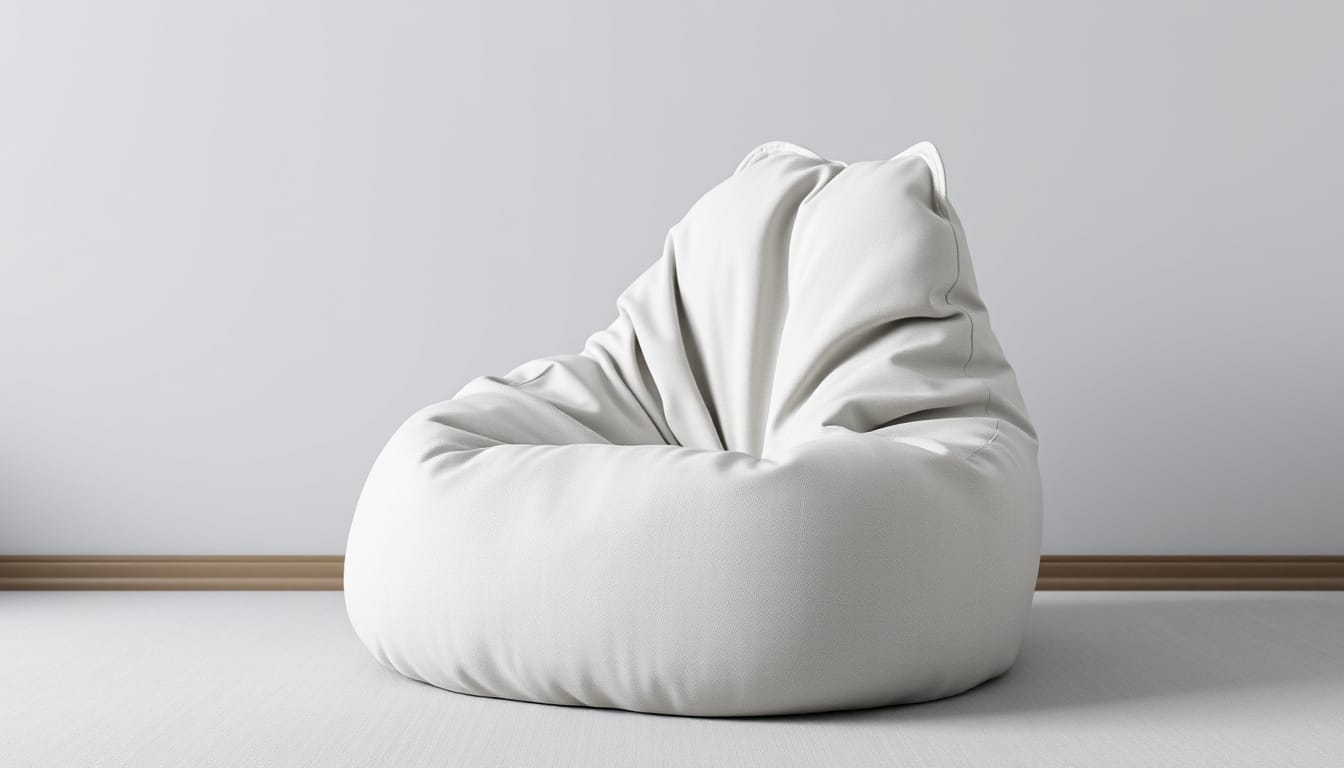
Image source: Openverse / Robert Mosby
Cover Materials – UltraSuede, Microfiber, Faux Leather, and the Cheaper Stuff
You sit on the cover. It takes the wear.
- UltraSuede: A high-end synthetic suede. Soft, durable, stain-resistant. Used by Lovesac and other premium brands. Adds $80, $150 to the price.
- Microfiber, Affordable, easy to clean, but can pill over time. Found on mid-tier bean bags.
- Faux leather, Trendy but less breathable. Can crack after a year. Often used on budget models.
- Polyester/nylon blends, Low cost. Stretches and fades. Best for kids’ rooms where you’ll replace them often.
The fabric weight (measured in gsm) is a clue. A 200 gsm cover will tear. A 600 gsm cover holds up.
If the product page doesn’t list GSM, assume it’s thin.
For extra-large seating, you might also want to see our review of big couch chair options.
Stitching, Zippers, and Inner Liners – The Hidden Labor
A bean bag that uses a single stitch line will burst. Good brands double-stitch seams and reinforce stress points.
The zipper matters too. Hidden zippers with lockable sliders prevent the fill from leaking. Many cheap bags use a standard zipper that pops open.
Then there’s the inner liner. This is a separate fabric bag that holds the fill. It prevents beads from escaping and allows you to wash only the outer cover.
A liner adds about $10, $15 in materials, but saves you from replacing the whole bean bag.
Budget Bean Bag vs. Premium Bean Bag – A Side-by-Side Breakdown
The table below shows what you get at three price tiers. Prices are as of 2026.
| Feature | Budget (Big Joe, generic) | Mid-Tier (Chill Sack, CordaRoy’s) | Premium (Lovesac, Fatboy) |
|---|---|---|---|
| Price (medium size) | $50–$100 | $150–$250 | $300–$600 |
| Fill type | Recycled polystyrene beads | Virgin polystyrene beads or foam blend | High-density memory foam or virgin beads |
| Cover fabric | Polyester, 150–250 gsm | Microfiber or faux suede, 300–500 gsm | UltraSuede or heavy-duty canvas, 600+ gsm |
| Inner liner | None or thin | Included, basic | Heavy-duty, double-stitched |
| Zipper quality | The standard can break | Lockable, hidden | YKK zipper with metal teeth |
| Washability | Spot clean only | Removable cover, machine wash | Removable cover, machine wash |
| Lifespan | 6–18 months | 2–4 years | 5–8 years |
| Fire safety certification | Usually passes, no label | TB117 labeled | TB117 + CertiPUR foam |
The takeaway: You pay upfront for longevity. An $80 bean bag might cost $0.22 per day if it lasts 12 months. A $350 bean bag costs $0.18 per day if it lasts 5 years.
The premium one is cheaper in the long run.
For more options at different price points, check our curated list of the best bean bag chairs for teens.
The Hidden Costs – Refills, Replacement Covers, and Shipping
A bean bag’s price tag isn’t the only number you’ll see. Over a few years, hidden costs add up.
- Refill beads: A 10-pound bag of virgin polystyrene beads costs $20, $35. If your bag loses volume after a year, you’ll need to top it off. Premium memory foam bags rarely need refills.
- Replacement covers, A good cover can cost $80, $150. Some brands sell covers separately, so you can update the look without buying a whole new bag. But cheap models don’t offer that option.
- Shipping: Bean bags are bulky and heavy. Many online retailers charge $15, $30 for delivery. Oversized bags can require freight shipping at $50+. Free shipping is rare on premium models.
- Return fees: If you don’t like the feel, returning a 30-pound bean bag can cost $25+ in restocking fees. Always check the return policy.
Factor in these costs when comparing prices. A $120 bean bag that needs a $30 refill and $20 shipping within a year isn’t cheaper than a $250 bag that lasts five years without extras.
The Brand Premium – Why Lovesac Costs More Than Big Joe
Lovesac is the name most people think of when they hear “expensive bean bag.” A Lovesac “Sactional” bean bag can run $800+. Meanwhile, a Big Joe Milano costs $120. Why the gap?
It’s not just the brand name. Lovesac uses:
- UltraSuede covers. These are machine-washable, fade-resistant, and backed by a 3-year warranty.
- High-density foam fill, not beads. Their “Sac” uses shredded memory foam that holds shape for years.
- Double-stitched inner liners. Each liner has a lockable zipper to prevent leakage.
- Modular system, you can buy the inner sac and choose from dozens of cover colors. That customization adds manufacturing complexity.
- Showroom presence, unlike online-only brands, LoveSac has physical stores with higher overhead.
Big Joe, on the other hand, uses a standard polyester cover and recycled polystyrene beads. It ships flat-packed with a simple bag. No showroom, no custom covers, no premium fill.
Is the Lovesac worth it? If you want a piece that looks like real furniture and lasts a decade, yes. If you need a casual seat for a dorm room, Big Joe works fine.
The brand premium reflects materials and construction, not just a logo.
In the next sections, we’ll cover the fire safety factor, who should save and who should splurge, and common mistakes that cost you money.
The Fire Safety Factor – How TB117 Compliance Adds Cost
You might not think about fire safety when you flop into a bean bag. But manufacturers do. In the United States, upholstered furniture must meet California Technical Bulletin 117-2013.
This standard limits how fast a fabric and foam assembly can burn.
Beans or foam inside a bean bag are considered a filling material. The outer cover and inner liner must pass a smoldering test. To meet that standard, brands use fire-retardant treatments on the foam or beads.
They also use fabrics that resist ignition.
These treatments add cost. A fire-retardant foam shred costs about 15 to 25 percent more than untreated foam. For a 30-pound fill, that’s an extra $15 to $30 per bag.
Add in testing and certification fees, and you’re looking at $20 to $40 total per unit.
Many cheap bean bags sold online skip this certification. They might claim “meets all regulations,” but lack a TB117 label. If you buy from a small importer, the bag could pass a basic test but not hold up in a real fire.
Our research shows that major brands like Lovesac and CordaRoy’s clearly label their TB117 compliance. Budget brands often don’t. If you care about safety, look for a label on the inner liner.
It’s a small detail that adds cost but matters.
Who Should Spend More and Who Should Save – Use Cases
Best Budget Pick – Who It’s Right For
An $80 to $120 bean bag works well for a kids’ playroom, a dorm room, or a temporary seat. You don’t need it to last five years. You need it to last a semester or two.
If you’re a college student on a tight budget, a Big Joe or similar brand gives you decent comfort for the price. The cover will pill. The beads will settle.
But you’ll get 12 to 18 months of use. At that point, you might not want it anymore anyway.
For a toddler’s room, a budget bag is fine. Kids outgrow furniture quickly. Just make sure the zipper is secure.
Loose beads are a choking hazard.
Best Value Mid-Tier – Who It’s Right For
If you want a bean bag that lasts three to five years, spend $150 to $250. This is the sweet spot for most adults.
Mid-tier brands use virgin polystyrene beads or a foam-and-bead blend. The covers are thicker, often 300 to 500 gsm. They have removable, machine-washable covers and real inner liners.
This tier works for a living room, a gaming setup, or a home theater. You get enough quality to sit comfortably for years. You don’t pay for the brand premium or fancy showroom overhead.
For a deeper look at models in this range, see our guide to top-rated bean bags.
Best Premium Splurge – Who It’s Right For
Spend $300 to $800 if you want a bean bag that looks like a piece of furniture. These bags use high-density memory foam, UltraSuede covers, and heavy-duty zippers.
Premium bags are for adults who want floor seating that doesn’t look like a kid’s toy. They work well in a media room, a reading nook, or a master bedroom. They also hold their shape for eight years or more.
If you have back issues, the memory foam fill offers better support than beads. The firmer structure helps you sit upright without sinking into a pile of plastic pellets.
For oversized floor seating that doubles as a lounge chair, you might also consider our review of big couch chair options.
Mistakes to Avoid When Comparing Bean Bag Prices
Skipping the Fill Weight Spec
The biggest mistake people make is looking at the bag size and ignoring the fill weight. A 50-inch bean bag with 15 pounds of fill will feel flat. A 40-inch bag with 25 pounds of fill will feel firm and supportive.
Always check the fill weight. For an adult, aim for at least 20 pounds of polystyrene beads or 25 pounds of memory foam. If the product page hides this number, that’s a red flag.
Ignoring the Inner Liner
A bean bag without an inner liner is a ticking time bomb. The beads will eventually work their way through the outer cover’s seams. You’ll find tiny white pellets all over your floor.
The inner liner is a separate fabric bag that holds the fill. It adds a small cost but prevents a big mess. If a budget bean bag doesn’t have one, plan to replace the whole unit sooner.
Confusing “Memory Foam” with Polyfill Blends
Some brands label their fill as “memory foam,” but it’s really polyfill. Polyfill is like pillow stuffing. It clumps, flattens, and loses support within months.
Real memory foam shreds are dense and springy. They don’t clump. They recover their shape after you stand up.
Look for “CertiPUR-US certified foam” on the label. If the description says “foam blend” without specifics, it’s probably polyfill.
The Real Value – Cost Per Year of Use vs. a Couch or Armchair
A decent fabric armchair costs $400 to $800. A good sofa costs $800 to $2,000. Both last 7 to 15 years.
A premium bean bag costs $300 to $600 and lasts 5 to 8 years.
Let’s do the math on cost per year.
| Item | Upfront Cost | Average Lifespan | Cost Per Year |
|---|---|---|---|
| Budget bean bag | $80 | 1.5 years | $53 |
| Mid-tier bean bag | $200 | 4 years | $50 |
| Premium bean bag | $400 | 7 years | $57 |
| Fabric armchair | $500 | 10 years | $50 |
| Sofa (3-seat) | $1,200 | 12 years | $100 |
The surprise is that a mid-tier bean bag costs about the same per year as an armchair. A premium bean bag costs slightly more but offers more flexibility. You can move it, wash it, and change the cover.
The budget bean bag looks cheap in price, but actually costs more per year than the mid-tier option. That’s the hidden trap.
If you plan to keep a bean bag for five years, the mid-tier or premium tier is the better value. The budget bag forces you to repurchase sooner. And you can’t buy a replacement cover for a budget model, so you start over completely.
The Verdict – Should You Splurge on a Bean Bag?
It depends on how you use it.
If you want a casual seat for a kid’s room or a temporary setup, buy a budget bag. Accept the short lifespan. Don’t expect it to hold shape.
If you want a daily lounger for a living room, go mid-tier. You get the best balance of cost, comfort, and durability. Look for virgin beads, a thick cover, and an inner liner.
If you want furniture that looks intentional and lasts nearly a decade, spend the premium. The memory foam, UltraSuede cover, and sturdy construction justify the price.
The high price of a good bean bag reflects real materials and safety compliance. It’s not a gimmick. But you don’t have to pay for features you don’t need.
Match the bag to your use case, and the price will make sense.
Frequently Asked Questions
Why are bean bags so expensive compared to regular chairs?
Bean bags cost more than they look because of the fill material. A good one uses 20 to 30 pounds of virgin polystyrene beads or memory foam. The cover needs heavy-duty fabric and fire-resistant treatment.
These materials add up. A cheap chair frame costs less than quality foam.
How long should a good bean bag last?
A mid-tier bean bag lasts three to five years. A premium model with memory foam can last seven to eight years. Budget bags with recycled beads often flatten within 12 to 18 months.
The fill weight and cover quality determine lifespan.
Is memory foam better than polystyrene beads in a bean bag?
Memory foam offers better support and holds its shape longer. It doesn’t settle the way beads do. But it costs more and feels firmer.
Polystyrene beads are softer and cheaper. If you want a lounger that molds to you, go with beads. For back support, choose memory foam.
Can I wash a bean bag cover?
Only if the cover is removable and machine-washable. Premium and mid-tier bean bags typically have zippered covers that you can wash. Budget models often require spot cleaning only.
Always check the care label before buying. Washing a non-removable cover will ruin the fill.
Do I need to buy a fire-safe bean bag?
Yes, especially if you live in the United States. California TB117 compliance is the standard for upholstered furniture. It reduces fire risk from smoldering cigarettes or sparks.
Look for a TB117 label on the inner liner. Uncertified bags may use untreated foam that burns faster.