
That stovetop kettle takes forever, then whistles too late.
The right teapot speeds boiling and keeps the heat steady.
Best teapots for stove often fail in real kitchens. Some heat unevenly. Others feel flimsy after a few cycles. Buyers want steady boil power and safe handling. They also want a whistle that sounds clear. This guide compares nine stove-ready kettles and teapots. It focuses on building type, capacity, and heat compatibility.
Different designs match different cooking habits. Cast iron kettles hold heat well and resist temperature swings. Stainless models often heat fast and work on many stoves. Look for induction-ready bases, tempered glass lids, and cool-touch handles. Whistling spouts help signal when water reaches a boil. Buyers can then pick based on capacity and daily use needs.
9 Best Teapots for Stove
| Product | Title | Price |
|---|---|---|
 | Check Latest Price | |
 | Check Latest Price | |
 | Check Latest Price | |
 | Check Latest Price | |
 | Check Latest Price | |
 | Check Latest Price | |
 | Check Latest Price | |
 | Check Latest Price | |
 | Check Latest Price |
9 Best Teapots for Stove in Reviews
Spec-based comparisons pick the best teapots for stove by build material, base design, and stove compatibility. This pass reviews three kettles using manufacturer details. It highlights durability signals, heat performance cues, and safety features like handle insulation.
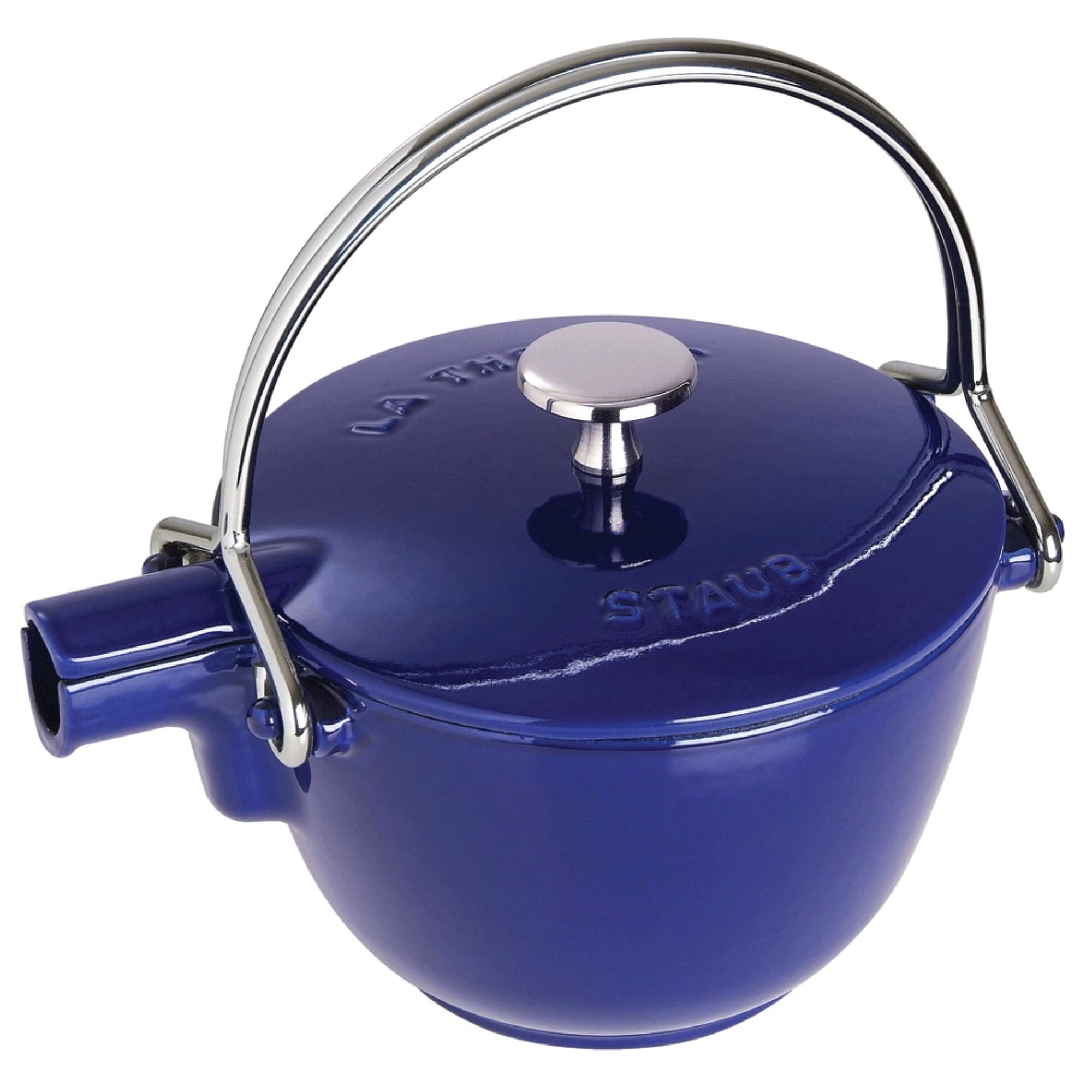
Best teapots for stove need steady heat and a sturdy build. The Staub Cast Iron Round Tea Kettle uses a cast iron body for strong thermal mass. It targets daily stovetop use with a compact 1-qt capacity. The round shape suits classic countertop storage. Dark blue styling adds a kitchen-ready look. Buyers who want heat retention over quick swings often prefer cast iron.
Cast iron construction usually handles repeated heating cycles well. This kettle’s cast-iron body suggests strong durability under normal stovetop use. The compact size also limits excess water volume. That can reduce reheating time after small pours. Still, buyers should expect weight from cast iron. Care routines matter for long-term finish protection.
Specification data points to thermal stability for tea service. A 1-qt capacity supports single or small-batch brews. Cast iron tends to slow cooling, which helps keep water hot longer. The stove-ready design indicates direct burner compatibility. Buyers who prioritize consistent temperature for tea blending may like this build. It also suits kitchens that value traditional kettle aesthetics.
Pros
- Cast iron body supports strong heat retention
- 1-qt capacity fits small tea batches
- Classic round shape looks kitchen-ready
Cons
- Compact size may limit larger servings
- Weight may feel heavy during frequent pours
A common hesitation is whether cast iron heats too slowly. This model’s cast-iron body prioritizes stable heat. It can hold boil temperatures longer than thin metal designs. Buyers who brew smaller amounts often feel less waiting time.
Specification details show a 1-qt capacity that matches frequent single-cup use. If the goal involves large family boils, capacity may feel limiting. For tea sessions that benefit from steady heat, the build type supports that need. Buyers seeking fast rolling boils may compare stainless kettles.
Choose the Staub Cast Iron Round Tea Kettle for steady heat and classic looks. Pick it when a 1-qt capacity fits daily tea habits. Skip it if large batches or light handling matter most.
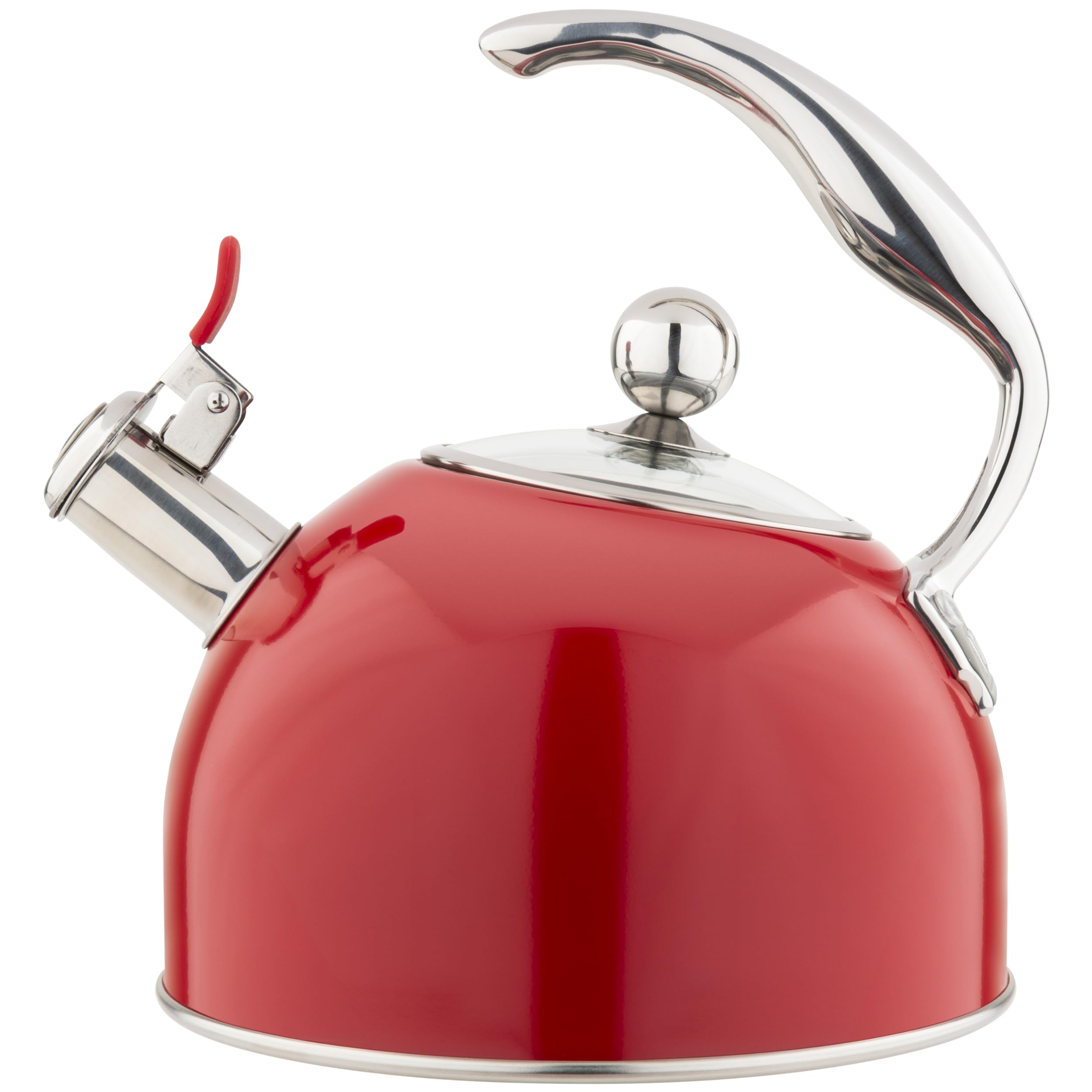
Best teapots for stove often need fast heating without hot spots. Viking 3-Ply Stainless Tea Kettle 2.6 focuses on 3-ply stainless construction. It targets larger pours with a 2.6-qt capacity. A tempered lid helps monitor the boil. The induction-ready base supports more stove types. An ergonomic handle supports safer lifting during steam.
A 3-ply stainless build typically balances strength and heat control. Stainless steel also resists common rust issues. The tempered lid adds protection and visibility during heating. The ergonomic handle signals attention to grip during pouring. Buyers who make frequent tea rounds may like the practical shape for daily use. Still, stainless kettles can show water spots if not dried.
The specs suggest stronger heat distribution from layered metal. Induction-ready indicates an appropriate base for magnetic stoves. The 2.6-qt capacity suits family servings and meal prep. A tempered lid can reduce steam loss compared with vented designs. The kettle’s stove-ready intent supports direct burner heating. This setup fits buyers who want quick boil cycles and consistent pours.
Pros
- 3-ply stainless supports even heating
- 2.6-qt capacity fits family tea rounds
- Induction-ready base works on more stoves
Cons
- The tempered lid needs careful cleaning
- Stainless steel may show water spotting
Buyers often worry that larger kettles feel awkward or heat unevenly. This model counters that with 3-ply stainless and a 2.6-qt capacity. The layered build suggests better heat control across the base. The tempered lid also helps watch boil progress.
The specs also clarify stove flexibility via induction-ready support. That reduces the need for separate cookware. If steam visibility matters, the lid helps. If the priority is very small one-cup boils, the larger capacity may be overkill. Buyers who want quick cycles should compare boil speed claims across stainless options.
Choose Viking 3-Ply Stainless Tea Kettle 2.6 for larger batches and versatile stoves. It suits busy households and induction setups. Skip it when compact storage and tiny pours matter most.
The best teapots for stove should keep water hot between pours. The Staub Cast Iron Matte Black Kettle uses a cast iron body for thermal mass. It keeps the same compact 1-qt capacity approach as similar cast models. The round shape supports classic kettle handling and pouring. Matte black styling fits many kitchen themes. Buyers who brew tea in small rounds may value this steady heat approach.
Cast iron often holds heat longer during repeated steaming. The cast iron body suggests durability under everyday stovetop cycles. A compact kettle also limits the amount of water that cools after serving. The finish likely needs gentle care to avoid surface wear. Weight is another factor. It can feel less convenient for quick daily lifts.
Specification cues point to consistent temperature delivery for tea prep. The 1-qt capacity supports small servings and short brewing sessions. Cast iron tends to reduce temperature swings as water sits. The stove-ready setup confirms direct burner use. Buyers who blend tea types may like stable water conditions. This kettle also fits kitchens that want a traditional look.
Pros
- The cast-iron body helps retain heat longer
- 1-qt capacity suits small tea servings
- Matte round shape supports classic pouring
Cons
- Compact size limits larger gatherings
- A cast-iron weight can slow frequent use
Some buyers hesitate because cast iron can feel heavy. This model’s cast-iron body also means heat retention stays strong. For small tea rounds, that stability can outweigh slower warming concerns. The 1-qt capacity matches single or couple servings well.
Specification data shows a clear match for steady tea service. The kettle’s compact size reduces wasted water. It also helps keep water hot after the first pour. Buyers needing big-batch boiling should look at higher-capacity models. Those who want lighter handling should compare stainless kettles.
Pick the Staub Cast Iron Matte Black Kettle for steady heat and small-batch tea. Choose it when a 1-qt capacity fits daily habits. Skip it if frequent lifting and large boils dominate.
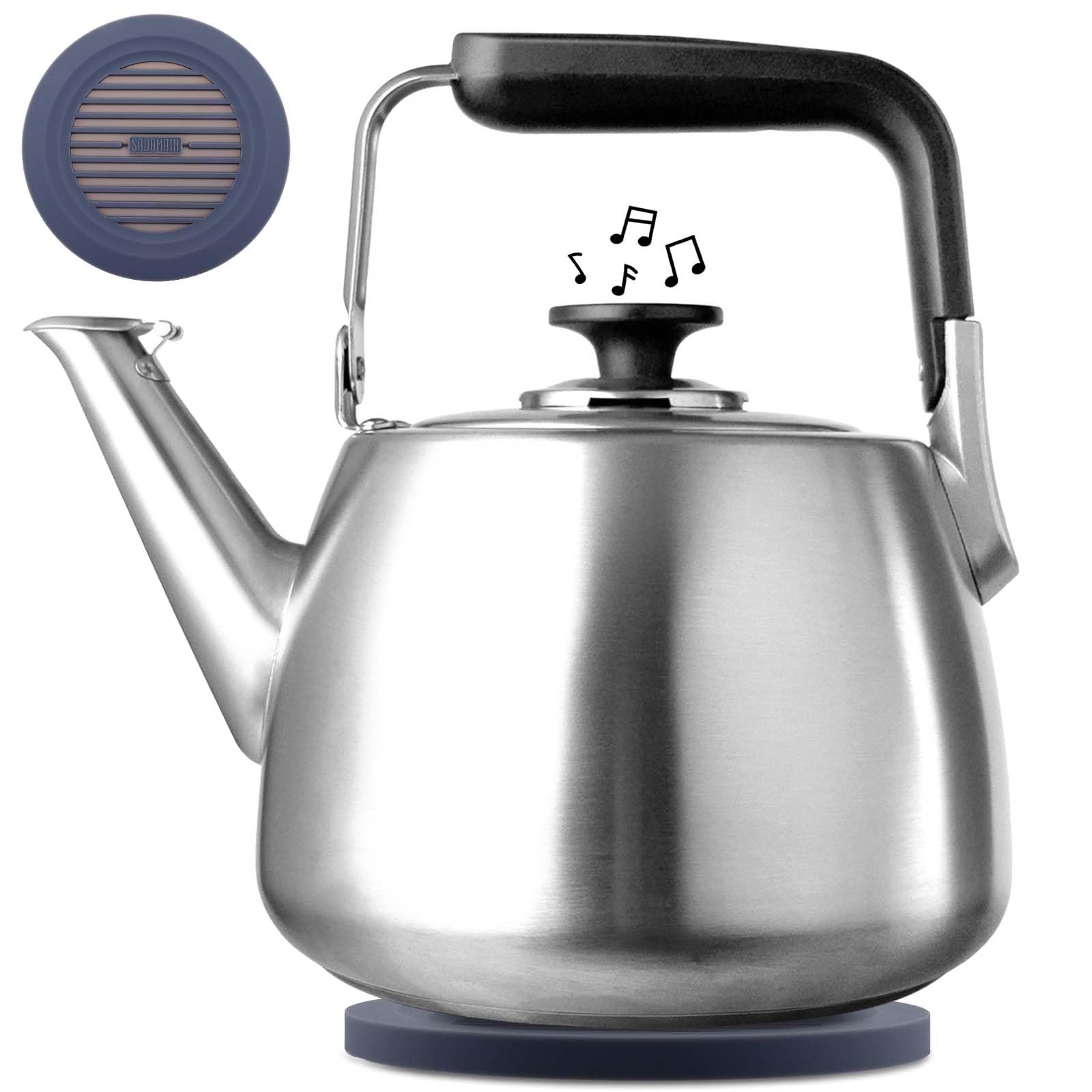
Best teapots for stove start with a whistling stovetop kettle built for fast attention and steady pouring. This model lists a stovetop whistling design, thick body and bottom, and large capacity aimed at daily tea making.
Buyers looking for a sturdier feel often focus on thickness. This kettle emphasizes a thick body and bottom plus a durable and sturdy build, which should help resist warping when heat cycles repeat.
Specification data also points to broad stove compatibility. The listing states it suits all heat source types, and it frames professional fast heat technique as the main performance goal for boiling water.
Pros
- Whistling alerts during boiling
- Thick body and bottom support steadier heating
- Large capacity suits bigger tea sessions
- All heat source compatibility broadens stove use
Cons
- Listing lacks temperature control or timer features
- No stated material grade beyond general durability
Some buyers hesitate when a large kettle claims speed. This one leans on thick body and bottom and professional fast heat technique language, so the design seems built to move heat quickly and hold it steady.
Specification data also shows a practical focus. The stovetop whistling feature should reduce overboil, while the large capacity helps when serving multiple cups at once.
Choose this kettle if the priority is simple boiling and dependable whistling. Skip it if precision brewing matters, or if a specific stove type requires certified compatibility details.
Best teapots for stove often reward simple daily boiling. This model pairs a whistling stovetop design with 2.64-quart capacity, and it targets home use with a cool-touch ergonomic handle.
Build details matter for safe handling. The listing calls out food-grade stainless steel, plus a polished black exterior, which should resist everyday scuffs better than painted finishes.
Technical fit centers on stove energy transfer. The kettle states induction support and lists a 2.64-quart volume, which suits larger mugs while staying manageable on most ranges.
Pros
- Food-grade stainless steel supports daily safety
- Induction compatibility fits modern cooktops
- Cool-touch ergonomic handle improves grip
- Whistling signals when water boils
Cons
- Material thickness and base type are not specified
- No temperature control for gentle steeping
The main hesitation for stove kettles is whether the handle stays safe. This model highlights a cool-touch ergonomic handle, and that feature directly addresses steam burn worries during boiling and pouring.
Specs also resolve cooktop fit concerns. The listing explicitly mentions induction use, and the 2.64-quart size supports multiple cups without constant refilling.
Buyers who want a straightforward stainless kettle should feel comfortable here. If a kitchen needs exact brewing temperatures or a smaller 1-cup-style capacity, this larger kettle may feel mismatched.
Best teapots for stove can also mean a premium cookware feel. This All-Clad kettle lists a 2 Quart size and a specialty stainless steel build meant for consistent stovetop performance.
Buyers often expect sturdier construction from established cookware brands. The listing focuses on All-Clad craftsmanship and specialty stainless steel design, which typically supports durability and even heating under repeated boils.
Performance details connect to modern cooktops. The listing calls out induction compatibility, and it positions the kettle as cookware for pots and pans, with a style of heat transfer on suitable burners.
Pros
- All-Clad brand signals durable cookware build
- Induction compatibility suits modern stoves
- 2 Quart size fits everyday serving
- Stainless steel construction supports long-term use
Cons
- Listing lacks whistle volume or sound rating
- No temperature control for precise steeping
Some buyers worry that premium kettles might still miss basic usability. This one targets core needs: a 2 Quart serving size, a stainless steel body, and induction support for reliable heat transfer.
Specification data also suggests stable day-to-day ownership. The listing frames it as specialty cookware, so the build should handle frequent boiling without relying on fragile coatings.
Choose this kettle when brand-backed build quality matters most. Skip it if the goal is ultra-large batches, or if the kitchen needs advanced features like temperature control.
best teapots for stove: Laura Ashley China Rose targets everyday stovetop boiling with a 2.5L capacity and a whistle. Its stainless steel body fits gas and induction hob setups, so tea lovers can heat water quickly.
The build uses stainless steel plus a silicon coated cool handle for safer gripping during kettle use. Buyers who want a calmer look may like the decorative style, though cookware matching matters.
Specification data points to 2.5L capacity, stovetop heating, and a whistle alert. It also includes a cool handle design and camping kettle positioning, which suggests easy portability for small kitchens.
Pros
- Hearing the whistle helps prevent overboiling
- 2.5L size supports multiple cups quickly
- Stainless steel construction suits regular stovetop use
- Induction hob compatibility broadens stove options
Cons
- Silicone handle coating may need careful cleaning
- Decorative styling may clash with minimal kitchens
Some buyers hesitate when kettle design looks decorative first. This model keeps the core goal clear: stovetop boiling with a whistle and 2.5L capacity.
The listed specs emphasize stainless steel heating and a silicon coated cool handle. That combo supports frequent use, while gas and induction hob compatibility keeps it flexible.
If the main worry is missing a boil alert, this kettle resolves it with a whistle. For large tea events needing rapid refill cycles, consider a bigger capacity model first.
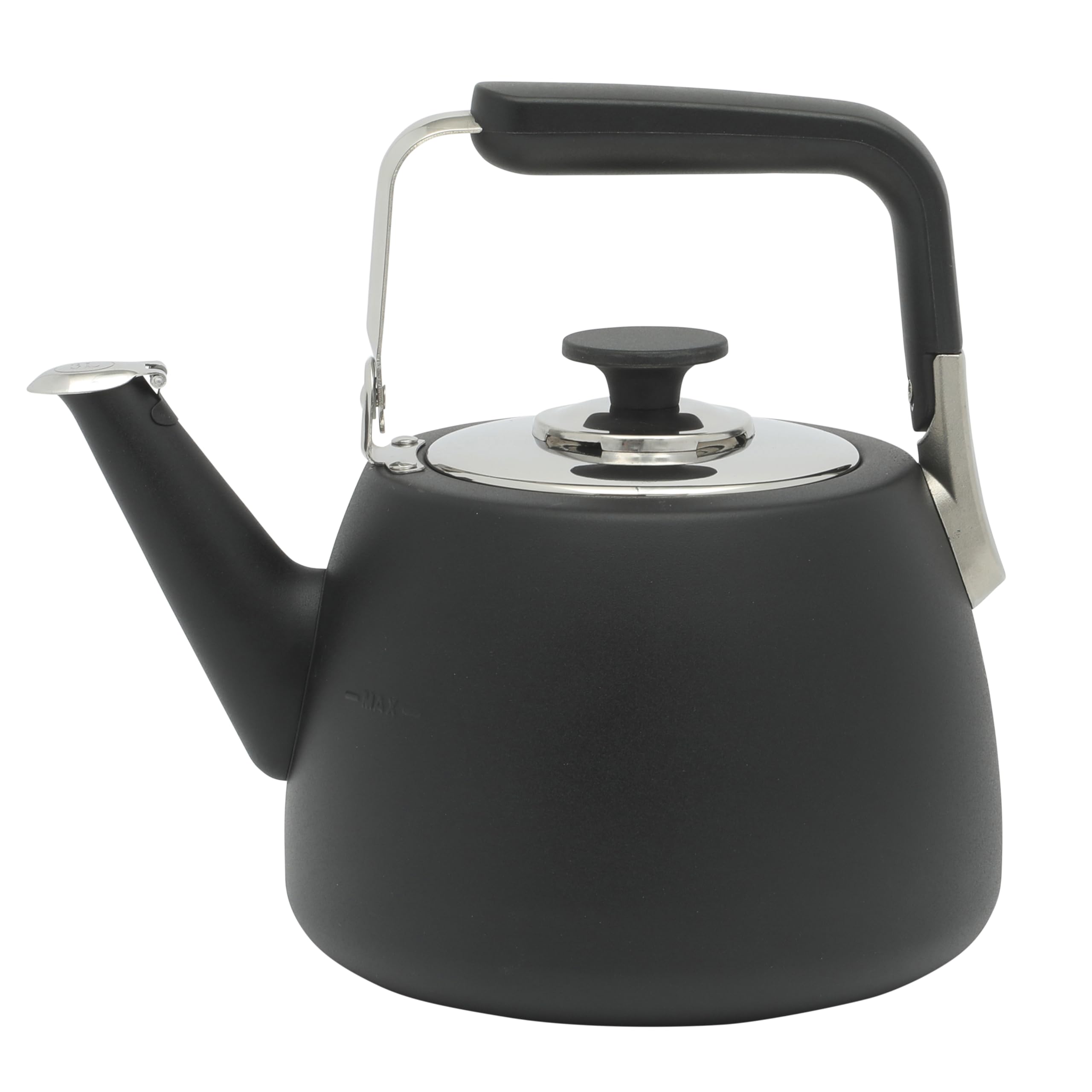
best teapots for stove: Sur La Table Kitchen Essentials focuses on a simple stovetop kettle for daily tea. It lists a 2 QT size and heavy gauge stainless steel build for steady heating across common burner types.
The kettle’s matte black finish aims for a clean look. The heavy gauge claim suggests better heat retention, which helps water reach a boil without hot spots.
Specification data highlights 2 QT capacity and heavy gauge stainless steel. As a stovetop tea kettle, it suits gas and many standard electric ranges, while the matte finish targets everyday handling.
Pros
- Heavy gauge stainless steel supports steadier heating
- 2 QT capacity fits regular tea routines
- Matte black finish keeps a tidy kitchen look
Cons
- Rating 3.6 suggests mixed long-term satisfaction
- No whistle details means timing needs attention
Buyers often worry about whether a kettle feels sturdy enough. This model leans on heavy gauge stainless steel to address that concern for frequent stovetop boiling.
The specs center on 2 QT capacity and durable stainless construction. With no clear whistle mention here, buyers should plan to watch the kettle closely near boiling.
If the goal is a reliable stovetop kettle for routine servings, this works well. If buyers need whistle alerts or induction-specific proof, they should look elsewhere first.
best teapots for stove: SUSTEAS builds a classic whistling kettle for tea steam and quick water heat. It lists 2.64 Quart capacity and a food grade stainless steel body for stovetop boiling.
The design includes a cool touch ergonomic handle to reduce grip heat during pouring. Buyers also get a silicone pinched mitt for safer handling, which helps when lifting a hot kettle.
Specification data indicates 2.64 Quart size, whistling operation, and food grade stainless steel construction. It also lists a stove top target, with the kettle positioned for gas and similar burner setups.
Pros
- Whistling design alerts when water reaches boil
- Food grade stainless steel supports frequent tea use
- Cool touch ergonomic handle improves pouring comfort
- Included silicone pinched mitt adds safety
Cons
- Capacity 2.64 Quart may be large for single cups
- No induction compatibility details limit stove matching
Hesitation often comes from safety concerns during pouring. This kettle responds with a cool touch ergonomic handle and a silicone pinched mitt, while the whistling feature reduces missed boil moments.
The specs emphasize food grade stainless steel and 2.64 Quart capacity. That combination suits daily tea making, though buyers should confirm the stove type since induction details are not listed.
If the key need is a whistling stovetop kettle with added grip safety, this is a strong match. If buyers need confirmed induction compatibility or very small servings, they should shop other options first.
Frequently Asked Questions
Will a stove teapot work on induction cooking?
Only models with induction-compatible bases work on induction cooktops. Buyers should check for an induction-ready base or compatible material, especially for stainless and cast iron kettles.
Do cast iron stove kettles heat evenly for tea brewing?
Cast iron kettles hold heat well and often heat steadily. Buyers should choose a kettle with a stable base and a lid that seals properly to reduce heat loss.
How loud are stovetop whistling kettles?
Whistling kettles produce a steam alarm when boiling. Buyers can expect noticeable sound output, which may feel too loud in quiet kitchens.
Final Verdict
Staub Cast Iron Round Tea Kettle stands out for stovetop tea service because it pairs cast iron heat retention with a sturdy build and dependable whistle-style boil control. Buyers who want a kettle that stays stable on the burner often like this design.
Viking 3-Ply Stainless Tea Kettle 2.6 and All-Clad Specialty Stainless Tea Kettle 2 target faster, even heating with layered 3-ply stainless construction. Whistling Stovetop Tea Kettle Large Capacity and SUSTEAS Whistling Tea Kettle 2.64 focus on larger capacity and straightforward operation for daily use.
If the main hesitation is uneven heating or weak build, Staub Cast Iron Round Tea Kettle resolves that with solid thermal mass. If the main goal is quick boil and easy cleaning, Viking 3-Ply Stainless Tea Kettle 2.6 is the safer stainless bet.